Something is a stirring at the end of 2025. International gothic super group, Beauty In Chaos have an extended single release in the form of two covers. Oh Lordie, there is going to be a reconning. The first is a folk cover, recorded as far back as 1956 by Odetta called “God’s Gonna Cut You Down,” and also under this title in 2009 by the original Man In Black, Johnny Cash, as well as Marilyn Manson (2017). It has also been reproduced as “Run On” by Elvis Presley (1967) and Moby (1999), as well as others.
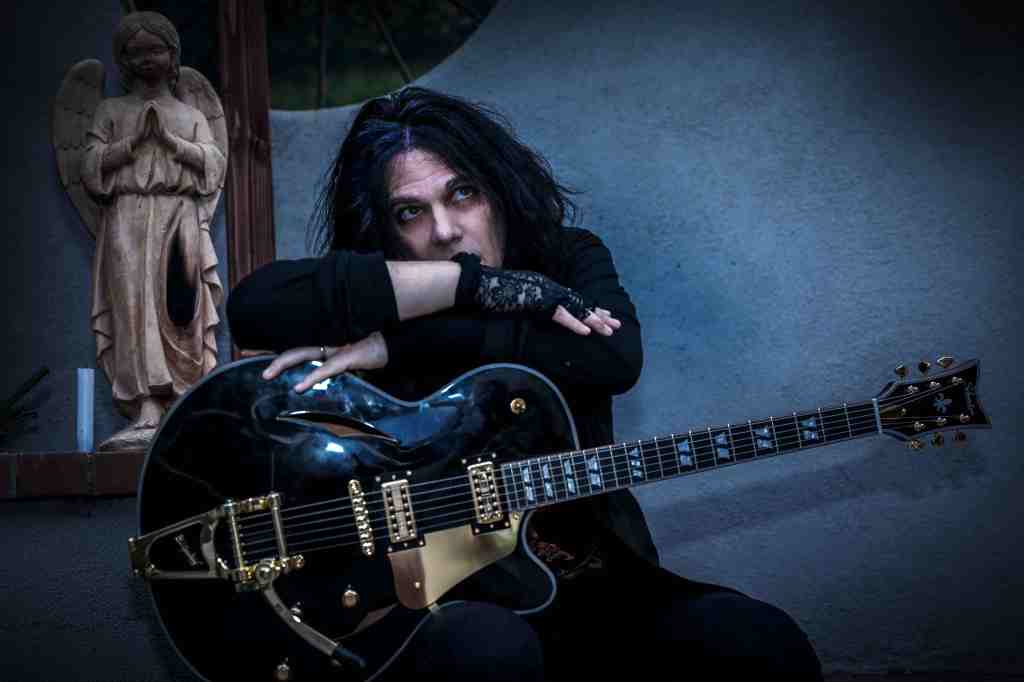
Photo by Anabel DFlux
You just know before a single note has been struck, this is going to be a southern gothic affair, where the coyote blues is just waiting there to bite and preacher is sizing you up for the next wooden box he’ll be sermonising over. Sure enough, there is that heavy guitar twang that rings out, joined by the gospel styled hand claps, as well as the rat-a-tat of the military drum, all calling on the day of judgement.
Back in 2003, Joe Strummer And The Mescaleros released the album Streetcore, which brought forth the single “Get Down Moses.” Oh yes, nothing like that reggae flavour, mixed with that unmistakeable Strummer guitar, and the brass section reminding us that ska is the voice of the streets. It is sassy, eexy and still runs true for the modern day.
After “God’s Gonna Cut You Down,” I feel like going to listen to Concrete Blonde’s version of “God Is A Bullet,” for will there be redemption?? I don’t know, but there is a cinematic darkness that tastes like dust and smells of gunpowder. Meanwhile, “Get Down Moses” is like the medicine you never knew you needed to soothe and heal your soul. Easy to listen to and still make you realise that the more things change, the more they stay the same, A bit like “Ghost Town” by The Specials. On a side note, Michael Rozon and Michael Ciravolo are the lynch pins of Beauty In Chaos, and we all know, Michael is God’s avenging angel.
Texan band, InADarkenedRoom, came together in 2020 during the pandemic lockdown, made up of CJDuron, Svia Svenlava and Kandi Hardee. After releasing a few singles, 2023 has seen them drop the debut album Sorrows. The album is a very gothic affair with Duron’s deep and smooth vocals, together with the jangle of his guitar, Hardee’s indispensable synths that colour the music and Svenlava’s fabulous post-punk saturated bass.
There is a languid tone to the music, together with maudlin topics, lending itself to the southern gothic sound with hints of TheCure and very missed RolandSHoward. As we are ever curious, we found ourselves lucky enough to talk to lead singer CJ to talk about the band, the creation of Sorrows, videos and even about the Texan scene.
Welcome denizen CJ of In A Darkened Room, to Onyx, where we are very familiar with our favourite places being night lit spaces.
You are all involved in other bands – you, CJ, in Cursus (doom sludge) and Sick City Daggers (psychobilly.) Svia in Shadow Fashion (darkwave) and Kandee in Love Hate Affair (electro darkwave.) How different has it been for you playing together in this new project?
Well, I can only answer for myself there. Working with Svia and Kandee is pretty organic. We are all close friends and navigate each other fairly well, I think. The process has been similar to other musical projects, but this music is much more personal. The songs have been a sort of reckoning for me. I revealed a lot of personal loss and tragedy on Sorrows that I had to learn how to express.
My previous bands have all been heavier and more aggressive with screaming and indecipherable lyrics for the most part. It’s easy to hide behind that anger and angst vocally. But with this project, I had to reach down and be more real with myself than I had ever been because I wanted my lyrics to be clear and articulate and honest. It felt very vulnerable.
How did CJ Duron, Svia Svenlava and Kandi Hardee find themselves all In a Darkened Room?
I played with Svia in projects for over 10 years. We share a lot of the same musical upbringing, so to speak. We became friends through music years ago playing in a punk band together. And it doesn’t hurt that he rents a room in my house, and our studio is in the basement. It makes it easy to get together to write and work out the music. And after working through a few songs, we both agreed adding synth to the melodies would create more of the lush sound we were trying to create. Our close friend and keyboard player, Kandi was the obvious choice. She has been with us since early 2020.
Were you aware that you share your name with a Skid Row track?
We were not aware of that at the time. We found out only recently when we googled our band name and Skid Row stuff came up. What a odd surprise! I’m realizing that finding a name without association can be more difficult than it seems. In a Darkened Room fit the atmosphere of our moody studio, and also the kind of place we envision people listening to the music – a seedy night club, or their own darkened room.
Do you all originate from Texas and what is the alternative/darkwave/industrial scene like?
All born and raised on the south side San Antonio, Texas. Our studio is in a small rural town south of the city in what local elders call “pueblo viejo”. It was considered its own town in the early 1900s because it had a doctor, a butcher, a blacksmith, and a small post office. So that was basically enough to make it a town. I bought one of the first houses built in there, and it had a basement – unheard-of in Texas. Naturally, it became our studio and is where we record all our music. The dark alternative music scenes here are extremely varied, but they all overlap. We have a large extended family of bands and fans in those genres. San Antonio is a big city, but it has, as of yet, maintined it’s small town feel. We have the best fans in the world here. We love the music with an abiding passion. Local musicians, DJs, artists, and venues all work to support each other as best we can. We are fortunate to know a lot of like-minded folks here. It’s really a scene unlike any other I’ve known.
How do you feel that the scene has influenced your music?
We are surrounded by amazingly talented and creative people in our scene. We are lucky to call many of them friends. Musicians, writers, visual artists, DJs, photographers, stage performers, the list goes on. It’s safe to say we are influenced by all of them to some degree. Our more recent songs are directly influenced and inspired by the local dance scene and the DJs who keep them moving. They have been incredibly supportive all along, but especially with the new more driving, upbeat songs. The newer songs are driven by the response we’ve received. People are dancing at our shows, and it’s a great feeling to make people want to dance. And we’re completely stoked to hear DJs, local and otherwise, spinning our music. People seem to be resonating with the pulsing, dark, building momentum of the newer songs. We love it.
This project began in the throes of the world pandemic, so was it something you had been thinking about doing or was it more so, a venture out of necessity?
It was a little of both. We had a lot of time on our hands and, like the rest of the world, were in isolation. My roomate, Svia, was the only one I got to make music with for a while. So the initial songs definitely carried some of that weight with them. It brought this kind of naturally slower more spacious sound to the fore, music with room to breath.
Now we are in 2023 and your debut album “Sorrows” has been released. Why did you go for the title “Sorrows” instead of using a title track?
The name Sorrows seemed to fit well with underlying theme of these tracks. The thread that weaves together all of the songs on the debut is love and loss. It’s a collection of stories, really, with no one story more important than another, and Sorrows speaks to all of them. These songs helped us in a lot of ways, you can hear the lament and longing in each piece. It was very cathartic for me writing these. I held back tears hearing us play these on stage for the first time. Slowly, I have been able to release the emotions that inspired them. Now they belong to everyone.
We wrote other songs but they didn’t quite fit the tone and purpose we wanted to give this particular group of songs. They have a different energy that is evolving our sound for future setlists. The final song on the album “Water Under the Bridge” is about letting go of all the burden we had taken on ourselves and about finding healing. We briefly discussed what we were going to go for before the session, and to our astonishment came out with the full 8 minute song in one take, playing it for the first time. We were glad we recorded it and soon we realized it had all the energy and resolution we needed for our final track on the album.
The band name, In a Darkened Room, alludes to the fact that you spent time writing and rehearsing in a basement. Do you think this bunkering down also adds to the ambience of the album?
Definitely. Our basement studio is a reflection of who we are. We surround ourselves with records, music, and instruments. Several amps and a few drum kits line the walls. There is moody ambient colored light and brocade tapestries covering every wall. I always find inspiration in that space.
“Wall Of Sadness” was your first single, setting a goth rock tone for future releases. There is that beautiful rich guitar that permeates the track and deep vocals. Was this the ideal sound for you from the outset?
Thank you. Yes, that song helped to set the template of what we would become. The guitars, vocals, bass, and keys are all very distinct to me, and it does serve as a sort of blueprint for our sound. The elements are simple, and the songs have so much space to expand within themselves. They are almost trance-like, and while the album is decidedly dark, we would to think this kind of meditative wave of sound can be for everyone, not just us black-clad few.
Texas is kind of renowned for its country music, which in turn has had an influence on rockabilly etc. For me there is that air of southern gothic in the album and was that something you were hoping to incorporate of was it just a natural thing?
That is a great compliment, thank you. I don’t know that we consciously try to incorporate that sound. It’s just a part of who we are and where we come from. I love the acoustic, and am a fan of old folk and older country, so we come by that influence honestly, I suppose. Living in a rural ranch community might have rubbed off on me. The area has a lot of history. I live right next to a river which was near the Battle of Medina 1813 – the bloodiest known battle in Texas history. 1400 Mexican freedom fighters were slain by the Spanish army. 9 years later, a Mexican general ordered troops back to the area where they purportedly buried the remains of the defeated army under the largest oak tree they could find. The tree has yet to be located. History, tales, and superstitions have always permeated South Texas, so I’m sure those things influence us and our music.
Do you have a favourite track off the album and if so, which one and why?
Probably Doom and Gloom. To me, the mood of that song seems to curl throughout the rest of the album like smoke. The ashy, breathy approach I was trying to affect in the vocals and the almost opium induced tumbling of the piano melody takes me back to when we first wrote it. I’m glad we captured that correctly. I also remember the lyrics of that one just coming out as if I had always known them. Svia went upstairs for a drink, and by the time he got back, I had finished it. We didn’t want to change a thing. When a song comes out like that it’s best to leave it as it is, I’ve learned.
How do you guys approach song writing and who is the main instigator, and is there one band member who would rather check out what is in the fridge?
I write the main melody on guitar or keys then think about the way it makes me feel. I tend to create the lyrics around that feeling. Svia and Kandi help me arrange the length of parts and particular sounds. We are pretty good at figuring out if it’s something we can work with or not. We have gotten pretty adept at smoothing out the process and making it relatively easy.
Have you been playing live gigs and if so, is it something you like to do?
Oh, yes, as much as possible. We have been lucky enough to open for some hot touring acts right now coming through Texas, as well as some legendary bands that we have admired and loved for years. It has been a real privilege to share the stage with these bands. We look forward to more shows. We know it’s hard starting a new band and taking on all that is necessary to promote it, but we come into it with experience. I feel like the music is bigger than any one of us. It’s the one driving the bus, we’re just the passengers. We’ve come to a place where we need to give back to music what it gave to us, hope. So it doesn’t matter what happens as long as we stay true to ourselves, respect the music, and be open to where it might take us.
Are you just a bunch of dark romantics?
I’d like to think so. I am a lot more empathic these days. We’ve all been through some very hard times in the recent past, and have had to find out where we stand in the world these days. I’d like to think we are all trying to find a better version of ourselves.
What bands/acts got you into the dark alternative scene?
I grew up listening to early metal. It was huge growing up in San Antonio, and still is, really. From that background, industrial was a natural progression for me and piqued my interest in electronic sound. Pretty Hate Machine had just been released. It was a game-changer. It was an incredible album from start to finish, and it sounded nothing like anything else I was hearing at that time. Then I heard Skinny Puppy’s “Too Dark Park.” It simultaneously fascinated me and scared the hell out of me. It was like witnessing something forbidden, the equivalent of sonic porn.
What new acts do you listen to now?
I really like a lot of the bands that are making moves right now. Soft Kill, The KVB, Glass Spells, to name just a few. We tend toward a more traditional goth/dark wave sound with a bit of contemporary style, but our musical tastes are varied and many.
If you had an unlimited video budget, which track off the album would you choose to use, where would you set it, director/actors (dead or alive as we will generously revive) etc?
We are heavy into videos. We have a blast making them. Our plan is to release a video for every one of the 8 songs on this debut. I shoot and edit all of our videos with the help of the band and sometimes friends who volunteer to help. We like to create a vision and look for the video and keep them a little different style wise. We just released the 6th video for “Descend” which features a slow, twisted cruise through a nearby cemetery. We would go there when wanted to clear our heads and it seemed a perfect place for this song and video. The scenery and the quiet there always puts me in a creative mind.
We’ve almost finished the video for “Hollow” as well, that makes 7 videos so far. But, hm. If budget wasn’t an issue, I would choose “Water Under the Bridge” since we haven’t started it. We have some ideas but it needs more time and space to work out how to translate the depth of that song.
What is in the future for In A Darkened Room?
We love meeting new people and experiencing new places, so we hope to do more road shows, touring, festivals, and touring Europe. Writing the music and creating the videos is our focus in the meantime. Hope to see all of you soon. We sincerely appreciate your support, listens, and shares! Please visit our bandcamp for all upcoming music and merch, thank you! ~ IN A DARKENED ROOM
Joshua Murphy is an ex-pat Australian musician, now living in Berlin and his debut solo EP, Lowlands was released in December of 2022, on the aufnahme + wiedergabe label. Lowlands is a slice of Australiana story telling in the bleak and often unforgiving outback, where loneliness, distance, scorching heat and dead cold can easily affect the human psyche. It follows in the gritty southern gothic vein of Nick Cave, where good and evil court in the dust and sweat of yesteryear’s memories, which are long in small country towns. Murphy echoes a tradition of musicians where there is nothing that quite sounds like the Aussie post-punk scene from Cave, or the laconic late Rowland S Howard, or the hauntingly beautiful songs of the late David McComb of The Triffids. We spoke to Murphy about the EP, what lead to the writing and was involved in the recording. I will just say that as an Australian, this land leaves an indelible mark under your skin.
You are a member of Crime And The City Solution but you have taken the time to write and record your debut solo material, in the form of “Lowlands”. What prompted you on this solo journey?
I started working on “Lowlands” alongside Producer Martin J. Fiedler in 2019. It was a sort of re-introduction to creation for me after a 5-year break. It was later that I met Simon and was asked to join Crime & The City Solution. Martin had started working with the band on their new record, and I was asked to add some guitars. Which later turned into playing some shows with the band and then joining, but joining Crime came as a result of making “Lowlands”, not the other way around.
Photo by Steve Gullick
Being the sole composer and decision maker, have you found it easier or harder?
There is something very freeing in having full creative control. I knew what kind of record I wanted to create, so having the autonomy to make decisions just meant that I could arrive where I already knew I wanted to go. It is important to say that I wasn’t alone in the process though, I had a great ally in Martin J. Fiedler, who produced, recorded and mixed “Lowlands”. Martin sat with me at the piano, in his home and listened to the sketches of songs as I was writing them, and always gently pointed me in the right direction when it was needed. He helped immensely to sculpt and realise this record. Though I wouldn’t have been able to make “Lowlands” in a band formation, its songs are singular, and deeply personal. I wouldn’t have been able to go there if the focus was one of creative exchange, this wasn’t about that.
“Lowlands” is a gritty a dark release, with many comparing it to the works of Nick Cave, where you can almost feel the dust on your tongue and it does have a lost in the open spaces of the Australian landscape quality. What compelled you to write “Lowlands”?
I’m happy if it makes you feel that. I wanted to write a record that forced, or helped, (depending on how you look at it), me to reflect and confront a lot of the things in myself. I wanted it to sound like my home of Australia, specifically the rural areas where I grew up, with that vastness that can make you feel both connected to something, and completely at its mercy. I was compelled to write a record that felt like me, both lyrically and musically.
Joshua, you make reference to ghosts or tormented spirits, which evokes images of violent and lawless times…. where did you draw the inspiration for the imagery?
“Littered with Ghosts” is about lies and the idea that living within your own fabricated reality gives birth to ghosts, manifestations of lies told, physical companions serving as constant reminders. Specifically relating to the lies we tell ourselves, which is possibly one of the most violent things we can do. To lie to ourselves, distorts everything we are, and everyone around us. The inspiration is drawn from my life, from mistakes made, and from wanting to free myself from the companions I gathered along the way.
There is something of the story teller in Joshua Murphy, so is this something you enjoy in music?
I’m a huge Country, early Blues and Folk music fan. I see these three genres as very similar, just presented by a different people, at a different time. They all speak of truth, they tell tales, there is an imagery and story to their songs, they are generally set over very simple chord progressions, and centred around a singular truth. Love, loss, regret, joy. That’s always been what songs are about for me, the centre, the tale, the music and melody are just there to relay that centre, that story, that truth told.
Do you have a favourite track off “Lowlands” and if so why?
That would be “The Fault Was Lain There Too”. I remember having the idea for the song, and the story that I wanted to tell, but I don’t remember working on it. Generally my songs go through 3 or 4 versions, a sketch, a draft, taking form slowly over time. “The Fault Was Lain There Too” was written in one sitting, recorded into my phone, put aside, and forgotten about. My friend Jesper Munk found it in my phone one night when we were showing each other song ideas. I had this song I was showing him, he kind of shrugged and started searching through my phone for other sketches, finding “The Fault Was Lain There Too”. I very clearly remember us sitting there, listening to it, and laughing about the fact that what we both believed to be my best work so far had been put aside and forgotten. I’m very thankful for that night.
As a multi-instrumentalist, what instruments were used to create “Lowlands”, especially some of the more jarring sounds that give a harsher effect?
I decided on a list of instruments before starting to record “Lowlands”, the idea being that limitations would help retain the narrative of the songs, and also create a narrative in the production of the record itself. Between Martin, Jonathan Dreyfus, and myself, we played all the instruments on “Lowlands”. The voice, piano, guitar, synthesiser, double bass, cello, voila and violin. Anything you hear on the record is made using these instruments, including the percussive sounds. Some of those harsher effects are synthesiser, or the sound of the instruments themselves being hit in a percussive manner.
There is a seductive beauty about dark places whether that is man-made, natural or in the minds and hearts of men. What draws you to the darkness?
I don’t really have a definitive answer to that. Musically I know that I like the sensuality of darker music, the chords and progressions used. I like the violence of the attack, and tension in the instruments played. The danger of the rhythms, the fact that everything sits on the back foot rhythmically, and when done correctly, I find it all to be, as you say, seductive. Although lyrically I’ve always been drawn to hopeful stories. The coupling of dark delivery and hope is something I find to be very human. That sentiment that even though we might be at the bottom, we are looking up. I believe people are hopeful, even if a little dark at times. “Lowlands” is a hopeful record.
For myself, Australian post-punk music has a certain sound or aesthetic you can hear that sets it apart. Do you think this is the case?
I do. I’ve thought about this a lot over the last years. My friend and Producer Martin always comments on the Australian touch, or sound. The chords we use, the way we approach songs. He describes it as uniquely Australian. Beautiful, yet violent, equally sad and hopeful. I’ve come to agree with him, I think it comes from the country itself. Australia is a very unforgiving place, both in the climate, and the people. It can be very harsh and desolate, isolating and lonely, it’s people can be quite rough and violent. On the other hand, It’s also visually stunning, it’s full of impossible landscapes, beautiful and endless. I think it’s the combination of this violent, rough isolation, and the most beautiful, peaceful and endless landscapes I’ve seen, that must take root in us somehow, and ultimately shape the way we play, and this Australian sound.
Photo by Steve Gullick
The German label, aufnahme + wiedergabe is heavily associated with the German post-punk, industrial and dark arts scenes. How did you end up signing and are you still pinching yourself being on their label?
Philipp Strobel (the head of the label) is my best friend. We’ve known each other for 10 years, and have spent a very large portion of that time together. While I was making “Lowlands”, we would sit together, speak about the record and listen to the demo’s, rough mixes and final mixes. The idea was never actually to release on a+w, I actively told him many times through the process, this is not for the label, I just need your opinion on something. It got to the point that he had to sit me down as the record was being finished and say to me. I know you don’t want to release on a+w, but I want to release the record. We both laughed a lot that day.
You have said that the beauty of music is the most important thing on this EP and that it can change for the live shows. Can you explain that a little more?
I think you may have misunderstood me here. What I actually said was that I think that the songs are the most important thing on the record. Everything begins and ends with the songs. Making everything else, whilst it should be beautiful, ultimately interchangeable. What I mean is that, the lines, the instruments, they should be beautiful, and they play a huge role in the delivery of the song in that specific recorded form, but the song exists with or without those elements. These elements can, and should be changed for live shows. I’ve done shows where the songs have been played on an electric guitar with a sampler and loop pedal, I’ve done shows alone with an acoustic guitar. I have played them many times alone on piano, at different tempos, in different keys. I love the music we created for the record, I’m proud of it, and I think it’s very beautiful, I enjoy listening to it very much. I don’t plan to be tied to it though, not in the same way I am tied to the songs. A song is a living thing that can change as we change, it would not serve the song to present it, night after night as some sort of rehearsed theatre piece. A song is not that.
The EP is written from an Australian perspective but do you think in a way, living in Berlin inspired that Australian Identity?
That’s a really good question. I think it has. There are some things about yourself that you don’t see until you look at them from afar. This was certainly the case for me in relation to music and living overseas. That distance in living on the other side of the world for the last decade has shown me that I am fundamentally, whilst I don’t see myself as singularly Australian, I am, in fact an Australian Musician. The parts that come out of me musically, are, at their core, Australian. I’ve also realised that I like that part of myself. I am drawn to an Australian musical Identity.
You have made your life in Germany currently, but do you miss Australia and do you ever think of coming back?
I’ve lived in Germany since March 2013, I have loved my time there, but I don’t think I will stay there forever. I don’t know exactly where I will go next, but I don’t plan to go back to Australia. I loved living in Australia, but I’m not a nostalgic person, I don’t miss it, and I probably won’t miss Germany once I leave. I try to be very involved in what I’m doing, and where I am while it’s happening. Once it’s over I try not to reside there anymore.
Photo by Steve Gullick
What music/bands inspired you when you were younger and have your tastes changed since then?
Growing up I was a guitar player, I was obsessed with notes and that form of expression, it was all Jimi Hendrix, John Frusciante, Eddie Hazel, Omar Rodriquez Lopez. Then I started to move more towards early blues, which is guitar and song, or tale based, people like Howling Wolf, Elmore James, Lighting Hopkins. Around this time I also started to realise what a great lyricist Jimi Hendrix was, I read an article that Jimi always used to carry a book of Bob Dylan lyrics around with him, that took me down the road of Country and Folk music, and that’s when I first got obsessed with stories, what they could do to you, a song with a good story is like a book, it can be devastating, or comforting, and it’s full of imagery and worlds. People like Gillian Welch, Leonard Cohen, Paul Kelly, Nick Cave, P.J. Harvey. Finally it all came back around to people like Rowland S. Howard, who uses the guitar in the way that I love, but also tell stories and write songs, I don’t think too many people do that. That’s what I want to try and achieve, music and songs that are both parts beautiful.
Can we be expecting an album at some point?
For sure, I’m working on the next release already, I’m half way through writing the songs, I’ll keep writing for another half a year and then start recording. I’m planning to have it finished this year in order to release in 2024. That’s the plan, but I don’t want to rush things, it will take as long as it takes.
Soooo, this is the fun bit. You are asked to contribute a cover song for a compilation and you can have guest musicians on it. What song are you going to cover and which musicians are you going to include, remembering that we don’t mind a bit of necromancy here when it comes to music and are willing to dig up a few souls?
Dead Radio, featuring Rowland S. Howard!
Thank you Joshua for being a good sport and talking to us today.
Garrett Cooper is a musician who hails from South Australia. We had all had enough of 2021, but Cooper decided to give himself the goal of writing one song a month and putting it up on Bandcamp from November. He named the project Brave Mistakes, which may or may not have been hinting at how he felt about the task ahead. Now, Brave Mistakes is not the first to do the one song a month challenge, but one must remember that Cooper started this with a change from his usual harder rock style.
And now we are in November 2022. Single number twelve is here…. or is it? There seems to be two singles in the form of the tracks “Can’t Fear” and “The Goon“, which make up a trilogy of songs called Shadow Pals and Brave Mistakes is no longer a solo project, but now a fully fledged band. The sound has filled out with those jangly guitars tumbling beautifully over each other and Cooper’s vocals have gotten stronger each track, dare I say giving Chris Isaak a run for his money.
Obviously not content on just one song for this month, we are going out with a bang. On Bandcamp you will also find a new rendition of “Charlotte Street“, which was the first to kick everything off and it has been stripped down, full of overwhelming emotion. I was actually surprised to also see the release of a cover of one of my most favourite bands of all time. The Church, for me are the epitome of superb composition, poetic lyrics and more cool than the Arctic (and good grief they were so hot looking in their paisley and winkle pickers). The cover of “Under The Milky Way” kind of blew my mind and in all honesty, I actually cried a little.
Over all, the general ambience is dark and moody, with definite overtones of country music, which gives Brave Mistakes a quintessentially Australian sound. The music follows in the footsteps of such acts as stalwart NickCave, rockers Beasts Of Bourbon, The Johnny’s or the wonderful and sadly missed Triffids. It is music that speaks of longing, loneliness and separation in a land both expansive and ancient, where one can lose themselves in the terrain or simply in your own head. Southern Australian gothic or dark country? Maybe it defies pigeon holing but it is terrific rock music no matter how you look at it. Brave Mistakes sometimes pay off.
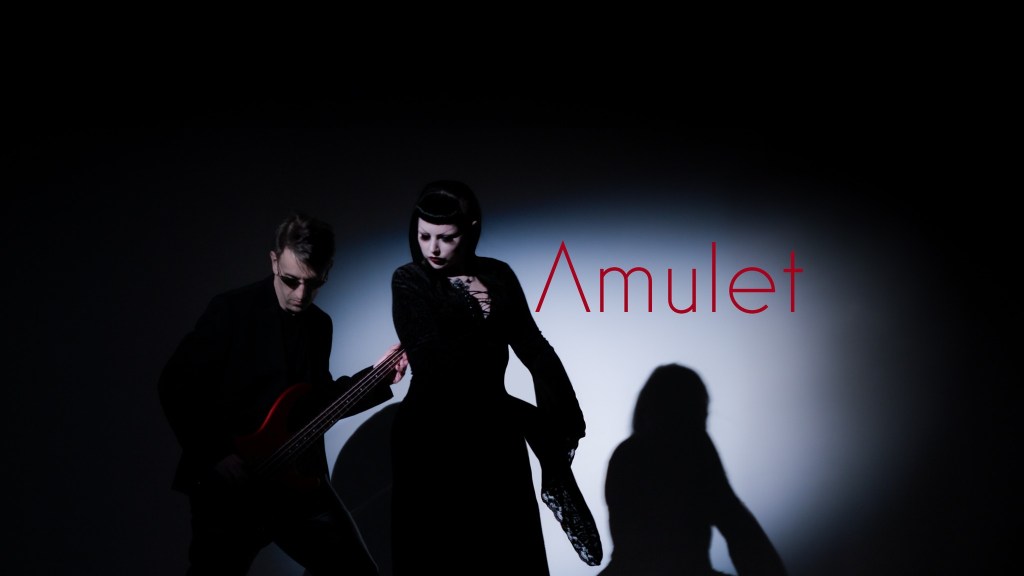
Washington DC is the town where you find gothic rock duo, Amulet. They released their debut album, The House Of BlackAndWhite in 2021 and it has a whopping sixteen tracks on it. Talk about getting more bang for your buck. Stephanie Stryker and MJ Phoenix have created an album full of quintessential inky gloom and a southern gothic feel that will warm the cockles of many a darkling’s black little heart. They remind me a lot of the wonderful Concrete Blonde with that heavy bass and ringing guitar, along with the laconic and unhurried drawl of the vocals, giving it the feel of a night out with Anne Rice’s vampires, in New Orleans, with the heady aroma of wisteria in the air. They have started to also collaborate with other acts and as a result we also have the amazing electronic remix of “Falling Down” by unitcode:machine which should be on high rotation on dance floors and sound systems. So we decided to open up a vein and ask Amulet a few questions which they kindly did between gigs.
Welcome Amulet to the darkside of Onyx.
Amulet is a fairly new project. How did it all come together?
MJ Phoenix: In October 2019, we wrapped a rehearsal with our old band that played a repertoire cover songs. I said I wanted to write a concept album of original music. So three of us from that group began to write songs. As we went through the writing and producing process, Stephanie and I felt it would be better to form our own group, independent of our third member, due to diverging musical styles. He agreed and Amulet was formed!
Stephanie Stryker: Most people say things and don’t do it, but a few months later during lockdown, tracks started appearing in my email from MJ. We spent over a year writing while he lived in Washington, DC and I lived Dallas, TX. Now I’ve returned to the DC area and we have formed a live band!
Are you both from a goth rock background with other previous bands?
SS: Nope, our previous band was a classic rock cover band, and MJ’s bands before that were a diverse mix between funk and rock jam bands. I am a goth/industrial head though, so it makes me very happy to make music that I like to listen to also!
Your debut album House of Black + White has a Southern blues style to it at times, that musically reminds me a lot of Concrete Blonde while at other times there is a post-punk vibe with the bass and percussion. What was the process in creating the album?
MJ: Almost all the tracks started with bass parts. When I write, I let the instrument feel its way to where it wants to go for that song. I also almost always start with bass lines written in minor keys. Once the bass line reveals itself, I play around with guitar parts to compliment. From there, I pass to Steph for vocals, sometimes with melodies and sometimes not. While I wrote most of the guitar parts on the album, many of the final guitar recordings were played by Stephanie’s brother John Taylor, a professional guitarist from Nashville, TN. Keys were added later by both John and I to round out the sound.
SS: This is the first recorded music I’ve done so the learning curve was steep! As MJ mentioned, he would mostly send me close-to-finished drafts and I would record demos for vocals in Logic. I would often write or contribute to the vocal melodies. Two of the songs on the album are written by me, Last Ditch and Witchfinder. With Last Ditch, I sang the whole thing a cappella and handed to MJ for music. With Witchfinder, I produced a musical skeleton along with lyrics and vocals which we both developed the final track from there. After our drafts were done, we hit the studio for many hours of vocal recording, mixing, and mastering!
Did it feel a little ambitious releasing a 16 track album asyour debut?
MJ: We actually had trouble stopping. We have many more tracks that could have been made but we had to stop somewhere. Clear Blue Sky was the last track. I wrote it quickly and it made itself very clear it needed to live on this album.
SS: As someone who was a teen in the 1990s, I fully expect albums to have at least 12 tracks (usually closer to 15) in order for me to consider it a full album. My favorite album of all time is Nine Inch Nails’ The Fragile, which is a double album. So, I really wanted to give people their money’s worth. These days, an album on Bandcamp is only $7 USD, so for 16 tracks, that’s a damn good deal I’d say! We actually have more tracks that could have made it on there, but we just needed to put a cap on it at some point.
Your music seems to touch some very personal subjects, so are you writing from experience or as an observer?
SS: MJ’s been dumped a lot of times, ha! I wrote my songs on this album from an observer’s perspective. This was my first foray into writing, so I didn’t dive as deep into my personal issues. Writing more and working with MJ has taught me a lot about using music to express that side of my life, as well. Expect more sad, emotional tracks from me in the future!
MJ: While there is plenty of my own life in the album topics, it is also an expression of general dissatisfaction and a comment on those experiences that most people go through. Though mainly about relationships, there are also a few tracks about dissatisfaction with the modern political climate, which again, I think most people can relate to.
You had other musicians play on the album with you and Amulet has been playing live shows, so do you play with backing tapes or do you have a live band to play with you?
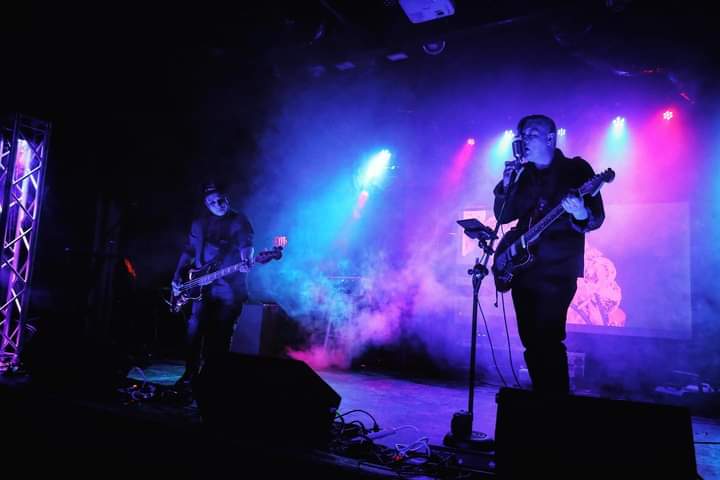
SS: We have a six-person live band now! They are not the same folks who played session work on our album, but local musicians from the Washington, DC area. We have MJ on bass, myself on lead vocal, Damian Himeros on lead guitar, Bob Carr on rhythm guitar and backing vocals, Alison Freyja on keyboard and backing vocals, and Thomas Grothe on drums.
How did you find trying to release an album during the pandemic and how has it changed the way you do business?
MJ: Not much to compare it to since this is our first album. Since so many people were stuck at home, there is probably more competition than there was. We’ve also had to take a little more time to go live due to the pandemic, but we’ve used that time to build the live band. The real challenge is breaking through the mass of music and other information on the internet and just getting the album into people’s ears.
Our formative music choices often colour our tastes, so in that vein, what acts did you listen to when you were younger?
MJ: I grew up in Liverpool, UK in the 1970s and 80s so I was greatly influenced of the counterculture music of the time. Sex Pistols, Bowie, Pink Floyd, Blondie, Led Zepplin, Gary Numan, punk, new wave, reggae, and funk (even played in a funk band).
SS: I was a suburban 90s mall goth, so I loved the dark alternative giants of the time: Nine Inch Nails, Manson, Skinny Puppy, Stabbing Westward, etc. Graduating high school, I fell in love with David Bowie, Sisters of Mercy, and The Cure, as well as EBM and industrial dance acts like VNV Nation, Apop, Icon of Coil, Covenant, etc.
Whom do you listen to now?
MJ: Amulet! I’m usually writing in my head.
SS: I still do have my old favorites on rotation. When I’m not listening to our music, it’s usually some harsh EBM or aggrotech acts like Alien Vampires, Suicide Commando, Nachtmar, etc. I am really obsessed with Faderhead’s new release Years of the Serpent right now.
What is in the future for Amulet?
MJ: A lot in store! We are building out our live show and beginning to gig regionally in our area. We are also working on two new album concepts: A sequencer and synth-based electronic direction for one (this may turn into a side project) and a more Amulet-style rock album. And who knows, we might write another dark lounge track (yes we did that! Secrets + Lies on Bandcamp). We are also currently working on a remix album for House of Black + White with other collaborators (so far, we are working with unitcode:machine, Red This Ever, and Grendel).
SS: All that, but we are also visual artists! We have several music videos coming up and we will be filming more soon. We also have a catalog of art photography that we’d like to showcase and make available to our fans. I am a graphic designer by day and have a degree in fashion design, so there are a lot of ways I can see expanding Amulet into a wide-reaching artistic endeavor beyond just music.
Check us out on Instagram and Facebook (@amulettheband), we are constantly posting our photography and often I will write poetry as well. Our website is amuletheband.com, we’d love to have you join our mailing list and follow us for updates! Thanks so much for reaching out to us.
Thank you for the music and we hope to hear more music from you soon!



 Onyx Music Reviews