Did you know that Geishas Of Doom (GOD) are a six piece punk band from the Netherlands? Me neither!! Punk has a happy little place in my heart, especially as it lent itself to the post-punk movement with its experimental stance and do it yourself ethos. May has the release of the album TheFirstFourTapes, which has a huge twenty four tracks, though in true punk form, most run under two minutes.
From the first track, ‘(Here Comes The) Snakestorm,” you get a taste for what this band is going for in sound. It is purposefully lo-fi in quality, giving it a raw edge that makes it feel like a live performance. The drums a loud and brash, getting a good workout every track, and pretty much, it is the guitars versus vocals that are the stars. However, you do occasionally catch the odd, possibly synth noise blip in the mix.
I think the track “Avoid The Fall” absolutely grabbed my attention with the classic post-punk guitar work in opposition to the screaming vocals, and it is a cracking song. Talking of cracks, there is the song “Crack” which is not about the drugs, but rather a split in the wall, which rather reminded me of the theme running through the Matt Smith era of Dr Who. Fans? “Pulse” is just another reason to really like these guys as it shows a different facet of their writing talent. So good.
You can hear a plethora of influences such as metal, prog rock, gothic rock, grunge, rockabilly and shoegaze, which makes the album a musical joy, as GeishasOfDoom fuse what makes them passionate, into a wonderful punk album with real soul. And honestly, who doesn’t like a band that sticks two fingers in the air and makes their initials GOD. Genius.
Paul Devine is a wordsmith, a musician, a composer, a scholar, a historian and at heart a humanitarian. The single “Leader of the Free World” (2024) has been born from the stark reality that Donald Trump might win the next North American election, even though he tried to usurp the White House in a coup in front of the whole world and equally is one of the most sexist and slimy humans in the public eye, that has absolutely no remorse for anything he does or says.
The thrumming bass and Devine’s snarled punk vocals, sneer at the propaganda of making America great again through guns, extreme Christianity and perversion of laws. He is the leader of the free world is the sing song chant, because in the end, it as all a joke. Angry guitars and booming drums highlight the truths of how backwards things have become as women have lost rights to their own bodies and racial tension overwhelming.
Not that I think this sounded wholly like TheClash, but I think JoeStrummer is probably sitting somewhere with a smile on his dial. “Leader of the Free World” takes no prisoners and tell no lies. This is a protest, taking a stand against a rising tide of misogyny and intolerance, in the hopes that history does not repeat itself, plus it is an ace song.
For those that remember the 80s, or are connoisseurs of goth/post-punk music of that period might be familiar with the band Siiiii, a UK band that sprung onto the scene from 83-86, with PaulDevine as the lead singer. Devine released his debut solo album called We Are The Compass Rose, the beginning of 2023 (you can read the MichelRowland review here —-> https://onyxmusicreviews.com/2023/02/26/paul-devine-we-are-the-compass-rose/) and in October, he dropped a second album, titled ADHD.
You know when the first instrument you hear is a deep, rolling bass, that you are in for something rather exciting, and so we are plunged into the punk affair that is “Leader ofthe Free World.” With the snarled vocals and grating guitar, it is a sneering two fingers in the air with contempt. “TheTardigradeSong” is dedicated to the micro animal who is also known as the moss piglet or water bear. One may ask what is so impressive about these creatures until you realise that they are near indestructible and in that light, the track conga lines, engaging with indifference of the humans, as the tardigrade will be here long after you are gone. The sawing guitars squeal and reverberate, collapsing into charming wistful chiming, over and over again in “RememberedVoices.” Everything is delicately layered into a powerful wall of noise with Devine’s poetic prose stirring the ghosts of yesteryears.
They say youth is wasted on the young, but also that time flies fast for a mortal soul and this feels true of “She Was Married in June,” a delicate track, with beautiful instrumentation with the air of an olde lament. The tragedy of a life so fleeting while the natural world continues without noticing the loss. “Dulle Griet” (Dull Gret) also known as Mad Meg, was a female of Flemish legend, who supposedly led an army of women into the Mouth of Hell to plunder. Peter Bruegel the Elder immortalised her in his painting of the same name, and there is debate as to whether the artwork depicts Meg as a shrew or a woman brave enough to face her own demons. And true to form, this track is a harsh descent into the madness that is the painting, portraying a lady who will broker a world created by men no more, stalking the Devil, before setting her intent on destroying God. RebeccaAntrim is responsible for the vocals of DulleGriet and they are wonderfully cutting, where you can feel in your bones her aggrievement.
There is a surreal presence in “Stillness,” a sinuous calm before the storm, the focus being between Devine’s vocals and the soaring guitar, foreboding and at odds with itself. I love the juxtaposition of punk music married to lyrics written in a much older form of English in “Mary’sAle.” Both bewitching and modern, using the English language as ornamentation and gilding the track in golden hues. The jauntily joyous feeling “One Skin for Another,” tinkles with guitar shoegaze swirls and couldn’t be much further in difference to “The Song of Just Because.” With its southern twang and Cool Hand Luke style vocals, you can imagine sitting on the open plains in twilight, though nothing is so simple. “O Happy Day” holds the promise of a 50s do-wop for the damned, and yet there is a sweet reminder that maybe, in the end, we should just enjoy the each day as it comes. The last track “Leaf” is an ephemeral piece, immersed in a classical fashion, a spoken word experimental tale that captures your imagination with its sorrowed sweetness.
For those wondering why the album is called ADHD, this is because the musician behind it all, is neurodivergent. PaulDevine recorded all these songs in one take, no practice runs with the other musicians, and it really is a tribute to the craftmanship of the tracks, as well as all the contributing talents. Each track feels fully formed and gloriously intricate, exploring the depths of Hell, the brevity of life, love and even celebrating the smallest creatures most people have no idea exist. ADHD is a plethora of styles held together with dark romanticism and is a modern classic.
Edward Butt and Liam O Callaghan are a pair of very busy Irish men from Cork, who you might know better as Arctic Lights. November 17th, was the drop date for their latest single “Melting,” which was produced, mixed and mastered by the guys. Told you they were busy.
From bongos, we are launched into aggressive sawing guitar and glitching electronics. The vocals are reminiscent of TrentReznor and the staccato style of the Nine Inch Nails track “PerfectDrug.” An air of instability is created by the slightly exaggerated guitar warbling between just becoming off key, while the vocals really just say it all with lyrics like, ‘I’m sick and tired of your crazy shit.’
When your mental health has hit rock bottom due to another person creating issues or unloading their own mental instabilities, is what “Melting” is all about. The walking on egg-shells because you are no longer able to predict what is going to happen next. You feel it in the music, as if ArcticLights are walking on that fine edge.
MattWebster is a man with the soul of a poet and storyteller, creating alternative rock with his Bradford based project, SigniaAlpha. With the latest album Entropy, he has been joined by PaulGray (TheDamned) on Rickenbacker bass guitar with other musicians making appearances on tracks. Harris (Chaing, Grim, Nowt, Zed), Is one of these, who has co-written and sings on six of the tracks. To quote the release ‘Guitarist WulfIngham lends his psychedelic solos to a couple of tracks’ and ‘jazz saxophonist KeithJafrate and flautist ChrisWalsh sprinkle their melodic flourishes over several songs.’ I say flourish away!
Punk meets PinkFloyd is how one might sum up the track “Such A Shame,” with its pogoing rhythm married to bewitching guitar work. Simon ‘Nogsy‘ Nolan (SpyBand, Zed) sings on and co-wrote “On Diego Garcia,” a commentary on the disputed Island which is currently owned by the British, with a US Naval base present, while all the previous inhabitants were forced to leave. This was found to be illegal by The Hague, but was ignored by the UK and “On Diego Garcia” is a protest song about the injustices.
“A New Dawn” has a undercurrent dirge like the ocean water pulling and pushing at boats, a alluring sadness, perhaps the subject matter within the lyrics are looking for safety, only to be faced with another shoreline to leave and more dangers ahead. The bass is sublime in “Hourglass,” which goes through a gamut of emotions such as loss, longing and sadness, for as we get older, we realise the fragility of all. This is reflected by the music ranging from introspective to a guitar filled rage. Those flute flourishes can be heard in the “The Price Of Admission,” in conjunction with a more thoughtful sound that echoes with a life maybe less lived or rather, perhaps, limited in their choices.
The paisley park feel to the music is in stark contrast to the bleak words in the single “Feels Like Rain,” and that bleak story telling, which only those who have lived it or watched it first hand, can be experienced in the next track, “Building Castles In Spain.” MathewSeamarks (DisciplesofSpess) is the vocalist and co-wrote with Webster, with its endearing dreamer quality and the beautiful jangly guitar backing up those vocals. The airiness of the flute and saxophone, wants to fly you away but the vocals of Harris weigh you down in the knowledge that life is “Waiting.” Waiting for the end and the inevitable. I have to say that “The Atmosphere” caught me by surprise with harkening back to DavidBowie yet having that XTC musical sensibility. It is a simply a post-punk gem, while the last track, “Kaleidoscope Wheels” is a psychedelic trip with a hurdy gurdy of circling sounds and voices, melding into a maelstrom, destined to collapse.
Hard to pick a favourite out of this lot as everything is just class, but for me, probably, “TheAtmosphere” definitely transports me back to another place. The attitude throughout is very much a punk one, pointing towards what is wrong with the world, but not the anger of young men. Rather, we are seeing these issues through the eyes of the world weary, knowing that life is precious and telling you the stories that deserve to be heard. The musicianship is grand and you really couldn’t ask for a better bunch contributing. Entropy is the measurements of thermodynamics, and the energy given by SigniaAlpha is nothing short of pure musical wizardry.
ESA (ElectronicSubstanceAbuse) met MoaanExis while playing a show in Prague in the beginning of 2020, just before Covid-19 shut down the world. Out on NegativeGainProductions, “Spit/Spite” is the end result of the UK’s JamieBlacker (ESA) and France’s MathieuCaudron (MoaanExis), going head to head in a battle of the industrial power noise versus industrial punk. The plague has come and kind of gone, but now we have been hit with a much better outbreak in the form of this split single.
“Spit” does not let up with the energy, pushing you higher and further with an intoxicating mixture of scintillating synths, techno styled rhythms that max out the bass and duelling vocals. Even in all of this, I hear hints of a Middle Eastern flavour to the music creeping through.
Yeah, from the beginning of “Spite,” you are already left a veritable shell of a human, drooling over the abrasive rhythms that pound into your chest. The two vocalists taking turns in eviscerating your ears to the pounding beats and off kilter electronics, setting your teeth on edge. Magic.
Who was the winner in this battle royale? The answer is easy…us the listeners. Both tracks are fucking awesome. Crunchy textures, beats to rupture organs, and enough angst to wet the panties of any self-respecting industrial noise purveyor. ESA Vs Moaan Exis have me just me wanting more.
We Are the Compass Rose is the first solo album from Paul Devine: undoubtedly best-known as the frontman and driving force behind 1980s Sheffield UK post-punk / early goth outfit Siiiii. The band formed when Devine was just 19, and were initially active from 1983-1986. Equally notable, then, is the fact that Devine’s solo debut comes forty years this year since he first formed Siiiii.
For English speakers, Siiiii would be more correctly pronounced “See” (not “Sigh”), taking their name from a passage in William S. Burroughs’ The Soft Machine, in which a Spanish-speaking man enjoys being rogered in a public toilet so much that he exclaims, “Siiiii!”. The band themselves, however, have always happily gone along with either pronunciation, thus becoming better known as “Sigh”.
Siiiii
In their heyday, Siiiii shared stages with The Psychedelic Furs, The Chameleons, and Artery; shared members with Pulp (guitarist and drummer Wayne Furniss); and appeared on compilations alongside The Birthday Party and Public Image Ltd. After first quitting the band in ’86, Devine also played with The Niceville Tampa (later simply Niceville), and in 1989 moved to South Wales, where he played for a few years with DVO.
Siiiii reformed again from 2005-2014, even playing as far afield as New York in 2006, having been “rediscovered” by global audiences, who first heard about them through the diligent efforts of goth / post-punk historian Mick Mercer. But during both incarnations of Siiiii, Devine struggled more than most with the pressures of public attention and performing live, later learning with professional help in 2019 that he was experiencing ADHD, Bipolar Disorder, and Tourette’s Syndrome. More recently, Devine has instead been making a name for himself as an author, publishing four (count them) – four fucking novels since 2020.
We Are the Compass Rose is in many ways a far cry from the jagged and spiky post-punk of Siiiii, albeit peppered throughout with elements that will make perfect sense to fans of that era. Eclectic in nature, We Are the Compass Rose focuses more on the weird and wonderful aspects of dark and gloomy music, from pastoral Avant-folk, to spoken word set against minimalist sound collages, and indeed elements of those earlier post-punk roots. A sensible writer might recommend the best parts of this album to fans of early Bowie (c.1968-71), Current 93, Syd Barret-era Floyd, Coil, classic Bad Seeds or solo Mick Harvey, or The Legendary Pink Dots.
‘Come Unto Me’ is a sort of droning gothic plaintive chant set against sparse psychedelia; blurring the lines between sacred and secular ecstasies. ‘Hearse Song’ is an adaptation of a traditional song, also known as ‘The Worms Crawl In’, commencing with the cautionary line, “Don’t ever laugh as a hearse goes by”. Popular during the period of the First World War, fragments of the lyrics are found as far back as The Monk by Matthew Lewis from 1796, often hailed as the first gothic novel. Devine’s rendition is the rattling bones of an acoustic Bad Seeds outtake; a rickety horse-drawn undertaker’s carriage making a frenzied, spiralling descent into madness; the wooden wheels about to fly off at any moment, while layers of nefarious character voices assail the ears like a swarm of muttering, fluttering bats. ‘The Mill’ could be The Smiths at their most maudlin, and is among the most obvious and accessible conventional ‘song’ forms on display up to this point.
‘Seeing’, which contains the titular line “We are the Compass Rose”, is a striking highlight. Devine’s oratory style here is both masterful and hypnotic, a soothing rumble in one’s ear (albeit with suitably theatrical dynamic to remain engaging throughout), while the prose recited comes from the segue between books 1 and 2 of his most recent novel, Gerda’s Tower. The disquieting motifs of a muted, organ-like tone drift in and out of earshot, barely accompanied by a ride cymbal and incidental percussion. It may also serve, perhaps more by accident than by design, to remind some of us that we have been sleeping on Devine’s literary talent for a little too long.
‘One Skin for Another’ heads back into heavily Smiths-inspired territory, and feels perhaps a little superfluous in context, albeit fairly well done. ‘For the Love of ParkusMann’ is a tender ballad, with a sense of uplifting and transcendence from sadness, which suddenly turns all spacey, awash with flanger effects and sweeping filters, a-la Donovan. ‘Jherome’ is closer to the angular post-punk of Siiiii, whereas the recording and production sounds more like a band of performing flies in a shoebox, recorded by a solitary contact mic.
‘Your Spell’ is a short but satisfying love song: very pretty acoustic guitar arpeggios and tender vocals, accompanied by washes of synth-strings. It ends leaving you hanging on wistfully for more, but that’s also what makes it so perfectly complete. ‘Lassie’ uses the old standard ‘Dream a Little Dream of Me’ as its intro, blending seamlessly into a swampy-blues-meets-post-punk singalong-dirge, led by intertwining Howard & Harvey Birthday Party-style guitars and Fall-ish vocals. It suffers a little from some of the same recording and production issues common to most “band” (guitar, bass, and drums)-based songs on the album, but is otherwise quite enjoyable.
‘The Mermaid Song’ is another standout: a song describing an unknowable song. It calls you in to the idea of a mesmerising siren song that will lead you down into the deep, without you ever having actually heard that song, which ultimately led the protagonist to his own doom. Devine is in fine voice here, smooth and lulling, with intriguing acoustic guitars and lovely string arrangements behind him.
PAUL DEVINE 1984
‘Every Day is One Day Closer to the Grave’ is both an obvious truism (which the album is littered with), and a better example of a “band” sound than any other on the album. The sound is bigger and fuller, while vocally, Devine shares some similarities here with the late Terry Hall. There is backing from at least one of many credited female backing vocalists, and the whole thing collapses into some kind of astral dispersion of its core elements, ultimately becoming stardust.
‘I Am What I Am’ is the old Broadway musical number: starting with atmospheric piano and intimate voice, before moving into a more vaudeville-meets-English music hall rendition. It quickly moves from there to a stupidly overblown cabaret showband arrangement, complete with elaborately nonsensical brass and strings, and works perfectly as a conclusion to the album, insomuch as the Sid Vicious rendition of ‘My Way’ serves as an entirely appropriate conclusion to the Sex Pistols.
All this from a man who would happily show you his arse and bollocks of a late evening, if only Facebook would allow it, while a long-suffering person named Linzi shakes their head in dismay. We Are the Compass Rose from Paul Devine is a very good album, from a very important artist. The album would probably be even better with less than a handful of songs omitted. Devine showcases here how diverse and eclectic his vocal talents are, ranging from droning choral gloom, to weird and wonderful character voices, through to brilliantly smooth lead baritones in a goth, new-wave, or post-punk style, and engagingly theatrical spoken-word oration. Finding his own voice in amongst all of this is occasionally a challenge, with some songs jumping back and forth stylistically between The Smiths and the Bad Seeds/Birthday Party. But the vast majority of the album, and certainly its strongest moments, don’t rely upon those tropes at all. Musically, conceptually, and creatively diverse, there is real art in what Devine is doing all these years since he first began with Siiiii, and one can only look forward to a second album with an identity entirely its own.
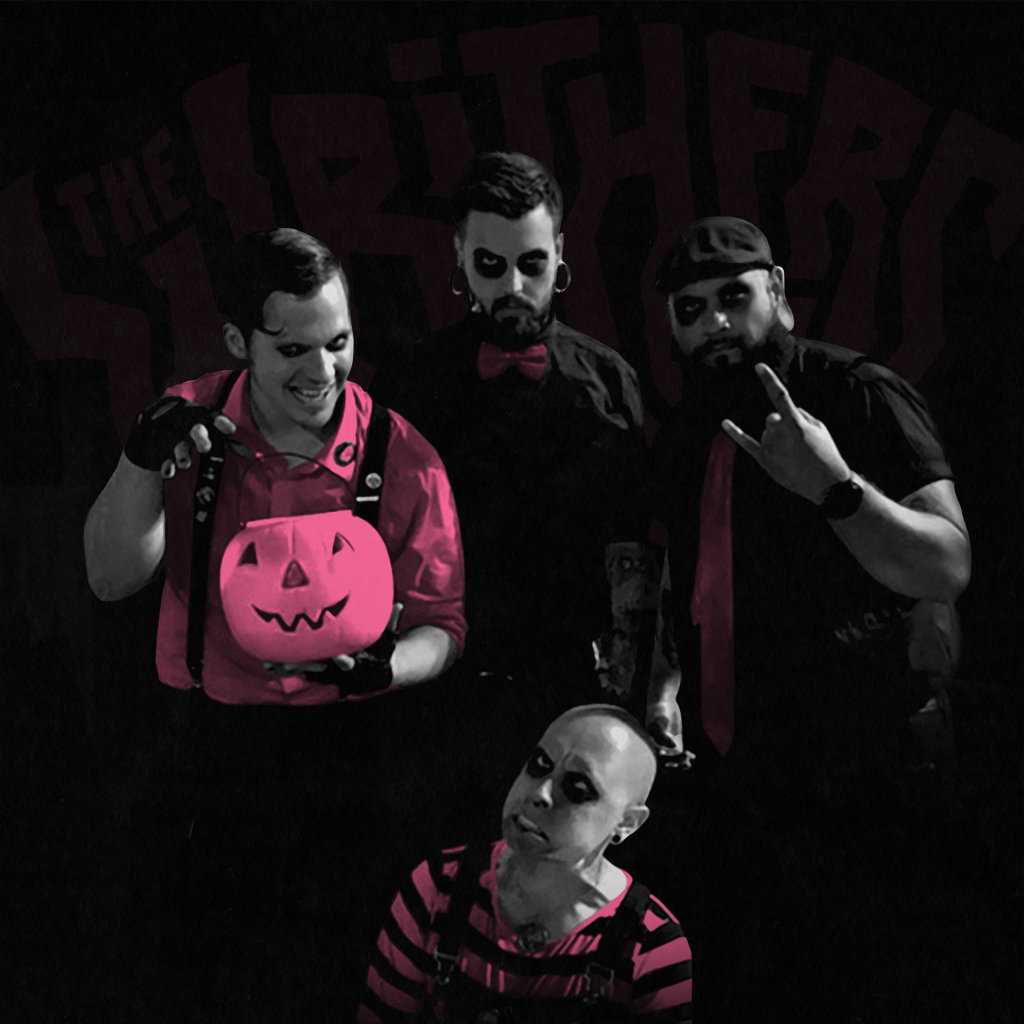
Californian foursome, The Writhers, are no dummies when it comes mosh pits. So the psychobilly, horror punks have written an ode to the church of the mosh pit and those that do not participate in the joyful flailing aptly called “Pit Dunce“. Now there maybe or maybe not wild accordion within, so hold onto your bobby socks, it could be a wild ride.
The soulful doo wop and harmonies take you back to 1950s America when bands such as the Del-Vikings were creating waves…. but somehow, you just know this isn’t going to last. Abandon all hope now, as we are flung into the abyss, as the band kicks in. Crashing guitar, rumbling bass, and thunderous drums are only rivalled by the enthusiastic vocals chastising the pit dunce, whom has flaunted moshing etiquette and not joined the motley dance by submitting their body to the tumultuous hordes.
This is just so much fun. The energy and passion is real, confirming the horror punk genre is very strong currently. There was a sneaky accordion in the intro…. we have been marked safe for now however. Don’t be the “Pit Dunce” and throw yourself into the fray with TheWrithers.
Always exciting to see a band releasing their debut single and hearing their style. Based in Atlanta, Georgia, is the darkwave duo Now After Nothing, with the single “Sick Fix“, out on the 27th of January. Vocalist Matt Spatial and drummer Michael Allen are Now After Nothing and they are joined by the guitar virtuoso, MarkGemini Thwaite (MGT). Just as impressively is the having the mixing done by Carl Glanville, who has worked with U2 and Joan Jett, and the mastering by John Davis, with names like Placebo, Jesus & Mary Chain and Suede under his belt.
A deluge of guitar and bass hits your ears, both raucous and refined at the same time. It is a punk like fevour that grips and further enforced with the vocals from Spatial, MGT’s guitar work and the synths moving together in a sinuous dance, fluid and whirling in a controlled tempest, while Allen gives us the drumbeats that keep this thunderous rhythm gracing our ears.
I was at one of the lowest points of my life and without a musical outlet. I was damaged, defeated, and deflated. One day in New York City, riding through Central Park with earbuds in place, I rediscovered a band that didn’t initially resonate with me. Hearing them this time was different though – I felt the spark. That emotionalconnection to a newly-discovered piece of music was the proverbial kick-in-the-ass I needed to ‘crawl out of cracks below.’ When I arrived home, I dusted of my studio gear and opened up files of previously unfinished song ideas, one of which was a rather bare recording of just a single bass line. It caught my ear and by the day’s end, Sick Fix was complete from start to finish. Listening back to it, I felt alive again. I felt the same spark I had felt that day in Central Park that inspired me and reminded me I had more music inside of me. I wasn’t going to let myself wither away. Though the band name came later, Now After Nothing was really born on that day, which is why Sick Fix undoubtedly needed to be our first single.”- Matt Spatial
So, there is great energy in this track and yes there is definitely a hat firmly tipped towards the old school post-punk such as Bauhaus, but I also hear strains of Alien Sex Fiend and Virgin Prunes in that maelstrom. Yes, originally I believed these guys were actually British going on sound alone, with their wonderful synergy and enthusiasm but don’t think you are getting some old rehash. “Sick Fix” is a wonderfully modern track and I am eager to see what Now After Nothing bring to the table next.
Based in the US is the alt band High HorseCavalry, creating their own blend of post-punk madness. Their debut, self titled album features Kalvin Oudou (vocals), Ron Hayden (guitars), Christian Johnston (bass) and Mark Fleagle (drums).
The band is somewhat inspired by KillingJoke, and honestly KJ are a bench mark band for many in the alternative music industry, melding post-punk finesse with heavier industrial tones and Coleman’s vocals that can be like that of possessed, screaming madman in his pulpit. The track, “Cult OfCongregation” most certainly runs in this vein.
There are also more than just hints of punk influence, such as the tracks “Wounds Of Separation” and “Spy Song” or driving mid west heavy rock crossed with the Sex Pistols in “LastLullaby“.
The vocals are unapologetically guttural, while the guitars churn and grind, pushing ever forward. I can say I hear the darker side of grunge in High Horse Cavalry. A nod to such bands like The Melvins, whom consistently deliver bone bruising riffs with consistent enthusiasm, not to mention lack of regard for playing by the rules. The album came across, in a way, more punk, especially in attitude. So son, get off on your High Horse Cavalry.





 Onyx Music Reviews