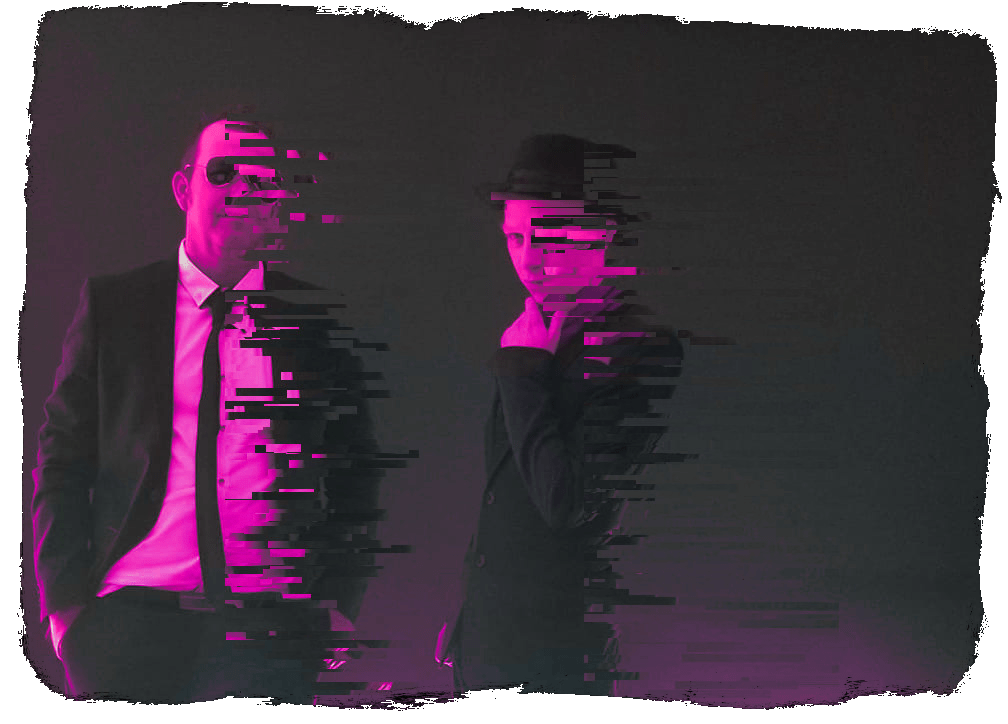
John R Mirland has become one of the staple masters of driving, power noise, rhythmic noise mixed with serious techno savvy. We are grateful he took time out to talk to us about the latest Mirland album and all his creative outlets.

Welcome to the weird of Onyx, John R Mirland.

Thank you so very much for showing an interest in my music

Congratulations on Compromise Is Defeat (CID). It is truly a very attention grabbing album. How naturally does it come to you to mix such genres as techno, power noise and harsh noise?

It does come pretty natural the moment I start working on the beat I can immediately hear if this is going in the Mirland-direction or if it’s the groundwork for another project or artist.

I try to be in the studio as much as I can and just work. I’m very focused so I sit down with the keyboard or guitar and just start composing and usually I almost immediately know what the track is suited for:

The hybrid of rhythmic noise and techno/dark trance is a reflection of my own tastes and I wanted to compose evolving yet pounding music. So I’m very conscious about the variations and small details in the mix. The process is very much my own and I’m not particularly dogmatic with regards to what goes where to satisfy genre specific demands.

John, you wrote the album over a period of time and even some of the tracks have been played live. Why did it take nearly four years for CID to come into fruition?

I started working on the album just after the release of the “Antagonist” ep where I felt I’d really hit a spot with my sound. But you know plans sometimes don’t work out.

The gigs I played both around that time and later gave me an opportunity for testing very early demos of some of the new tracks. But at the same time I was composing and producing for Am Tierpark, Emergency Sequence, M73, Negant, Eisenwolf, Bitter Distrust, Mirland/Larsen and later also Gusten and Udpint while producing and remixing other artists too.

I do like to keep busy and have composed around 200 tracks the last 10-15 years of which I believe around 150 or so have been released.

But time went on and I kept working on the side with the sound design for what was to be “Compromise Is Defeat”. I guess at some point I had 30 or 40 demo tracks.

I prefer getting stuff done so I really needed to get this album done. I felt the demo recordings had something but I’d been deep in the process for far too long. So in the late summer of 2021 I finally sat down and dug into the selection and production of what would be “Compromise Is Defeat”. I recorded and mixed the final album over two months and then my dear friend Claus Larsen (Leæther Strip) did the mastering as he’s done for a lot of my releases.

For many, creating music comes from their current situation/politics/beliefs. When you compose music, especially for Mirland, what inspires you to create?

I don’t consciously search for inspiration. My mind is always racing and thinking about new ideas so I keep a lot of notes and record a lot of ideas. When I watch a movie I often make a note of certain interesting quotes or phrases. I believe some of my titles might suggest what lies behind the track but Iike to keep things open for interpretation. I think that’s one of the great things about instrumental music. It’s very much like abstract painting in that regard.

But a small key to the different projects might be: Mirland is often related to space, transhumanism and futurism. In Am Tierpark, Mirland/Larsen and Gusten Claus Larsen writes the lyrics so he defines the content and we never interfere with each other’s ideas. But very often Am Tierpark is about love/the loss of love. In Udpint I write almost entirely about war and in M73 it’s a lot about cold futures and dark erotica. My own lyrics are often written with the intent to create images.

One of your other projects is Eisenwolf… a mix of blackmetal and industrial. Do you think your love of black metal feeds into this use of harsh noise?

Eisenwolf was a side project of the now defunct Negant which also spawned the electro punk band Bitter Distrust with Michael Hillerup of Birmingham 6. I left all three bands a year ago actually.

But yes, I believe my interest in extreme metal in general blends into a lot of my darker stuff. I actually recorded a black metal mini album last year as Udpint and Claus and I released a punk rock album as Gusten.

But my use of noise and experimental sounds also stems from a very early band I was part of called VHS which was a pretty noisy and weird construction. And I’m a sucker for brutal energy whether it’s industrial or metal. But even Eisenwolf had melodic themes as opposed to just a wall of noise.

Mirland is very much a solo thing for you but you do collaborate with many other artists, especially other Danes in the scene for other projects? How do you approach your solo work compared to your collabrotative with say Negant or Eisenwolf?

I try to uncover the potential in any proposed collaboration and then present a few demo recordings for the others involved with the project. When I can’t see any more potential I put the collaboration on hiatus or leave. I don’t like to waste my own or others’ time.

When I work on my own it’s somewhat the same and I’m a firm believer that nothing is supposed to last forever and some projects only last an ep or album. And that’s absolutely fine. I have no problem with leaving a dysfunctional project.

You released on Claus Larsen’s label, Læbel and you have worked with him as Mirland/Larsen as well as producing and mixing each others music. Leæther Strip/Larsen is spoken in near reverance by many in the industrial scene, though those that know him say he is the biggest sweetheart. Did you find it nerve wracking to work with Claus in the beginning and have you found that friendship has grown exponentially, forging something a bit special?

Claus is a very close and dear friend and I consider him family.

When we work together it’s like we have a direct brain-to-brain connection and we’ve never argued even if we may not agree on everything. I’ve learned a ton from Claus. And we’re equally productive and creatively restless.

Which aspect of music making do you think you enjoy the most? As the performer, the producer or the mix master? Or is it a bit of everything that keeps the flame alive?

I love composing and producing and I’m not particularly interested in being a face or a character. I enjoy the stage not for the sake of being the center of attention but for presenting and interpreting my music in a different, loud setting and watching people’s response.

Who were the early musical inspirations that set your pulse running and made you think ‘I want to do that!’?

A: Hmm, that’s a tough one. I’d like to say something cool and leftfield but actually I grew up with a very broad range of music from Pink Floyd to southern blues to classical, constantly playing at my parents apartment. So I’ve always been surrounded by music and I can’t remember a time not wanting to work with music but for many years my main focus was on painting and illustration.

What acts do you listen to now or find their innovation sucks you into their music?

Currently I’m working my way through a big stack of obscure metal releases on vinyl. But I’m also listening to a lot of newer electronic releases. I like the distanced coldness of Julia Bondar and Rue Oberkampf and the energetic techno of Anastacia Kristensen. I enjoy listening to my friend Kri Samadhi who’s a great psytrance producer. Italo Connection’s “Metropolis” album is an extremely well executed album and possibly one of the best synth pop albums in years. And the funky neo disco of Alexander Robotnick always put a smile on my face.

And then I keep coming back to an old release by a short lived doom/black outfit called Woods of Belial. It has this dark, gritty lo-fi sound that I’d never be able to do myself.

What is in store for John Mirland and all his many, many projects?

A: First of I’ll be playing in Copenhagen on March 5th as a double bill with Leæther Strip. It’s been so long! And then I’m currently working on the follow up to “Compromise Is Defeat” which I hope will be out this year. Working title is “Bastard”. There’s a new album from Am Tierpark out this spring which I believe to be the best we’ve done so far and an Italo disco single I wrote for a Danish singer. I’m also working on a new and so far secret space disco project. And maybe something from Gusten too.

Thank you ever so much for taking the time to talk to us!

Thank you!!

David Lawrie is The Royal Ritual, an Englishman living in the U.S., taught music from a young age, now involved in the goth/industrial scenes as a composer and producer. He kindly spoke to us about his project, the new album, film making and what inspires him.

Welcome David Lawrie to the darkside of the rabbit hole that is Onyx. The Royal Ritual is a new project for you. What inspired you to go on this solo journey?
The last time I had performed in an industrial outfit was with my friend Chris Coreline in 2008-2009 – when we played a string of shows, starting with the inFest Festival of 2008. It was so much fun. Since that point I have been mainly writing for documentaries, doing audio post production for film, and producing EPs/albums for various independent artists under my birth name. 

Fast forward to Coldwaves 2018, where I was in the audience with Dustin Schultz who, the night before, had performed with ohGr. It made me remember how much I wanted to get back into the fold. I mentioned this to Dustin, and we started working together in 2019. With the pandemic looming, it became more of a solo project in early 2020. Ultimately Dustin contributed significantly to two songs on the debut album, but without the initial collaboration with him, I don’t think I would have pushed forwards with the project.

As the lockdown clamped down harder on us all, I continued to work on the album. The name “The Royal Ritual” came to me on a cross country road-trip, in December 2020.

I would like to talk about the two singles you have so far released. “Pews In a Pandemic” is an observation of how commercial religion can be both controlling and coersive of their flocks, then married with the music that is harsher in sound.  Can you say what roused you to write this and influenced the choice in sound?
Firstly I don’t want to be insulting with anything I write. Whilst it is probably very obvious that I am fundamentally anti religion, I do not hold hostility towards the majority of religious people. It is no secret that I am atheist (and as close to “a-deist” as can be), but I also understand that a belief in a higher power brings comfort to a great many people, and I wouldn’t want to take the comfort of belief away from so many. 

Where this breaks down, at least for me, is in the boldness of a select “holy” few who not only claim that they have a direct communication with a deity, but they can disseminate a deistic message to a congregation – a move that, to me, is a parallel with divine dictatorship.

In the decade I have spent in America, I have really seen how bizarre things can become when religion makes good business, and the social fallout from that is a topic of great inspiration in my writing.
As for the overall sound, this was not the first song I wrote for the album, and as such, it was arranged to fit in with the already fairly solid palette of the other songs that had been written.

“Empires” is the second single and a comment that many English hark back to the ‘good old days’ when the British had a huge colonial empire which was at it’s peak during the Victorian era, with the British Raj in India, the jewel in the crown. Your song writing takes on a more classical quality and evocative of something exotic, maybe even forbidden, referring to the the line ‘when I was a little girl and you were a little boy’. How did this piece come about?
I do hope that the irony and sarcasm in this song is obvious. I also hope that my exclusion of Scotland, Wales, and Northern Ireland in the proclamation of “England” and not “Britain” is not dismissed as ignorance on my part.

I wouldn’t want it to be said that I am not proud to be English, because I do love the country. Whilst its history is turbulent, it is a history from which there are many lessons to be learned. I genuinely hope that as we move forward, these lessons will inform positive change.

Me being the “little girl” in this scenario harks back to mockery in the playground, where physical weakness and displays of emotion were “girlish” traits, whereas physical strength and the “stiff  upper lip” were “boyish” traits. I’m very glad we are gradually evolving past this nonsense.

The video for “Empires” is simple and yet beautifully directed by HARUKO. How was the experience making this video?
I try to separate out my different creative outlets, and HARUKO is my visual artwork pseudonym. I have been fascinated by filmmaking for many years, and in 2013, purely out of necessity, I made my first videos with just me, a camera, and some lights for the music released under my birth name. I learned a great deal very quickly, and since then I have continued to add to my equipment and skillset. That enabled me to do the first two videos for The Royal Ritual completely isolated from other people (I had some help carrying lights deep into the forest for my cover of Phildel’s “Glide Dog”).

For “Empires” I wanted to work with actors to tell a story, and I knew that I needed to put the cinematography in the hands of my good friend, and long-standing filmmaker colleague, David Diley of Scarlet View Media. He and I have worked on films for many years, with me taking care of audio post production in many of his projects. His expertise, along with his knowledge of my general vision, meant that I could focus on the direction and project management of the “Empires” video – trusting that it was being captured to a very high standard.
I have directed videos for other artists in the past, but this was the first time using actors. A full production, if you will. I am very proud of the outcome!

As an Englishman in the U.S., do you think being away from the U.K. gives you more perspective and also a different view while in the States? Kind of a stranger in two worlds so to speak.
I have always felt like an outsider, so I am used to that feeling of being a “stranger” – I think most people who work in the arts probably feel it too!

What I have found about splitting my time between the two countries is that it has opened my eyes to layers of odd logic on both sides of the pond, and it has also left me much more humble and less opinionated about subjects on which I am not well versed, as well as being more interested in learning.

Whilst I know that my transatlantic travel leaves a large carbon footprint (which I try to offset with the food I eat, minimising the waste I create etc.), I do feel that travel is key to us all understanding each other. Until you see the “other side” for yourself, you never really know how it compares to your own situation – and I think that being able to compare makes you not only more grateful for what you do have, but also more compassionate towards other people in worse positions. Experience, not hearsay, is key to progress.

You are a sound engineer and  you do musical scores for documentaries etc. Could you tell us about these and how it has influenced how you have approached creating music with Royal Ritual?
Working in audio post production/sound design for film came about almost accidentally, even though in hindsight it makes perfect sense. Using found sounds as percussive (and even melodic) elements of my music has been something I have done since studying my Bachelor’s and Master’s degrees. Field recording is one of my favourite pastimes.

When David Diley asked me to work on the audio for his film “Of Shark And Man” in 2012 (the film was released a few years later), it was a really exciting challenge. He told me that the main character of the film was not the sharks, nor the interviewees, but rather the water itself. Creating an almost musical sound for the water was a very rewarding exploration – almost the reverse of what I had been doing to create elements of my own music.

David Diley also asked me to compose the opening theme for the film, which helped me to develop my own way of mapping out a piece of music to visual cues.
With regards to The Royal Ritual, every single song was written with a very strong visual in mind, using techniques I have developed in both my musical and audio post production worlds. 

What can we expect from the full length album MARTYRS?
“Pews In A Pandemic” and “Empires” paint the musical extremes for the album. There is a lot of darkness, but also (I hope) a lot of light in there. As much as I focused on creating sound design elements for the musical side of things, I also spent a long time working on the lyrics – something I hope translates and resonates well with people. Words have always been important to me, so I made sure to take my time with the words on the album.

As I mentioned before, the album has something of a sonic “palette,” so whilst the songs have a lot of variety in their songwriting, I think their arrangements are tied together by a general “sound” (for want of a better term).

I am so glad that the singles seem to have been well received so far, but I feel like they make more sense in context with the rest of the album. I pieced it together with two sides of a record in mind, and I am very much looking forward to holding and spinning the vinyl myself!

What music first set your soul on fire when you were young and who do you enjoy or still fans that fire?
That question is always going to open Pandora’s Box, as far as I’m concerned, so I will try to keep it short.

The influences that jump to mind right now are Erik Satie, Pink Floyd, Arvo Pärt, Tool, Henryk Gorecki, Aphex Twin, Philip Glass, Björk, David Sylvian, Nine Inch Nails, Tears For Fears, Nitin Sawhney (and I could go on and on…)

The most perfect piece of music to me, however, is “High Hopes” by Pink Floyd. There is a long story behind that choice, but I am certain that it was that song which served as the catalyst for me truly wondering about how modern music was put together.

Thank you for your time and we can’t wait for the album MARTYRS.
It has been a pleasure – thank you!

https://theroyalritual.bandcamp.com/

The Royal Ritual | Facebook

If you drive west of Brisbane, through the beautiful countryside, you can reach Mount Nebo on the land of the indigenous Jinibara people. This is also the home of Ghostwoods, a new project by musician James Lees. Lees is better known in the scene for the more rock’n’roll style bands he drums with but he has found this didn’t quite feed his soul.

“During lockdown last year, I lost most of my work, so I had a lot of time and was pretty much isolated here at
my place in Mt Nebo so the seclusion and influence of the environment throughout the winter was really
strong. I had made a start on the project prior to this, but the lockdown made me turn back to the music for
solace. Another element of the project is for me to do some music with my partner Karl who plays bass and
some acoustic guitar – he also loves playing super-dark spooky music, so he agreed to this pretty readily!”
– James Lees

JAMES LEES – GHOSTWOODS

There is the magical tinkling of chimes that heralds the dark tones of the slow, deep piano and cymbal that is “Dark Moon“. It might be a flute that mournfully cries like a storm bird in the night. Soon joined by an electric guitar that languidly plays as if it is somewhere on a grim bayou. Anticipation fills the air and dissipates again with chimes like the frost in the heat of a new day. There is something austere and aloof about “Spiral Up” and yet a sadness pervades throughout, until the saxophone invades to bring a sense of longing. All the while the synths swirl of pulsate beneath, a creature wanting to escape. The recording of parrots crying out at the beginning and end of the Panoptique Electrical remix of “Dark Moon” is so utterly Australian. The mix by Jason Sweeney, is such a powerful noise inspired soundscape that almost is on the edge of becoming overwhelming and yet does not. You could swear it was trying to consume the light and air around it as it becomes a vortex, circling. Final track is “Spiral Down” and this is a much more electronic in feel than “Spiral Up“, however oddly the flute in the back ground gives it an unearthly feel in combination. The morose tones of the blues sax in juxtaposition with the ground swell of electronic noise .

Though this is James Lees’ project where he played piano/synths/drums/percussion, he fortunate enough to collaborated with Mark Angel on electric guitars, Karl O’Shea on bass guitar/ acoustic guitar and who is also in the band Daylight Ghosts, as well as Andrew Saragossi playing flute/clarinet/saxophone. These are very emotive pieces created in a time of uncertainty, in a remote and timeless landscape and a lot of that seeps into music.The Ghostwoods are mysterious and once you go in, you might not come out the same way…….

https://ghostwoodsau.bandcamp.com/album/dark-moon

Ghostwoods | Facebook

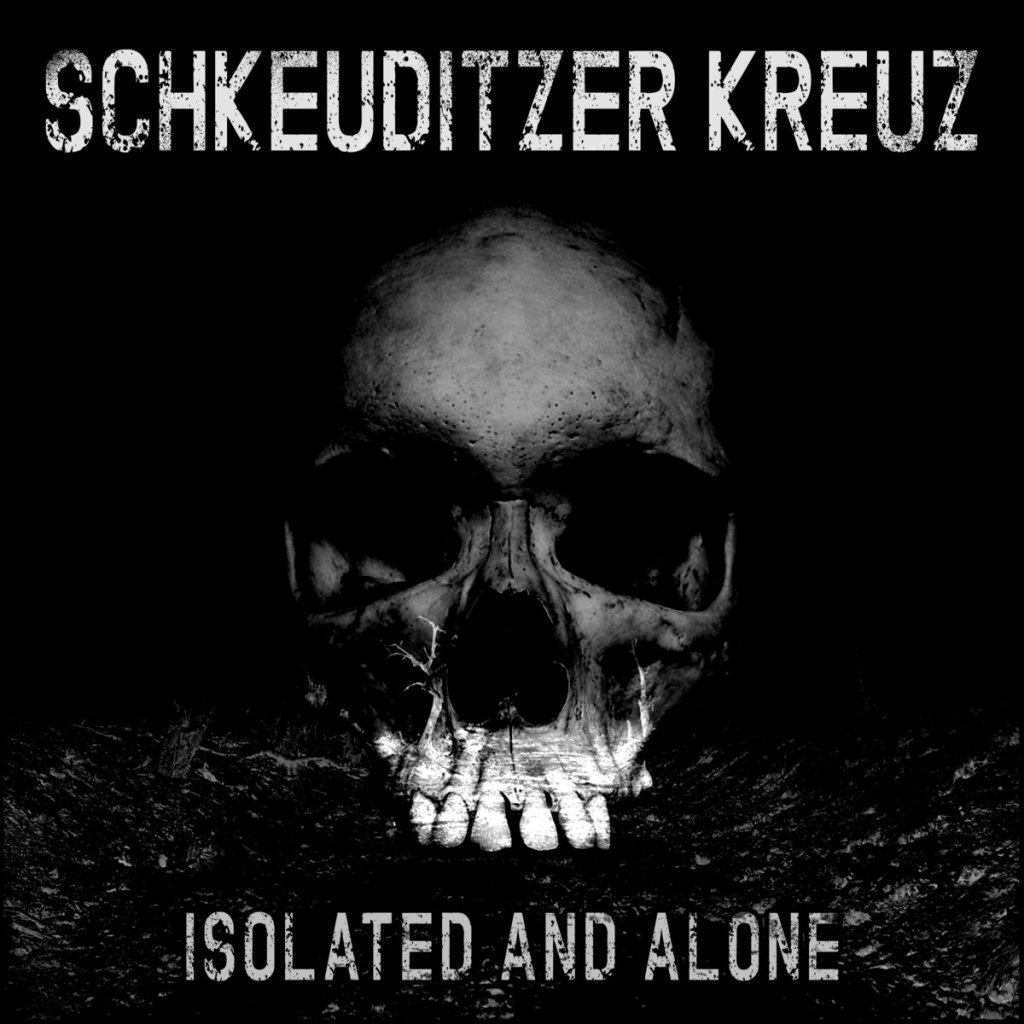
Recently we reviewed the full length album, Isolated And Alone by Schkeuditzer Kreuz, which is a journey in some ways, into the mind of the man behind SK, Kieren Hills. How did this power house record come into being and what makes Hills tick? Read on and find out……..

KIEREN HILLS – SCHKEUDITZER KREUZ

Welcome to the weird side Kieren Hills. You started off in the punk scene. What drew you to this music?

I first got into punk some point in the 80s when I was a teenager, starting with some of the more standard, commercial bands like the Clash/Sex Pistols etc and then delving deeper form there. All the time I was looking for music that sounded “more” – angrier, louder, more real, more intense. I didn’t want to hear anything nice but at the same time didn’t know what I wanted. I lived in town in New Zealand where the access to such things were kind of limited. I am not exactly sure what the first “industrial” song I heard was but it may well have been AFFCO by The Skeptics. A song that is musically intense but also had a pretty full-on video that was played about once on TV and then was banned. It resonated with me quite strongly and I loved the driving rhythm of it and the noise and the heart behind it. From there I started looking out for more industrial stuff as well as punk stuff. I didn’t see the two as separate really. They were different ways of expressing anger through sonic violence and aural assault and they both worked for me. Punk had always been (to me) more about energy than talent – not that you can’t have talent but if your music was more about showcasing your abilities than getting out your frustrations then it seemed to miss the point for me. And that feeling seemed to flow in the industrial stuff I was hearing – it was a raw release of energy, not the showing off of chops. So, most of the early industrial bands I saw – Cell, Invisible Dead, Children’s Television Workshop etc were slightly older (than me) punks who had just gone in a slightly different direction – away from guitars and more towards performance and making their own stuff.

Congratulations on not only the new SK album but also the new Dark Horse album as well. You always seem to be involved in a project, so how many are you currently a part of and will the gothic/post punk Death Church also be recording again?

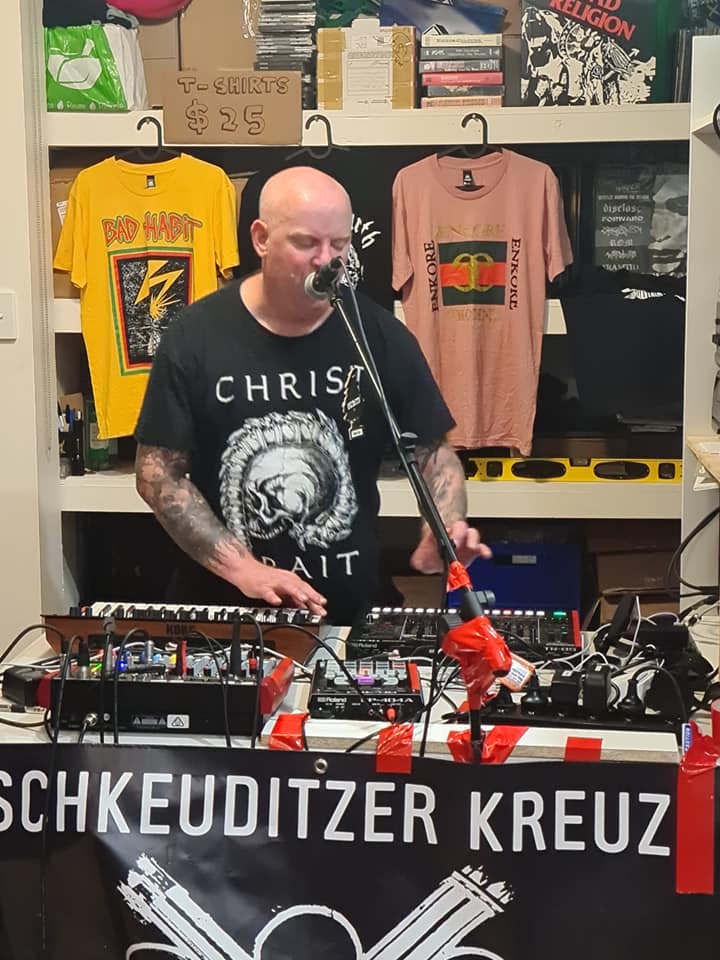
Thanks! Right now I am mainly doing SK and Dark Horse. Darkhorse has been around for somewhere over a decade and I have been in it for 7 years or so. In normal times we play a lot, tour a lot, and release a record every couple of years. These times are not normal, so we are a bit stuck. Normally we would be overseas this year. SK is a full-time thing. I work on it almost every day. I will run through my songs at least once a day and when I am developing a set for tour that gets upped to twice a day. I also make the music videos, compose the art, write the songs, do all the booking and communication and all the other stuff that a band needs to do, and it takes a lot of time. I am not complaining here – it is just true that if you do a solo thing that wants to release and play a lot, it takes a heap of work. I have recently started jamming with a couple of friends with an intention towards Japanese metal/punk kind of stuff. It remains to be seen how much time I can put into that though. Once Dark Horse really kicks off again and SK is in full flight it might not leave a lot of down time.

As for Death Church – it is definitely dead. We never wanted to do anything with different members, or any kind of lineup change so with a guitarist in NZ, a singer in melbourne and a drummer doing her own thing, it is definitely over. It was a fun ride though.

Is Industrial music something you have always been interested in or has it been a music that you have found yourself being draw to?

As mentioned before – I saw industrial as an extension of punk. Most of the people I met who were doing it when I was young were punks who were a generation or two older than me who had gone that direction via the likes of Butthole Surfers, Big Black etc and the Neubauten, Laibach etc side of stuff kind of came to them and me later even if they were working on similar ideas. Obviously, there was no internet then to find music on and those European experimental records just didn’t turn up in NZ very often. But I always loved what I heard when people were getting percussive and experimental with their sound. My first attempt at actually starting an industrial band was with Glenn Maltby and a couple other friends in the 90s. It was never going to work though. Already the ideas of what industrial was had diverged sufficiently that we didn’t have as much common ground – from Insurge to ministry to NIN, Consolidated or whatever, industrial was entering into popular music and was getting more refined and more defined. And that has continued to where industrial can mean anything from a person beating a piece of sheet metal to club music with slightly harsher/more attacking drum tones than what you might hear at a mainstream nightclub.

Something I was pondering the other day – Punk is a noun. And it gets a bunch of adjectives attached to it: crust, hardcore, pop etc.

Industrial is really an adjective which gets attached to various nouns – dance, metal, hip hop, goth etc

This may seem like a pretty wanky thing to spend time pondering but the reality of it shows in the way that people react. People who like punk will often check out anything that comes under that heading. People who like one kind of industrial often have no time at all for other types of industrial. So, whereas punk community pages (for example) often have hundreds of comments and reactions to every post. Industrial pages usually have nothing at all. Because it is not a community, but just a description of different factions of other communities.

You lived in Germany for a time and that is where you got the name Schkeuditzer Kreuz. Can you tell us what is the Schkeuditzer Kreuz and why you decided on this as a project name?

If you are driving from Berlin, south, on Autobahn 9 and want to turn onto the 14 to go Leipzig, the intersection where you would do this is Schkeuditzer Kreuz – literally the kreuz (cross) near the town of Schkeuditz. I was making that trip once (in the opposite direction) and I drunkenly said to my friend who I was in the back of the car with that I would call a band that one day. So I did. It is also the oldest autobahn cross in Europe but that is pretty irrelevant. Before I called it that, I did make sure there wasn’t any particularly fucked history attached to it. I did not want to call my rather silly band after a place which had war atrocities associated with it or anything like that. But no. It doesn’t. It is just an intersection. Every now and then I will run into some random German who is somewhat perplexed as to why I would name my band after an intersection, and I never have a satisfactory answer for them. They usually buy a record from me anyway.

There was a lot of Laibach influence on the first EP with the more pronounced pomp but Isolated And Alone feels a little more raw. Does it feel that way for you and was part of the frustration being in lockdown for periods of time due to covid?

In between the Give Me Nothing EP and the LP I did the D-Beat Raw Synth Punk EP and I think some of the attitude I took into that one came across into the LP. There is more noise, more anger, more distortion and more layers of synth and samples. The Give Me Nothing EP is relatively sparse in comparison, I think. Even the songs that I used on both have changed in that way. I have no idea if my next recording will continue that way or not. I have two new songs in my set now that are not on any records and not only do they not really fit in with either sound, they are not even that similar to each other. I think when I find a bit more time to sit and write I will find a direction to head in next. Give Me Nothing was interesting for me – I was learning the machines I was using and working out how I wanted to express myself with them. I still have a lot to learn but I think I have developed a bit of a workflow. Each song on the GMN EP was written in a completely different way from the others as I tried new things. I hope not to get too settled though. There are a million things I don’t know about making noise and I want to try all of them.

Did you find writing and recording the album easy or was it a labour of love?

Musically, it is not so much easy as natural. I have always written songs in my head along to the sounds I hear around me – that could be the sound of musical instruments but could also be the pumping of the coffee machine, the sound of a train I am sitting on, the slight misalignment in the wheels of my car, the cracking of the machines in a factory I used to work at or the beep beep beep of a laser level. I would write riffs in my head to them. But now I also created the beats based on them. Some songs start with something that is actually musical – a synth line or whatever, but more often than not it is with a percussive pattern which I will put noise or voice samples to, to give it direction. Sometimes this is something traditionally musical – for example on Traitor I had a melody I had recorded on my phone of the painfully loud music played from the Tannoy in the street outside of a funeral in Siem Reap in Cambodia. It is piercing and confronting and played so that everyone in the neighborhood knows the funeral is happening. I had recorded this years ago and then looped it and based the whole speed and layout of the song on that loop. Other times it might be downloaded field recordings that other people have made – from factories, in the street, in conversation…. recently I found some recordings from the deck of a North Sea oil rig and wrote a song around them. From there I will follow up with synth lines – bass, melody (sort of melody anyway), drone etc. For each synth part I will create the sound from scratch. I use an analog synth, so I start with that single wave sound and develop it until I have what I want using both the inbuilt stuff on the synth and the array of distortion pedals I use. In the end – the hard bit is the vocals. I don’t think of myself as a singer. I struggle with my lyrical output. But I have worked out a way to at least write words I can live with and then I vocalise them. I think this is probably the weakest part of my sound but I am coming to terms with it.

The most punk thing in the world is to be found to be subversive by a Communist country, however it must have been galling to have your original pressing of Isolated and Alone confiscated by the Chinese government.

Fuck but this was so weird. I had the records pressed through a broker in Melbourne who uses a pressing plant in China. So we went through the process – sent them my master and they cut it to their stamper plates and sent me the test presses. I was happy enough with them and asked them to continue (all standard up to this point) and then a couple weeks later I got a phone call – the factory had pressed my records and boxed them up to send but before they were sent, they were inspected by some official or another who decided that due to content they were not suitable for export. So they destroyed the lot. Everything. I have heard words like “subversive content” and similar but who really knows? They didn’t like it so I couldn’t have it. So we started again from scratch. New plates, new tests, new records. In the end I am just happy to have them in my hands.

Punk and industrial seem to have, for the most part become the social conscience of the music scene. How do you think this came about and does it resonate with you?

The politics of punk is what got me in there and kept me there. And industrial for me has the same feel. I don’t mean big P politics necessarily – just some kind of social conscience and attitude. Angry music without a conscience is just a temper tantrum and doesn’t hold my attention for long. This is not to say that every song must be a specific political doctrine. There are definitely SK songs that are quite personal but they are still aware of how the personal crosses over to the political.

The proceeds of the album sales are going to a charity that helps and support young Trans people. Tell us about this and what other causes you find yourself drawn to.

Yeah, all digital proceeds go to Transcend. Transcend is run by a wonderful woman named Beck in Melbourne who has been helping young trans people for many years now. I have met her personally a few times at various events but known of her for longer. She and her family are a large part of the reason for some of the trans positive law reform of the last few years. Trans people, and particularly trans youth, are often left out of any conversation on the rights of the population so I figured I would do my small amount to help. I have been involved in various causes over the years both through my music and through my actions – refugee assistance, trans support, anti-racism work, pro-choice advocacy. Mostly stuff where my big mouth and (where necessary) big body can help back up people whose voice is being ignored.

What music formed your formative years and by progression, who do you find now inspires you?

First band I really got into was The Clash. And I still love them now. Although some of my feeling for them has changed – when I first heard them, they seemed quite shouty and punk or whatever. What I really appreciate about them though, and how their influence has stuck with me over the years was their willingness to try different things and go in different musical directions and to create new sounds. From there I went through the normal run of punk bands that one does – Sex Pistols, Exploited, Siouxsie, SLF etc until one day in about 1987 when I was in hospital for an extended visit and one night nurse turned up with a tape he had made for me from a punk radio show – this opened my eyes to so much amazing music – Subhumans, Conflict, and Crass for a start but also bands like Puke from Sweden and then further down into European hardcore. I guess that was a pretty life changing moment for a 15 year old. Now days I feel I am getting inspired by something new every day. All the time I am coming across so much amazing music being made by people from around the world. From grindcore like Self Deconstruction (Japan) to evil doomy sludgy stuff like Religious Observance or Whitehorse (Melbourne) to dark curst bands like Ego (Germany) or black metal like Black Kirin and Zuriaake from China to weirdness out of the States like Hustler or whatever. Pretty much not a day goes past where someone doesn’t go “hey Kieren – check this!” and there is always something incredible attached. There is so much amazing music being created right now and most of it is available directly from the bands on their Bandcamp.

You have tour dates established for the East Coast of Australia, so what will be the plans for SK after the tour? Will there be another album and/or were there rumblings about touring overseas at some point?

So, yeah, after the tour… I am not sure. I really want to go and play in Europe. I have toured there with various hardcore bands I have been in, but I would very much like to take SK over there. Of course, that depends on what happens with the virus though. If it starts to settle, I will start looking at booking shows there. I am trying not to put too much mental energy into that yet though. Likewise, I was going to go to NZ but that is out for now. I want to add more to my Australian travels. I haven’t been to Tasmania or W.A with SK yet so will get that happening. My next recording I am not sure what I will do with that. Maybe a split with someone inappropriate. Maybe an ill advised single. I don’t really know. But I will keep going and keep creating stuff until it becomes too much like work and then I will stop. Can’t see that happening in a hurry though.

Thank you so very much for your time and looking forward to the latest tour!

Thanks for the interview. See you soon!

https://dorfpunk.bandcamp.com/album/isolated-and-alone

Sometimes you are privileged enough to meet extraordinary people who are talented, make a difference in the world around them and most importantly are very human. Kieren Hills is definitely one of those rare humans. From Lawson, in the Blue Mountains of New South Wales, he runs the label Dorfpunk, Dark Horse is his crust punk project, he has turned his hand to gothic fare with Death Church and has been involved in the music industry for a fair while. Schkeuditzer Kreuz is his one man industrial project and the first full length album, Isolated And Alone, was released on the 14th of December, which is a follow up to the EP, Give Me Nothing. I once described the music style as very Laibach and it still is but those harsh elements of industrial are very much present.

KIEREN HILLS -SCHKEUDITZER KREUZ

The song that kicks this off is the single “Broken“. From the start, you are going into Hills’ world with the warning that this is the representation of a brief psychotic episode. Massive reverb flies with the static, consuming your ears as the vocals savage your brain. It is the explanation of an episode where everything is over stimulating, you don’t want to die but the effort to actually live seems far too hard. The klaxons hail in “Warning” that has the drum machine pounding away as the music blares in.

All shall be reduced to the same particles of dust when the “Wraith” comes. The synths are almost ear bleeding in their pitch and give a sensation of dysphoria. All is lost as love and hope are wiped away to be replaced with fear and ultimately nothing. “State Violence State Control” has the blaring sirens of Australian emergencies services screaming in the background (so this is not the sort of song I will play in the car while driving because it always scares the crap out of me!!). If the title is familiar, that is because it is a cover of punk legends, Discharge, who are the godfathers of d-beat and this was also released on a split single but since then reworked and mastered for the album. It is every bit as angry as the original version, in electronic form, throwing two finger in the air to politicians, cronies and violent suppression of the masses.

Normally an interlude is a short piece to give the audience a break with some light music, that then soon gets back to the main entertainment or a bridge. “Interlude” is the interlude you are going to get and you better just hunker down and stick to the programme. It starts lightly enough with flowing synths before the rhythm picks up and Kieren informs you – It’s happened before It’s happened before And millions have died And millions have died And millions have died And millions of people have died. A warning that history is repeating itself because people either don’t want to see it or don’t educate themselves. The vocals bring forth visions of holocausts, military coups/enforcement, genocide and war.

Full of loathing and dark thoughts is “Disappointment” starting slowly and picks up speed as the those thoughts become a swirling overload. There is a beautiful synth line hidden within if one listens closely. It is like a veritable scream of fury into the aether, with the metallic beats. When someone refused to go to war because they were a conscientious objector, they were called cowards and “Traitors” to their country because they didn’t want to carry a gun and kill their own kind. Their is an urgency to this track like life itself depends on movement. Fittingly, the “Last Dance” is the final track and the track about finality. When the end comes will you have the last embracing waltz into the darkness? So I guess in a way though it sounds bleak there is a romantic side to it as well.

I am privileged to call this man a friend though I had seen him live before I had met him. In short his show blew us away. He is warm and charming, loves his family, music and pottering around in his garden because it brings him closer to nature. These things are also his sanctuary from the world and especially the last two years have been mentally difficult for many people.

100% of proceeds from digital sales will go to Transcend to help create a world where Trans, Gender Diverse and Non-Binary children are embraced and given every opportunity to thrive and flourish – the man has a beautiful heart and a keen ear.

Get in quick if you want the vinyl or cassette as they always go fast. Just to prove how hard core Schkeuditzer Kreuz truly are, the original pressings of the vinyl were done in China, finished and then confiscated after some complete and utter bastard had a listen, ending up in the whole batch being deemed subversive. That is so punker that thou. It’s an emotional roller-coaster but its well worth every moment and maybe you will find it as cathartic as Kieren Hills does because in the end we are not so Isolated And Alone.

https://dorfpunk.bandcamp.com/album/isolated-and-alone

Schkeuditzer Kreuz | Facebook

Distributors –

Bad Habit Records | Facebook Bad Habit Records

https://alreadybrokenrecords.bandcamp.com/album/isolated-and-alone Already Broken Records | Facebook

Pyrrhic Defeat Records (limitedrun.com) Pyrrhic Defeat Records | Facebook

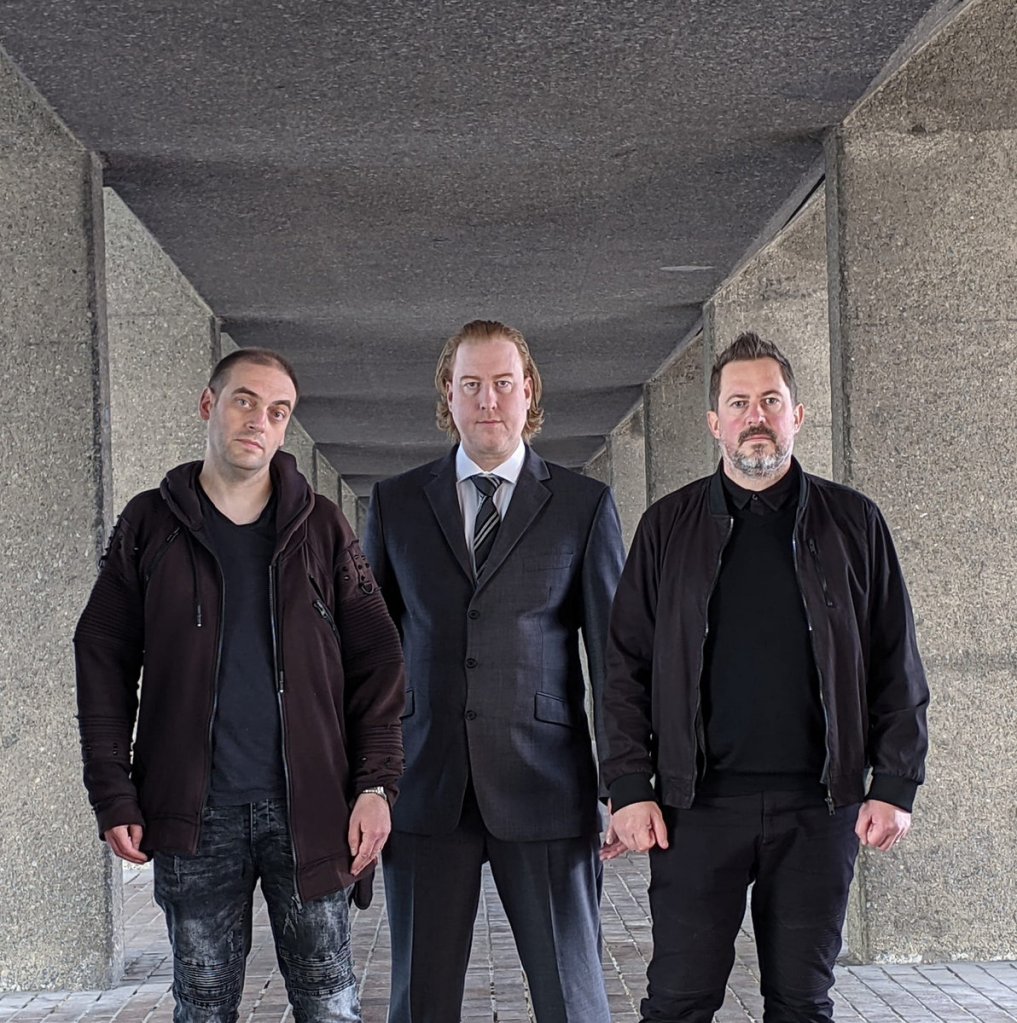
Industrial music actually covers a lot of scope, from heavy dance music to experimental, ambient noise and this is where we introduce British band, Decommissioned Forests. So far there have only been singles released by the three men behind the project, though the latest single, “Ants Part 1” will be on their debut album Industry.

DECOMMISSIONED FORESTS

From the start you can hear the undeniable homage to Coil in their spoken word phase and Rael’s utterances are uncannily like the late John Balance. Ants Part 1 (Our Last Supper) is just over nine minutes long and is like a dissonant journey that seems pleasant, yet the lyrics are the disembodied oddities of strange and disturbing sequences. The one running thread is the ants running riot over the picnic as they transcend the existence of this plane it seems. The band agreed the track “Functional Programming For Humans” was their favourite to play in the studio.The low tones almost could the far off church organ while the quirky sounds could be firing synapses while the commentary is how not feel any emotion like an automaton unless it is turned on. Grand soundscape with cold barren wept vistas. The last song is “Base” and the first bars start like a droning sea shanty though this drone is sinister and full of loathing as the piano enforces it’s disappointment.

Decommissioned Forests (is) the result of friendships going back to the beginnings of this century and a shared love of the darker post-industrial world of Coil, Current 93, Cabaret Voltaire and Nurse With Wound. In this collaboration, Daniel Vincent (of cult space rockers The Resonance Association) handles the music, ably abetted by Howard Gardner (the multi-media artist behind Non-Bio, Pillars of Golden Misery and Down With Freedom), whilst the vocals are channeled by Max Rael (the lynch pin of post-industrial noiseniks History of Guns) – Decommissioned Forests bio says it better than I can. You can hear those influences so clearly in the music these guys create and there is definitely a passion for the genre. There is a timelessness in a way to Decommissioned Forests, not only the themes but expressions of love, loss, life and always the ants.

https://decommissionedforests.bandcamp.com/album/ants-part-1

Decommissioned Forests | Facebook

Michael Gillman (Gillie) and Daniel Allen are the brothers that make up the band Dirt Factory. Gillie is in Brisbane and Allen lives in Melbourne which means since the outbreak of the plague (covid) they have been in lockdowns for well over a year and unable to meet up or play live gigs unless doing them solo. This hasn’t slowed them down one iota because December the 3rd saw the third album released in two years, called Systems Deleted on Brisbane based label Viral Records Australia. Interestingly Dirt Factory almost exclusively use analogue equipment.

MICHAEL GILLMAN & DANIEL ALLEN – DIRT FACTORY

Oh yes from the start you can already hear how good this really is. “Delete The System” growls Allen, ‘fuck your commands‘ over rampaging rhythms that give this it’s bang. Second single, “Microscopic“, has guest, Roger Menso (ex-Dogmachine) on guitar and good grief, this is a new level Dirt Factory. It is a grimy, sexy beast of a song that takes your breathe away and gives you shivers up your spine. Allen sounds like a very angry dalek that has fully gone industrial and it sounds brilliant. Dirt Factory want to “Factory Assimilate” you and quite frankly I can think of worse things to do as the music beast down in industrial precision convincing you that you will obey. There is something symphonic and other worldly about “Hammer“. It experiments with low tones that sound like abused piano wires and high synths in direct opposition, while Allen is the bloody butcher. The original single is “Crash Landing“, because you know they are out there and they have those stellar synth lines and beats. Yes the aliens are here and you can listen to a report of an eyewitness and Allen’s inhuman screams.

Swallow the pill and “Suck It Up” is a dirge ridden number and I honestly can hear far too much innuendo. “Dive” is just a superb piece with sweeping electronics that fritter out and arc around you like electrical tendrils. Soundscape mixed with such hostile vocals. Jethro Hilliard (RAZRWHIP) guests on this track providing drums and sound effects. This has to be one of my favourite tracks on the albums. But wait, they then slam us with “Digital Media” with guitar provided by another member of RAZRWHIP, Johnny Ryall, who nails the electronic fuzzy tones that help propel this forward in real rock style. The next track is all about the animated dead…spooky. “Flesh” is horror inspired zombie fare with glitching beats and vocals as they stalk you. In the “Exstream” they are observing you, surveillance of every aspect of your life and you can be brainwashed but are you too involved in the conspiracies? Final eleventh track is “Ghosts” and this just is just a great bouncing track and probably the most reminiscent of Skinny Puppy and it pumps.

I love what they have done with Allen’s vocals and Gillie is just so talented with synths. This is a monster of an album, again beautifully mastered at NyteShayde by Menso. If this doesn’t get your heart rate up then you might be dead. The really scary part is that I already know that the lads have almost finished their fourth album which is both mind blowing and disturbing all at the same time. Gillman also revealed that the next album is already darker. So before they stab their way repeatedly with rhythmic timing through your chest, do listen to “Systems Deleted” because it kicks arse.

https://dirtfactory.bandcamp.com/album/systems-deleted

Dirt Factory | Facebook

https://nyteshaydemusic.bandcamp.com/

NyteShayde | Facebook

https://viralrecordsau.bandcamp.com/

Viral Records Australia | Facebook

https://viralrecords.com.au/

Zac Pliska and Emily Sturm make up the band known as VAZUM. Their music has been described as deathrock with shoegaze or deathgaze but on the latest album, there has been a paradigm shift. They released the new album titled Unrated V on October 22nd and the theme throughout seems to be the creatures and humans that inhabit the inky night and demonic spaces.

EMILY STURM & ZAC VAZUM – VAZUM

From the beginning, you can hear that his is going to be a different VAZUM album, a more industrial electro sound is creeping in and the “Jester” is a genuinely verbose and grandiose example. The nine minute epic will wind you up in it’s synth laden tentacles, enthralling you. The single “Lycanthrope” very much features Sturm’s vocals in this tale of werewolves and the animals men become. The chorus is a beautiful swirling gothic affair and speaking of gothic, vampires come hand in hand with the genre. “Vampyre” is probably a far more truthful examination of the blood suckers world, where everyone is just a food source to them. A nice heavy mood that smothers us in the dank blood-lust.

Everyone needs a woman pieced together from other’s dead flesh so they can have a “Frankenstein Gurl” though she will more than likely kill you in the end and this tune is a stonking representation with it’s scintillating synths and uncompromising rhythm. The tone turns a bit stalkerish as we join the “Vampire Killer” on his quest to remove the parasites that plaque human kind. There is great purpose to the music and Pliska cannot be swayed by Sturm’s sensual words of ownership and death. The synths waver and Latin is invoked for this is the “Wytch Lych“. The track gives the impression of impending doom if you are not found worthy of the witch’s time and it is a fabulously powerful piece.

For the rest of the album, it delves into a more instrumental and experimental vein. “Fantoms” is full of bells tolling, dark bass tone and creeping synths like something you would find in a Hammer Horror movie as Christopher Lee searches for his next victim. The far more electronic “Wytch Tech“, with Sturm’s sighed vocals could be a modern summoning ritual putting you into a techno trance. Following up is “Summon Her” where there are industrial clanks and screeching, near metallic sounds. You can imagine a thick fog where disturbing not quite human voices can be heard.

There has been folklore tied to the Gypsy people that they have unnatural powers and you will have to make up your mind as you listen to the trap like “Romany Way“. I remember a dark, British children’s television show I watched as a child, where there was an old grandfather clock that would strike thirteen at night and everything would go back to a past life. “Thirteenth Hour” reminded me of this with it’s mysterious wending synths. Your final track is “The Abyss“, a place that is unfathomable and permeates the mind with dread at what lays within, the unknown and music gives it a science fiction overdrive.

Some bands go on and they often lose what drew you to them or the quality just cannot be maintained. VAZUM just seems to be going from strength to strength. They remind me of the wonderful Faith And The Muse except they have a dark gritty core mixing industrial into their music which is making them a hybrid beast of much beauty.

https://vazum.bandcamp.com/album/unrated-v

VAZUM | Facebook

David Lawrie is The Royal Ritual and November, 5th was the release date for the second single “Empires“, that will be on the new album, MARTYRS which is being released in the first half of 2022. Lawrie is the live guitarist with London After Midnight but also a composer/producer in his own right as well as sound engineer for television and movies, experience which he brings to his music,

DAVID LAWRIE – THE ROYAL RITUAL

There is something a little epic about the beginning, the pomp and ceremony of a bygone era. It evokes the images of India Raj and colonization in a movie. The vocals are deep and resonant enough to give you shivers up and down your spine. I am going to assume that the lyrics refer to the Victorian age of Empire, where being British came with a lot of privilege to plunder other cultures and yet there were so many rules to abide by in polite society so as not to lose face or standing. There is in the background a sad version of “Land Of Hope And Glory“, a testament to fall from grace.

There is no empire anymore, as time and world events have wiped it away and only a shadow of a ill remembered memory of something that was glorious. Or was it? Don’t speak of the poor houses, match girls and slums of merry England at the time. Lawrie is looking into the very British psyche of the stiff upper lip and he has found it lacking but more to a point, given us an almost cinematic and thought provoking track.

https://theroyalritual.bandcamp.com/album/empires

The Royal Ritual | Facebook

HOME

There are some albums that come around and they make you stop in your tracks with the pure musical delight they are. Brisbane based Jerm is Stephanie Ganfield and she released her debut, self titled album on October 22nd. Jerm’s style I would describe as experimental electro-industrial with gothic overtones.

The delicate fluctuating rhythm free flows into the distortion and the gorgeously sensual vocals alight it all and this is just the beginning of the album with “White Lies“. It graduates in power and the synths sprinkle down. The single. “Make Your Mind” is a little creepy with the whispered lyrics asking you to make your mind up and yet there is this glorious chorus that sweeps you skyward. “At Night” has an odd syncopation but it works giving the song an even more languid feel, as though there is a hopelessness in the darkest hours of the night.

Her voice is mesmerizing in “Left Behind“, a single released back in 2018 under the moniker Germ, and the electronics just highlight the sweetness and purity of the singing. It is exciting to hear something that is experimental and so stimulating, which brings us to “Gem” with bursts of noise like mini fireworks erupting in the background. Slow and thought provoking with so much movement within the track. There is the brief interlude with the instrumental “Dissect” just before another single, “Brain Candy” and it is just extrodinary. Musically it is beautiful and expansive, with harsh edges, ready to hook into your skin and the concept if you take away what makes a female look feminine, still the sweetness and colour is all in the brain, that which makes you. Final track is “Beg”, that takes on a heartbeat that will, at any given moment, go into tachycardia. A beautiful way to end.

The production is great and the music has such near visible texture and a vibrancy that is breathtaking. As for Ganfield’s vocals, they are true and clear, combined with the darker lyrical content, you could be forgiven for thinking she is an angel who lost her way in this dirty world and to be fair, lucky for us. Even if you are not into industrial music, do not let this deter you from having a listen to Jerm.

https://jermnoise.bandcamp.com/releases

Jerm | Facebook