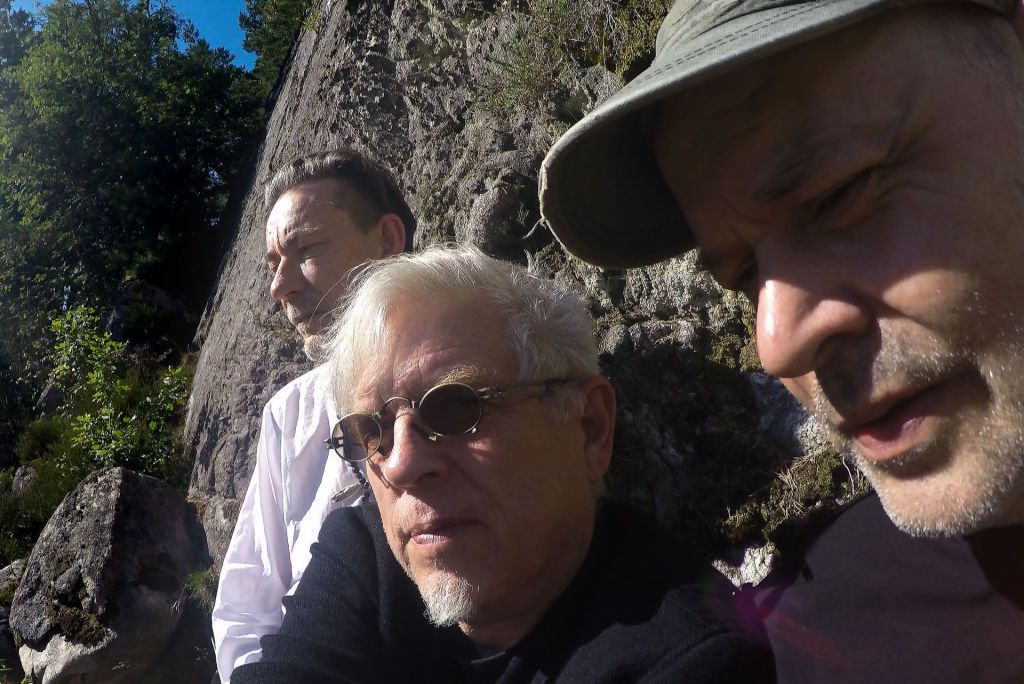
Dan Söderqvist, Karl Gasleben and Jocke Söderqvist have been together under different guises, making music since 1981, though they are best known as Twice a Man.. They are on DependentRecords and Twice a Man have dropped the single “Birds eye view,” off the soon to be released album The Coloured Breeze is a New Dimension.
There is almost a gentle calm in the beginning, though the echoing is unsettling. The vocals take strength and synths are soaring above the rhythms, pure and clean. An explosion of warmth as if the sun’s rays are gracing us through music.
“Overview can light sparks in the place where your roots are waiting. If you follow the time you can destroy the eradicating wheels of commerce. Don’t drown yourself in pretended sleep! There is a common knot that must be untied. Our thoughts are the light and nature sings our lullabies.” – Twice a Man
Between the video and the lyrics, Twice a Man seem to be tied to the natural world, using electronics to delve into their connection and love of the environment versus the industrial world. The crows in the video, make their way through different art styles and they look beautiful. “Birds eye View” is an ambient lullaby and Twice a Man have proven they are as relevant as ever.
RobertBenaquista brings you Cucurbitophobia, the project so grim, it is named after the fear of pumpkins, and after sowing the seeds, he has reaped the new album called IV. Cucurbitophobia is a darksynth/neo-classical project hailing from New Jersey.
You have entered the time of nightmares where nothing seems real and all is covered in a pall of dusky sorrow. The fires burn cold in this hellish wasteland that is “IgnisSatanae,” dragging you into the shadow realm. “GaleofLucifer” is the quiet before the oncoming storm, an entourage of building anticipation of dark angelic release, ticking like a timebomb, never getting any faster, as if your doom means nothing in the whole scheme of things. The solo guitar sets your teeth on edge in opposition to the piano. You are now on the “SoilofBelial,” and the devil is going to welcome you. From within the cacophony, if you listen carefully enough, you might hear the voices of lost souls wailing in the distance.
Like something from BlackSabbath, the guitar holds sway, the creator of organised chaos and then, yet, there are periods of reflective electronic dismay, distant and disconcerting. You shouldn’t be here and the tension rises for whatever is in the dark is baying for your blood. The creature in the “Bay of Leviathan: Chapter I” calls out from the deep and it almost feels like sanctuary, a ray of light in the gloom. The piano takes its place, making you feel most uneasy, rippling through the surrounds, and into the murky unknown. Unlike the previous track, “Bay of Leviathan: Chapter II” starts so differently, tasting of gentle breezes and fingers of sunshine breaking through to the shimmer water’s surface….though is it almost a lament in a way, the piano plinks in a sporadic wandering, modern avant-garde style. Final track “Memento Vivere” continues in this vein, conjuring shadows of memories along with raising the ghosts of what is lost.
If you haven’t quite caught the drift yet, Cucurbitophobia is very much entrenched in the horror genre. Music that imprints on your psyche and tugs at your base human instincts that recognises fear and aberration. Why is the album called IV? It isn’t the fourth album. Curiosity abounds. Benaquista has said that the inspiration is from John Milton’s “Paradise Lost,” a poem about the expulsion of Adam and Eve from the Garden of Eden… a loss of innocence that can never be regained and the full realisation that what we do not know terrifies us, captured in a mirror like reflection by Cucurbitophobia.
One of our favourite songbirds is back. The heavenly voiced, singer/songwriter MadilHardis has released the latest track called “Melancholia” in March.
The synths are like rays of sunshine, reaching out into the darkness, soft and gently probing, with Hardis‘ vocals tracking along side, a literal angelic sigh almost imperceptible next to the electronics. Even with all that airiness, there is a weight of uncertainty, and maybe this is where the melancholy lays.
The singing is so delicate and yet if it was not there, this track would not even have half the impact. “Melancholia” is a sweet vignette that goes for under two minutes and teases you. Is there something else to come? Wallow in the “Melancholia” with MadilHardis.
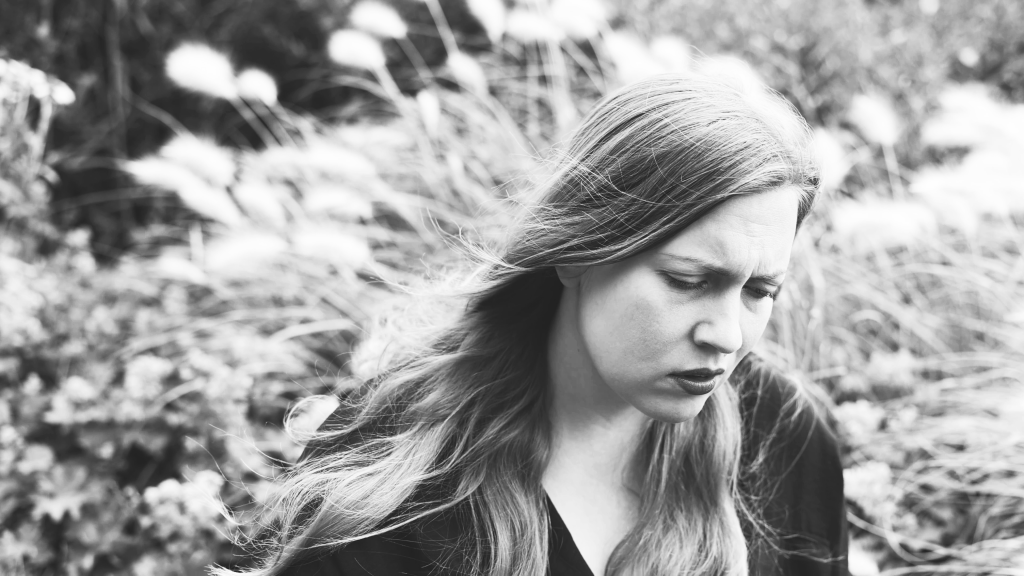
NaturalDarkness is the new album offering from German born, London based MadilHardis, with twelve original tracks and six remixes, meaning not only is there quality, but you are getting quantity too!. Hardis is known for her gloriously angelic vocals, married with very emotive musical scores that she has created.
The first cab off the rank is “Absence,” settings the tone for the album. Crystal like shards of life experience and poignant, filled with longing that is heart felt. “Crucifixus” has those deeply religious tones of devout exultation given by angels to the heavens in the form of vocals. The track “To The Heart” floats with an internal rhythm and the ever-present piano, caressed by the synths, as if trying to bring comfort, all the while Hardis‘ vocals soar above. Just one of the songs that showcase her talents.
One of the shortest numbers is also, for me, one of the most sublime. This is “Disintegration,” and it is one of those songs that can just cast you adrift on a forlorn sea. The title track, “NaturalDarkness,” has a rather preternatural echoing air, haunting and ethereal, as if yesterdays spectres are waiting at the vale.
The remixes are done by the likes of AshburyHeights, VortexFour, WanderingStars, BérècheYou, and ElectroSpectra. There is a version of “NaturalDarkness” that isn’t really a remix but rather features the cello talents of MichaelHyman, which just creates a feeling of welling beauty and haunting desperation. The others range from modern, through to experimental electronica, giving you new and intriguing ways of perceiving each track.
That is just a taste of NaturalDarkness, from a lady with an abundance of natural talent. MadilHardis carefully entwines classical tendrils with electronic ones, weaving music that is otherworldly and, at the same time, grabs your heart strings.
Should you dare slip into the wooded areas of Marietta, Ohio, after dark, you might happen upon the ambient and industrial musing of PressedFlowers. Blake Pipes is the man bringing forth the electronic magic/madness in the single, “The Ascension.”
‘I composed “The Ascension” using, among other things, the sounds of hammers on large nails, the sounds of vehicles barely able to bear the weight of their load, and a mess of synthesizers. These elements were each stretched to their limits and sculpted carefully into place. In the track, there is a choice to make, a choice to stay or to go. The choice is made to go. The path forward is not necessarily a pleasant one, but neither is the path back. Too often, we can only hope to outrun what we try to leave behind.’ – Blake Pipes
This track is saturated in growing dread, from the scraping metal into the nails being knocked in. There is a near Hitchcock shower scene , which prevails and then collapses into what could be described as the warblings of an estranged classical orchestra, which is oddly satisfying. It is an intriguing use of elements and experimentation. There is a horror filled majesty with “This Ascension” by Pressed Flowers.
Glaswegian band, Hanging Freud have a new single, out on the Belgian Spleen+ label, just before the release of their seventh studio album, titled Worship. The track is called “Falling Tooth,” and the name alone made me feel all creepy. Not sure what Paula Borges and Jonathan Skinner have been up to, but I’m not sure if I’m up to hearing about falling teeth.
The rhythm sounds like a clock, ticking down, while Borges vocals gracefully wander the soundscape like a ghost searching for completion. Electronics whir and drone, building the tension, as time ignores all of it, matching on.
Beautifully avant-garde and engrossing, like a fever dream that takes you down a path of your mind, you never knew existed. Hanging Freud’s first offering off the new album leaves you wondering what is next… though I am rather relieved to say no teeth were hurt nor fell in the creation of “Falling Tooth.”
When you know singer/songwriter, MadilHardis has a new single, then there is only one thing to do… tell everyone. The German with the exquisite vocals, living in London, is about to release a new album called NaturalDarkness, and the track, “My Jolly Sailor Bold” is our first glimpse of what is come. This piece is originally a sea shanty sung somewhere between the 17 and 1800s by sailors, and if it sounds familiar to ye, well, you might not be wrong. It also featured on the movie Pirates of the Caribbean – On Stranger Tides.
There is such a warmth and sensuality dripping in sadness from her vocals alone, and then there are the added delicate gossamer synths that rise and fall gently, like the waves lapping onto the sand. Also, there is also a second version, a capella, which means for those unfamiliar with the term, sung without any instrumental accompaniment.
Even now, this is like an echo through time of great love followed by even greater, gut-wrenching loss. Whether you listen to either version, you can’t help be struck by both the divine beauty and terrible heartache invoked by the sentiment of the track and Hardis‘ poignant singing. Madil Hardis is a land bound siren calling for “My Jolly Sailor Boy”.
What is a dream? There are many theories but they are definitely made up of past experiences, but also plum the depths of human aspirations and creativity. This brings us to the experimental Australian project lixly. Whom or what is lixly? No idea but as far as I know, their release, a leopards head, is their first, and is based on lixly’s dreams.
The surreal hissing before the acoustic guitar throws you slightly, and it seems to be recorded in a room where other things are happening. The spoken vocals are eerie and prophetic, as the track is called “i cannot forget“. Maybe “the song of ereshkigal” is a falsetto version of NeilYoung, if Neil was being particularly creepy in a delicate way. Distorted chiming notes, herald in a terror filled and oppressive atmosphere, settling uneasily in the back of your head, in the instrumental “i don’t want to look at the baby“.
“a leopards head” has the heavy and electricized vocals, while the wavering electronics assault your ears with their hit and run tactics, hissing and fizzing with the undefined rhythms. Classical piano strains greet your ears, ghost like, in “a royal audience“, but there is the pitched overriding electronics and what sounds like a person cooing behind it all. The final track “it is no mask“, and the deep voice is back. The music around it is full of violence on an epic scale, brooding and aggressive.
Is it an EP or is it an album??? Mmmm, I leave that up to the listener, but there is no doubt that there is a lot of horror in the dreams of lixly, as they waltz between ambient industrial, acoustic and classical, building tension. This is a dream leopards head with the disturbing and very interesting lixly.
Mmmmm, from somewhere in New South Wales, there is a man called Dan, though he might be an alien, however, still Australian (actually he’s from West Wyalong, which I had to look up to see where is was). Now Dan has a noise project called DEATHCOMET,and the most current release is DEATHCOMET 14…. yarp, so there is a lot more of where that comes from.
Like all noise music, a lot of this is going to feel like it’s shredding your ears off and brutalising all your senses all at the same time. It tastes of metal, prickles the skin, and smells of sulphur as we journey with the DEATHCOMET, while he decimates pedals “and flangers to kill“.
Even in these buzzing, throbbing, and most possibly sanguinary soundscapes, you can hear bleeding through vignettes of tunes in the miasma if you listen carefully. The final track, “in the lair of the satanic worms” brings the album full circle.
Honestly, who does not love satanic worms, skulls, and aliens?! To quote the man himself….
‘DEATHCOMET plays unholy space metal exclusively – cosmic sonic terror via electric guitar and fx pedals – “it’s like being probed in both ears by aliens with power drills!“‘
Really could say much better myself other than saying death by pedal… wwwoooaaahh! DEATHCOMET 14 is here, and your ears are not safe, but then that’s half the fun and amazing industrial noise all done on guitar.
We Are the Compass Rose is the first solo album from Paul Devine: undoubtedly best-known as the frontman and driving force behind 1980s Sheffield UK post-punk / early goth outfit Siiiii. The band formed when Devine was just 19, and were initially active from 1983-1986. Equally notable, then, is the fact that Devine’s solo debut comes forty years this year since he first formed Siiiii.
For English speakers, Siiiii would be more correctly pronounced “See” (not “Sigh”), taking their name from a passage in William S. Burroughs’ The Soft Machine, in which a Spanish-speaking man enjoys being rogered in a public toilet so much that he exclaims, “Siiiii!”. The band themselves, however, have always happily gone along with either pronunciation, thus becoming better known as “Sigh”.
Siiiii
In their heyday, Siiiii shared stages with The Psychedelic Furs, The Chameleons, and Artery; shared members with Pulp (guitarist and drummer Wayne Furniss); and appeared on compilations alongside The Birthday Party and Public Image Ltd. After first quitting the band in ’86, Devine also played with The Niceville Tampa (later simply Niceville), and in 1989 moved to South Wales, where he played for a few years with DVO.
Siiiii reformed again from 2005-2014, even playing as far afield as New York in 2006, having been “rediscovered” by global audiences, who first heard about them through the diligent efforts of goth / post-punk historian Mick Mercer. But during both incarnations of Siiiii, Devine struggled more than most with the pressures of public attention and performing live, later learning with professional help in 2019 that he was experiencing ADHD, Bipolar Disorder, and Tourette’s Syndrome. More recently, Devine has instead been making a name for himself as an author, publishing four (count them) – four fucking novels since 2020.
We Are the Compass Rose is in many ways a far cry from the jagged and spiky post-punk of Siiiii, albeit peppered throughout with elements that will make perfect sense to fans of that era. Eclectic in nature, We Are the Compass Rose focuses more on the weird and wonderful aspects of dark and gloomy music, from pastoral Avant-folk, to spoken word set against minimalist sound collages, and indeed elements of those earlier post-punk roots. A sensible writer might recommend the best parts of this album to fans of early Bowie (c.1968-71), Current 93, Syd Barret-era Floyd, Coil, classic Bad Seeds or solo Mick Harvey, or The Legendary Pink Dots.
‘Come Unto Me’ is a sort of droning gothic plaintive chant set against sparse psychedelia; blurring the lines between sacred and secular ecstasies. ‘Hearse Song’ is an adaptation of a traditional song, also known as ‘The Worms Crawl In’, commencing with the cautionary line, “Don’t ever laugh as a hearse goes by”. Popular during the period of the First World War, fragments of the lyrics are found as far back as The Monk by Matthew Lewis from 1796, often hailed as the first gothic novel. Devine’s rendition is the rattling bones of an acoustic Bad Seeds outtake; a rickety horse-drawn undertaker’s carriage making a frenzied, spiralling descent into madness; the wooden wheels about to fly off at any moment, while layers of nefarious character voices assail the ears like a swarm of muttering, fluttering bats. ‘The Mill’ could be The Smiths at their most maudlin, and is among the most obvious and accessible conventional ‘song’ forms on display up to this point.
‘Seeing’, which contains the titular line “We are the Compass Rose”, is a striking highlight. Devine’s oratory style here is both masterful and hypnotic, a soothing rumble in one’s ear (albeit with suitably theatrical dynamic to remain engaging throughout), while the prose recited comes from the segue between books 1 and 2 of his most recent novel, Gerda’s Tower. The disquieting motifs of a muted, organ-like tone drift in and out of earshot, barely accompanied by a ride cymbal and incidental percussion. It may also serve, perhaps more by accident than by design, to remind some of us that we have been sleeping on Devine’s literary talent for a little too long.
‘One Skin for Another’ heads back into heavily Smiths-inspired territory, and feels perhaps a little superfluous in context, albeit fairly well done. ‘For the Love of ParkusMann’ is a tender ballad, with a sense of uplifting and transcendence from sadness, which suddenly turns all spacey, awash with flanger effects and sweeping filters, a-la Donovan. ‘Jherome’ is closer to the angular post-punk of Siiiii, whereas the recording and production sounds more like a band of performing flies in a shoebox, recorded by a solitary contact mic.
‘Your Spell’ is a short but satisfying love song: very pretty acoustic guitar arpeggios and tender vocals, accompanied by washes of synth-strings. It ends leaving you hanging on wistfully for more, but that’s also what makes it so perfectly complete. ‘Lassie’ uses the old standard ‘Dream a Little Dream of Me’ as its intro, blending seamlessly into a swampy-blues-meets-post-punk singalong-dirge, led by intertwining Howard & Harvey Birthday Party-style guitars and Fall-ish vocals. It suffers a little from some of the same recording and production issues common to most “band” (guitar, bass, and drums)-based songs on the album, but is otherwise quite enjoyable.
‘The Mermaid Song’ is another standout: a song describing an unknowable song. It calls you in to the idea of a mesmerising siren song that will lead you down into the deep, without you ever having actually heard that song, which ultimately led the protagonist to his own doom. Devine is in fine voice here, smooth and lulling, with intriguing acoustic guitars and lovely string arrangements behind him.
PAUL DEVINE 1984
‘Every Day is One Day Closer to the Grave’ is both an obvious truism (which the album is littered with), and a better example of a “band” sound than any other on the album. The sound is bigger and fuller, while vocally, Devine shares some similarities here with the late Terry Hall. There is backing from at least one of many credited female backing vocalists, and the whole thing collapses into some kind of astral dispersion of its core elements, ultimately becoming stardust.
‘I Am What I Am’ is the old Broadway musical number: starting with atmospheric piano and intimate voice, before moving into a more vaudeville-meets-English music hall rendition. It quickly moves from there to a stupidly overblown cabaret showband arrangement, complete with elaborately nonsensical brass and strings, and works perfectly as a conclusion to the album, insomuch as the Sid Vicious rendition of ‘My Way’ serves as an entirely appropriate conclusion to the Sex Pistols.
All this from a man who would happily show you his arse and bollocks of a late evening, if only Facebook would allow it, while a long-suffering person named Linzi shakes their head in dismay. We Are the Compass Rose from Paul Devine is a very good album, from a very important artist. The album would probably be even better with less than a handful of songs omitted. Devine showcases here how diverse and eclectic his vocal talents are, ranging from droning choral gloom, to weird and wonderful character voices, through to brilliantly smooth lead baritones in a goth, new-wave, or post-punk style, and engagingly theatrical spoken-word oration. Finding his own voice in amongst all of this is occasionally a challenge, with some songs jumping back and forth stylistically between The Smiths and the Bad Seeds/Birthday Party. But the vast majority of the album, and certainly its strongest moments, don’t rely upon those tropes at all. Musically, conceptually, and creatively diverse, there is real art in what Devine is doing all these years since he first began with Siiiii, and one can only look forward to a second album with an identity entirely its own.






 Onyx Music Reviews