In the mid 80s, Tears For Fears were one of the huge names in popular music, topping the charts. One of their tracks is the still well loved “Mad World,” and MadilHardis has released a cover of this iconic number.
Echoing, delicate singing of Hardis is the absolute focal point, with the electronics simply haunting the background. The Tears for Fears version was for the disaffected, while this new cover is ethereal and not bound to this world.
Pretty sure that I have said this in the past, but honestly the vocals are simply angelic in nature, touching that place within you that causes involuntary shivers down your spine. Otherworldly and poignant, with the ability to drag out emotions of even the most coldest of hearts, this is “Mad World” by Madil Hardis.
When you know singer/songwriter, MadilHardis has a new single, then there is only one thing to do… tell everyone. The German with the exquisite vocals, living in London, is about to release a new album called NaturalDarkness, and the track, “My Jolly Sailor Bold” is our first glimpse of what is come. This piece is originally a sea shanty sung somewhere between the 17 and 1800s by sailors, and if it sounds familiar to ye, well, you might not be wrong. It also featured on the movie Pirates of the Caribbean – On Stranger Tides.
There is such a warmth and sensuality dripping in sadness from her vocals alone, and then there are the added delicate gossamer synths that rise and fall gently, like the waves lapping onto the sand. Also, there is also a second version, a capella, which means for those unfamiliar with the term, sung without any instrumental accompaniment.
Even now, this is like an echo through time of great love followed by even greater, gut-wrenching loss. Whether you listen to either version, you can’t help be struck by both the divine beauty and terrible heartache invoked by the sentiment of the track and Hardis‘ poignant singing. Madil Hardis is a land bound siren calling for “My Jolly Sailor Boy”.
Classical music is probably not something many think about, or they think that it is only the rock and roll life for them. However, it pervades our world, often taking us on adventures without our even knowing. Television shows, advertising, and importantly, movies often use classical music to sway our emotions. That is the power of this style of music. Secluded away in a Western Australian monastery, Father Robert Nixon, a Benedictine monk and a classically trained pianist, composes and plays his own pieces. Before joining the order, he hailed from the State of Queensland, played in goth bands, and was a concert artist of note.
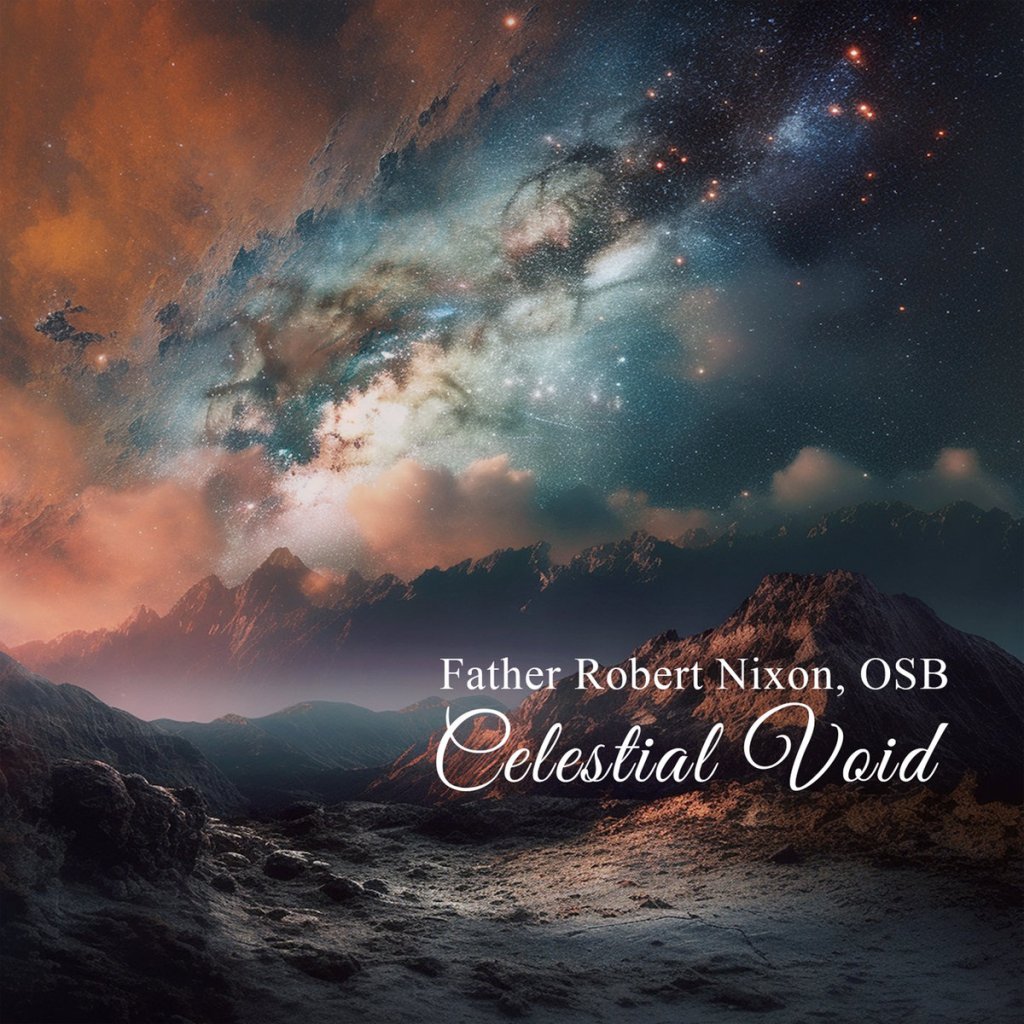
The album Celestial Void, on the US label, MoonCoil Media, was recorded at the monastery. A beautiful neo-classical platter of piano filled tracks is what you will find within, harkening back to the period of the German piano masters. Thoughtful, expressive, and full of longing that life brings, there is always a darker side and more bewitching with each listen. So, there really isn’t a more interesting person to talk to. I think, than Fr Robert as we delve into the music that he creates, what fuelled his passion for the craft, and what Celestial Void means to him. Ps…. oh my goodness, the man plays Baroque harpsichord….a deep abiding love of this style I have. Fingers crossed for that album maybe one day, but in the meantime, read on.
Welcome Father Robert into the hallowed halls of Onyx.
Many thanks! It is wonderful to be here and share with you and your readers, Adele.
You are a member of the Ordo Sancti Benedicti, also known as the Order of Saint Benedict. What drew you to join a monastic life?
Solitude and the interior side of life have always been important to me, and monastic life is directed towards the cultivation of that. Also, I love old buildings, ancient libraries, etc., which are things we have here in abundance! Of course, monastic life is based on faith, and I was raised a Catholic, so I have the Catholic faith and culture ‘in my blood’- my tastes incline very much towards the Medieval Catholic traditions, which are preserved in monastic life. We are really directed towards helping people on their own individual spiritual journeys and discovering their own path to truth and peace.
You live at the New Norcia Monastery, which is situated in Western Australia. Do you enjoy the solitude or with the age of modern technology, do you find yourself very connected to the world?
We are a little isolated from the world, and deliberately so- although visitors and guests are always welcome here. Of course, it is impossible to do very much at all without the aid of technology, so we stay connected, to some extent. But things like Instagram and Twitter, which probably a lot of people take for granted, are not a part of our life.
Before becoming a man of the cloth, you had previously mentioned to me that you came from Brisbane and were well acquainted with the term ‘swampy’, which is what goths in Queensland were called originally. How were you involved in the music scene back then?
Yes, indeed! I am not sure if that term is particular to Queensland, or even if it is still in use…In fact, I am from the northern part of Queensland (Townsville). Sure, I’ve been involved in music since the late 80’s, and so the music of Sisters of Mercy, The Cult, Bauhaus, and The Cure influenced me from a pretty young age, as did bands of other styles, like The Misfits, Danzig, and Bathory and all the interesting stuff that began to emerge in the late 80’s. This was all a source of inspiration, feeding into the classical music I was studying.
I started playing music (learning classical piano) when I was about 9, and then got my first professional performing job as a pianist in a French restaurant when I was 16.
The Benedictine monks are world renown for their involvement in music, with it being incorporated into prayer and mass, as well as widely circulated recordings of Gregorian Chants often written by the monks themselves. Is this something that drew you to the Order and obviously brings you a lot of joy?
I love traditional Gregorian chant (if it is well sung), and one of my roles here is directing music for liturgy. The harmonies and melodic formations in Gregorian chant are often very similar to those found in the darker genres of music. And playing our wonderful pipe organ brings me great joy!
Where did you learn to play piano? Are you self-taught, or were you classically trained?
I had lessons in the usual way, but (unlike most music students) I loved practicing because it was like a refuge for me and a way to create and to express myself. I studied composition and performance at university after I left school and travelled a bit to do more studies. I specialized in harpsichord, especially French baroque music, which is something I love, but don’t have much opportunity to do these days… I was active as a concert pianist for a while (and still am, in a way), and teacher of music in secondary and tertiary institutions. But then I felt called to seek a kind of higher truth through becoming a monk– but (luckily for me) music has continued to be the cornerstone of my life.
You signed to the label Moon Coil Media in the USA, which is run by William Zimmerman. I actually knew he was in negotiations with you because he was just so excited (but I was sworn to secrecy). What has this relationship and friendship meant for you?
William Zimmerman of Moon Coil Media is a fantastic guy, and very understanding of different genres and music. A lot of people had been asking me to put out a CD of my compositions, but I was keen to reach an audience beyond the usual boundaries of who would usually listen to my music, so I knew I had to work with a label that crossed boundaries.
We now come to the album “Celestial Void”. Most of the tracks are original compositions, apart from one Chopin piece. Do you find it easy writing instrumental pieces, or is it a bit of an arduous process at times?
I find a great joy in writing music, and feel that I am not actually ‘writing’ at all, but just channelling the music, which is perpetually flowing through the universe and through the heart. What I love about composing instrumental music is that you can express your feelings and thoughts completely, without spelling them out in words. This means you can say literally anything, even things you would never dare to say in words, so composing instrumental music is very liberating.
Each track seems to paint a vista of emotions, varying from quiet contemplation through to wistful sorrow. Do you feel that the classical form of music has this power to tune into the human psyche, more so than other forms?
Definitely. All forms and genres of music tap into something in the human heart, but possibly classical music can do that most profoundly and universally. I try to achieve an idiom which is not bound by time, and doesn’t immediately identify itself with a particular point in history, either the present or the past.
All of the album was recorded by you in the monastery. Did you find this difficult to accomplish as far as getting the right sound?
Yes, getting the right sound was an immense challenge! In the venue I most like to play in (our church, which is 175 years old), there is an unbelievably rich reverb. Playing live, this is fantastic, but when recording, it can make everything sound like a blur.
The album was mastered by Sean Beasley and the beautiful artwork created by Greg Rolfe. You must have been pretty pleased with how it all came together…..
Yes, Sean is a genius as far as the sound is concerned and was unbelievably diligent – he is a real perfectionist and an artist in sound! And Greg’s artwork is stunningly beautiful.
Do you have any tracks that you particularly love?
I like very much ‘Ode to a Nightingale.’ It’s inspired by the words of a famous poem by Keats. Just as a nightingale is expressing or channeling something complex, deep and beautiful through its song (although there are no words), so I am trying to do in this piece, and my other music.
The Chopin piece you chose is known to be technically difficult to play due to being in C#. Did you see this as a challenge?
To be honest, not really. Because I spent so many years practicing piano for about 4-8 hours a day, it wasn’t too much of a challenge technically. Paradoxically, I’m more comfortable playing difficult pieces than easy ones…
When I listen to the album, I hear the influences of the German piano masters such as Liszt, Richard Strauss, and, of course, Chopin. Have they been large influences on your style?
For sure. I am totally immersed in the idiom of Chopin and Liszt, from performing them so much, so that they almost seem like old friends to me. There is something timeless about the music and literature of the 19th century, and also something which seems to be deeply relevant to our own times.
Father Robert, you are well versed in Latin, so I am curious as to reasoning behind the tracks with Latin titles and do you find the Latin far more descriptive?
Somehow, the titles seems to work best in Latin, which is a beautiful and rich language. One single word in Latin can have several meaning and connotations, and it has a beautiful sonority.
For you, what are some of the themes covered by “Celestial Void”?
The album “Celestial Void” focuses on the theme of the longing for the transcendent or what lies beyond us. As a Catholic priest, I would tend to call this a “longing for God,” but it’s a human reality which is the experienced by people who don’t like to use that language or don’t believe in God. Anyway, this “Celestial Void” is a void because it surpasses all characteristics and limitations and names. Of course, other themes represented in the album are love, pain, and solitude, which are eternal and universal themes.
In your youth, what bands drew you to getting into music?
I listened to a wide variety of stuff, but mostly tending towards a dark aesthetic. So, I loved the melody, emotion, and elegance of bands like Sisters of Mercy, the Cure, Lacrimosa, etc. but also loved the imagination and musical skill of Kreator, Merciful Fate, and so forth. In the early 90’s there was a whole spread of new sonorities and approaches (with Emperor, Burzum, and similar artists just appearing), which was when I became acquainted also with the more experimental forms of classical music (through people like Stockhausen and Boulez), as well the work of minimalist composers like Philip Glass. As I become older, the music I compose and perform has become simpler and gentler.
Are there any modern bands you listen to now?
There are such a multitude of creative artists that it is almost impossible to name them. But I will definitely be paying close attention to what comes forth through Moon Coil Media!
If you were allowed to go anywhere in the world in order to record, i.e. basilica, studio, or auditorium, where would you go?
I would love to record at the monastery at Subiaco, in Italy. That’s were the founder of our order of monks, St. Benedict, first fled from the world to live as hermit in a cave. Today, there’s an ancient monastery there, set on the slopes of a steep mountain. It would be a place alive with mystical energy!
What is next for Father Robert Nixon OSB?
I’m keen to continue to use music to express myself, and contribute to the unfolding of the beauty of creation- not so much to use it to push my own Catholic faith, but to explore the spiritual and inner dimension of life, which are the true essence of the human condition. I’ve often thought about collaborating with a singer and lyric writer, so that’s something I’m hoping to do one day!
Thanks ever so much for taking the time to talk to us.
When was the last time you listened to a piece of classical music? Many will start to appreciate it as they get older, because we grow with life experiences and often tastes develop. In this vein, new US label, Moon Coil Media have signed Western Australian, Father Robert Nixon, OSB and released his neo-classical album, CelestialVoid. Everything was recorded at the New Norcia Monastery, then mastered by SeanBeasley, with the lovely cover art created by GregRolfe
Yes, you did read correctly. Father Robert is a man of the cloth and God, as the OSB stands for Ordo Sancti Benedicti or more commonly known as a Benedictine Monk. Before Father Robert took his vows, he previously been involved in post-punk, goth and classical projects.
As a classically inspired instrumental album, heavily saturated in piano and backed up by synths, it is unfair to pull apart CelestialVoid track by track. Instead I will give you my impressions in general. Some of the tracks are lilting and sweetly calming sanctuaries, such as the “OdeTo A Nightingale“, with wending piano strains that gently caress your senses. Others. like “Eludemelancholique” are saturated in exquisite mournful gloom, and FatherRobert creates darkly beautiful tracks that remind me of pieces such as “MoonlightSonata” by Bach or the evocative “Clare De Lune” by ClaudeDebussy.
Most pieces would be in the category of toccata, and it really does not surprise that the Chopin piece, “Valse In C# Minor,” was chosen as the one cover version. Not only is it a gorgeous piece of the ChopinOpus, but in reality, it is a very hard track to play properly due to it being in C sharp and FatherRobert pulls it off perfectly.
If I had to choose a favourite track, I might pick “Nocturne In C# Minor” as it has the heart of a FranzLiszt waltz, the difficulty of a Chopin piece and the moonlit supernatural beauty of VaughanWilliams‘ “Fantasia on a Theme by Thomas Tallis“. FatherRobertNixon, is not only a talented musician and composer, but also a theologian, poet and well versed in Latin. A renaissance man staring into the Celestial Void.
Weimar is an experimental industrial EP in three parts, by BrianTibbs of Chicago. A little bit of background on Weimar, that not only is it a city in Germany, but it became in 1919, the German Reich (Republic of Germany), which also heralded in the rise of the Nazi Party
Part 1 is “Dream, Reminisce and Secession“. that starts off light and airy, with dreamy chimes, yet then it seems to have a darker level below… That darkness is so low key that the listener might not realise, considering this track full of sparkling synths. The menace of what is to come, starts to flower in “TheFruitsOfIngenuity“, as the music snakes along, the light absorbed by the encroaching storm The music bleeps and bleats, becoming almost insistent, clashing and claustrophobic. The piano wanders aimlessly, before the interspersed harsher electronics beats, let themselves be known, and that dalliance with the off-kilter synths in Part 3 called “AgnosisAndRupture“. There is a digital distress in the second half of this track and a foreboding in the dominate piano, amidst the screams and cries.
I don’t think this is that far a reach to correlate a musical comparison of the rise of political powers that seek to remove human rights in many countries, and how the Nazi’s came to power under the guise of being a country’s great saviour. What are they saving people from? From threats that they have deemed relevant and supported by zealots. Brian Tibbs has brought you Weimar which is thought provoking and a journey into the socio-political rabbit hole, through a combination of industrial married with experimental classical music.
Not often that you have a group that is known as a collective, but this is just what Flowers Of Hell is, which a group of sixteen musicians revolving through, based between London and Toronto. The project encompasses both classical and modern alternative rock and in 2012, they released the album Odes, a collection of covers, from bands that have influenced them.
Photo by Greg Jarvis
Now, in April 2023, Odes will be getting its first showing on vinyl with Space Age Recordings. At the time, back in 2012, the legend LouReed acclaimed it ‘an amazing, amazing album‘. You can’t get much better praise than from the guy who was the voice for TheVelvet Underground, about an album that bears one of their tracks. In fact, they have used the original lyrics that were penned by Reed on the Velvet’s original demo for “Walk On TheWildSide“
There are covers of BobDylan’s “MrTambourineMan“, SiouxsieAndTheBanshees‘ “LastBeatOfMyHeart“, and Stereolab’s “Super-Electric” just to give you an idea of the variation in styles. You can even go check out the new video created for the post-punk track “Atmosphere“, which is of course, originally, by the beautifully sad Joy Division. Flowers Of Hell treat both this, and all the other songs with great reverence whilst giving each a classical twist. Odes is a musical salute to the tracks that have influenced generations, and Flowers Of Hell have acknowledged they are building their own wonderful legacy on the shoulders of giants. The release date is April 22nd.
In 2009, Lisa Hammer released her first solo album, named Dakini, which in the Buddhist belief is a female spirit, be this a goddess or a demon. Before all this, Hammer had already made a name for herself as the lead singer for the deathrock/goth rock band Requiem In White and then the more medieval based Mors Syphilitica. Since then, she has thrown herself endlessly into many different projects such as writing, filming, acting and producing both television shows and movies, but the music has always been there as well.
French label, The Circle Music, has joined forces with Lisa to re-release Dakini this year, with beautiful coloured vinyls and also three extra bonus tracks. The album features Hammer’s heavenly operatic vocals, which can dissolve, almost, into chattering demonic verse, and that is the great thing about Dakini…it is not formulaic but rather a spiritual journey you are following, that experiments with sound and voice, in a difficult time. With this in mind, we have the opportunity to ask Lisa about what has lead her up to this point in time, this re-release and what is in the future of this goddess/demon, plus you really need to know which dead people we will exhuming just for the fun of it.
Photo by LiAnn Grahm
Lisa Hammer, welcome to the lands of Onyx that time forgot… which is really a house and the lands my rather overgrown garden of scary delights.
Hello!
Born in Salem, did you grow up there and do you think it had an influence on you artistically or was it more so your family?
Definitely both. I lived next door to Laurie Cabot, the famous Salem witch. It was the 1970’s so I remember seeing her walk around in her black cape with her big black hair. She often commented on my little lamb toy I pulled along. On certain nights I could see across the alley to her window, where there would be a red light illuminating a group of people in a magic circle. When I moved to another state I was convinced that I was also a witch. Musically, my family always had singalongs or “Hootenannies” and everyone played and sang beautifully, especially my mother Roberta Stockton. What a voice and boy could she play guitar! We took great pride in our harmonies and beautiful tones.
A woman of many talents, musician, actor, director and writer. Which of these first brought you into the gothic fold?
TV. It was the Addams Family, and film – my grandmother and I watched a lot of old silent films together, and that is where Siouxsie and Exene got their makeup from.. I identified with them at a very young age. But then as I got older it was music, but the term Gothic had not been invented yet. We were Deathrock or Deathpunk. My roots were in Punk music, mixed with Classical/Medieval and campy 60’s Pop/Mod.
Lisa, you have been in the alternative/gothic scene for a while and the front woman for the ethereal goth rock band, Mors Syphilitica and before that in Requiem In White. Requiem In White struck me as being influenced by Christian Death, while Mors Syphilitica was tapping into that blooming period of medieval/renaissance style music. What drove you to create these styles of music and do you feel it was a time of musical awakening, so to speak?
Yes, we all loved Christian Death and were so happy to open for them a few times. Requiem in White was considered Death Rock because of the hard guitars, we thought we were Black Sabbath with an opera singer, Black Sabbath being one of my favorite bands of all time. With Mors we wanted to explore as many alternative styles as we could, there are heavy rock songs, but also very lovely
Most of this was happening in New York, so what was it like living in that period of time and what was the scene like back then for you?
New York in the 90’s was so fun. There were so many music venues to play, you could draw a crowd any night of the week. Rent was cheap and time was unlimited. We played CBGB and The Limelight more times than I can remember. We all hung out a lot – no one really needed to work 80 hour weeks, we were free to create music, film, whatever we wanted. I remember one night at the Limelight very fondly. We were opening for Type-O Negative, at Peter Steele’s request. The club was so packed they had to lift me and carry me over the crowd to and from the stage! I remember looking up during our set and seeing Peteron the balcony with Kirk Hammett from Metallica watching us perform. The audience were writhing to our music, some were kissing, some crying, some lost in meditation. I will never forget that night.
In 2009, the first solo album, “Dakini” was released on the famous Projekt label and now in 2022, it is seeing a revamp in the form of beautiful vinyls and three previously unreleased tracks. What was the reasoning behind giving “Dakini” this new lease of life currently?
The Circle Music approached me about re-releasing Dakini, remastering it, and they asked for bonus tracks. I had recorded Alte Clamat Epicurus during the pandemic lockdown and thought it would make a great bonus track. That song is another one of the 12th century Carmina Burana Codec songs written by radical monks. I love vinyl and couldn’t resist the color vinyl!
When you brought forth this album, how important was it for you?
I recorded it and finished it while both my mother and my guitarist of Radiana/childhood friend Steven Deal were dying. The music is dedicated to them. I was too full of grief to fully enjoy or even promote the CD back in 2009. But now, years later, I feel like dedicating my music to them even more. I can see with more clarity and enjoy moments of celebration. It is hard to keep making music without them, but I have to push myself to do it. Especially after having cancer myself in 2016. Everything is harder now, but more urgent and important to me.
The production is flawless and the music certainly feels as fresh as when it was first recorded. Do you feel a certain amount of pride that it has weathered so well?
Yes, thank you. Every artist I know is full of doubt about their music. But the original recording by Dan Kohler (with Steven Deal on guitars) is already so lush, and the genius re-mastering by The Circle Music and the gorgeous artwork has renewed my pride. I credit the label with reviving my spirit of creation.
For me there seems to be influences such as Dead Can Dance and Autumn Tears through to Diamanda Galas, mixed with a spiritual searching, would you agree?
I have never heard Autumn Tears, never really got into Diamanda even though she is insanely talented, and I remember hearing Dead Can Dance’s first album being played at Newbury Comics in Boston, getting really mad because Requiem in White was exploring this neo-classical style and they beat us to it, lol. But eventually they won me over and I became a big fan. Dakini is a mix of my influences, it is a hybrid of classical, folk, world music, experimental and ambient.
How important is spirituality to you?
I am fascinated by spirituality, it is really fun to explore. But I don’t claim to know anything – how can we know until we die where we will go? Is it spiritual or is it science? Is my mom in another dimension or is she in heaven? It is mind-blowing to contemplate, I even get chills looking at photos of outer space, does our consciousness float around and get sucked into black holes then spit out again? I DO believe she is somewhere nearby, as my aunt is a spiritual medium and received messages from my mom that she would have had no knowledge of unless they were directly from her.
Why did you decide the 3 unreleased tracks should see the light of day?
They were requested by the label.
Who or what bands and musicians first got you into this dark and beautiful scene?
Black Sabbath, Klaus Nomi, Nina Hagen, Lene Lovich, Christian Death, The Sisters of Mercy, The Damned… Too many to list.
Who do you find yourself listening to now?
Still going strong with Black sabbath and the 60’s-70’s classic rock bands (Radiana even did a Kink’s cover song for WFMU and now for Wicked Opossum Records) All my old Punk favorites, Opera, Indian and Nepali Classical, lots of Shoegaze and Britpop, King Crimson (Just saw them perform last year!) all the Gen X indie rock from The Pixies to Stereolab…Black Metal, world music, ska, campy 60’s pop – whatever mood strikes me that day.
Your vocal talents on this album are powerful, beautiful and on occasion….terrifying. Is there one particular track that you are particularly proud of the vocals?
I had a lot of fun with Alte Clamat Epicurus. The singer is overindulging in wine and food and by the end of the song is completely debauched. I love the hymns, I love singing the Indian classical ragas (I studied with Michael Harrison who was a disciple of Pandit Pran Nath).
You have definitely made the arts your life in a way, pursuing many aspects such as creating the Blessed Elysium Motion Picture Company to produce German Expressionist styled films, writing movie scripts and even voice acting, with one of your most famous characters being Triana Orpheus on The Cartoon Network’s Venture Bros. Is there one of these things that adore over all else or do you need all of it?
I think right now I’m more obsessed with film-making, but I also really need the music. Voice acting/acting is not my favorite. I was just doing it because I was married to Doc Hammer. Now I make films and music with my husband Levi Wilson. We are working on several film and music projects all at the same time. We need to take a break but we can’t stop ourselves.
We have heard on the grape vine, which creates a fine wine, that a new Lisa Hammer album is in the works as well as another album for your other project, Radiana. Is this true and what can we expect?
You heard correctly. The Circle Music has asked me to record a follow-up album to Dakini for next year, which is 1/3 recorded, and they will be releasing all of the Requiem in White music on vinyl, possibly Mors Syphilitica as well.
I am also halfway done with the new Radiana album, which, without Steven Deal’s indie-pop sensibility, is going to be much darker and post-punk-shoegazey than our debut album. For both albums I will be working with musicians from Wheatus, Late Cambrian, Paul Ash will be appearing again (Unto Ashes), a tabla player from the Nepali group Sur Sudha, and my husband Levi.
If you could make a music video anywhere, where would it be and whom would you get to direct it (we don’t mind digging up famous corpses or going back in time)?
I insist we dig up Luis Buñuel and Salvador Dali and make them direct my music video, in the spirit of Un Chien Andalou.
What else is in the future for Lisa Hammer?
A TV series called Great Kills, where we portray documentary filmmakers who follow a hitman around Staten Island, NY as he does his jobs, callously ignoring the pleas of the victims – Streaming soon. Our film “Luke and Emma” which is in development, we have a short excerpt film in post production now and will submit to festivals. More and more music, and hopefully live shows in Europe, starting in Greece where our record label resides. So many projects, I hope we have time and energy to do them all.
Thank you Lisa for joining me in the garden of good and evil for this chat. Be careful of the ley lines on your way out!
The ley lines should be careful of ME on THEIR way out 😂. And thank YOU for supporting indie music artists and keeping the dark passions alive.
(What is there not to love about this fierce demonic goddess?! ❤ )
This year, Onyx spoke to Ted Tringo, original member and mastermind behind gothic/neo-classical group, Autumn Tears and he had spoken of new music. March the 24th, 2023 will see the album Guardian Of ThePale released via The Circle Music label, however in the meantime, a new single, “The Pulse In The Sky” has been dropped into our laps from the aforementioned new album. Guest vocalist is the haunting Francesca Nicoli of Ataraxia fame.
Nicoli goes from sensuous whispers, to light soprano singing and then dropping to an amazing, yet serious alto performance. All the while behind her are the many and varied stringed, wind instruments, as well as piano. A glorious choir of vocals eventually chime in and it is truly wonderous in a track about nature.
Autumn Tears have this wonderful knack of balancing darkness with moonbeams, the music seems beautiful and delicate like a spider’s web, but as we know, web is strong and has the ability to entwine, just as “The Pulse In The Sky” will coil around your senses, intoxicatingly. Nicoli is perfect for this piece and after listening a few times, I could not imagine anyone else pulling off this stunning performance.
I was brought up on classical music, not opera but all the masters and musicals. When I was sent the Crooniek album Trails Of Time, I will admit, it was a strange experience listening to each track, struck how it was like hearing brass bands in my childhood, mixed with modern guitars and a darker ambiance, a sorrowful heart so to speak. The album has a gothic essence of family, loss and memories of dark histories, set to a style called neo fanfare. There is probably no one better qualified to tell you about the Belgium band Crooniek, the music and their debut album, than the man behind this project, Gerry Croon. I invite you to the fanfare!
Welcome Gerry Croon, from Crooniek, to the hallowed halls of Onyx where time is just an abstract concept.
Hey Onyx, thanks for the support!
Gerry, you play the cornet. How long have you been practicing with this classical instrument and when did you think, I can use this in more than jazz?
Yes, I play the cornet. I started, at the age of nine playing the cornet, in our local fanfare. Later, I started playing in different ensembles (fanfare, brassband), but I always felt the need to have a band of my own. To do the things I really want to do. And that is to combine my two musical loves – gothic & brass/fanfare music – together in an unique blend. So I’m not into jazz. The cornet is not a typical jazz instrument, it fits in many genres. At the age of 17 I lost my self in the dark music, favoring bands like Das Ich, Arcana, Tristania, Goethes Erben and of course, Lacrimosa!
You hail from Belgium, so what is the alternative dark scene like where you live?
Yes, there is a alternative dark scene in Belgium, like most of the European countries. As you may know, I also write some things for the Dutch online underground magazine Dark Entries (www.darkentries.be). About the dark scene, it is alive. Not exactly in my hometown, that is rather a small village, nearby historical cities like Brussels, Mechelen and Leuven. Concerts and parties are scheduled, luckily there are enthusiastic people and organizations (like http://www.portanigra.be) who have the guts to do so. Believe me, it is not easy to organize things, and it is even more difficult to make them even profitable.
There are two projects you are involved in. Winterstille is one and the other Crooniek. Which one came first, and did it influence the other?
Correct. Winterstille went first. In 2020 we released the CD ‘Puin van Dromen’ by the label Wool-E Discs (www.wool-e-discs.be) This is a project (dark folk/chanson/gothic) I started with Xavier Kruth, whom I’ve met by Dark Entries, where he is also an editor. Xavier is a self made man, singing, playing the guitar, writing his own songs. In a way he was looking for a band to help to get these songs recorded. Because he knew about another project of mine (www.olivier-crooniek.be – 2018) , we agreed to join forces and establish this new project Winterstille. First, we thought to call this project ‘Xavier & Crooniek’, like the project with Olivier. But after thinking it over, we decided to go for Winterstille, which is German for ‘Winter silence’.
And yes, the new album of Crooniek is influenced by Winterstille. We always evolve, always trying to make something new, better. But also keeping looking back and have our musical history embedded in our musical path. Two songs on ‘Trail of Time’ are new interpretations of songs by Winterstille.
Crooniek just released the debut album “Trail Of Time”. How did you get together a large group of classically trained musicians to record this album?
I’m blessed to have them! Most of the musicians you can hear on ‘Trail of Time’ are friends, some go way back. One of them is Jan Croon, my nephew who was there from the start in 2005, when we were just a instrumental ensemble. And Annelies Callewaert (melodic percussion and flute) is the woman I married in 2009 😉. A few members are new forces, just to complete this project. You know how is goes: you spread the word and the right people will find you.
The style is called neo-fanfare, which until now I had never heard of. Can you tell us about this style?
Because we use typical fanfare instruments like alt saxophone and flugelhorn, but not in ‘regular’ fanfare way, we called in neo fanfare. It leans on to neo classical, also favored by the people who like darker goth sounds. Perhaps a synonym could be gothic fanfare, but I leave that up to the audience and music reporters.
There are also modern instruments such as electric guitars and bass but no synthesizers. Was this a conscientious thing or did it never suit the style?
In a way, it was already a selection of instruments. If you would asked me my dream, I would like to record an album with an entire brass band, combining harsh guitars, bass guitars, drums and dark vocals. Perhaps someday? But to stick to the question: the electric guitars and bass guitars (and sometimes synths) where absolutely necessary to create the sound the voices in my head tell me to do. Could you image whether there would be electric guitars when Richard Wagner was composing? I’m absolutely certain that he would also have uses bass guitar and electric guitars: it just gets a full, dynamic, deep dark sound, other instruments cannot manage
The title “Trail Of Time” refers to a point in your life when you start to reflect on your life? What caused you to start this reflection and how does that tie in with the music?
I think the cover says a lot: two hands, one pocket watch… four generations. My father’s hand passes my grandfather’s pocket watch to the child hand of my son. It symbolizes time passing by as well as the inevitable fact that someday, time will run out.
Thematically, this album reflects on the concept of time. In particular, the inspiration for ‘Trail of Time’ is the conflict between the known past and the unwritten future. The future remains hidden and we do not yet know it. But we do know the past.
This album is a nostalgic journey through my past, my musical projects (‘Parade of the ‘Funeral Fanfare’) and my relationship with my own birthplace Kampenhout, a small village in Belgium, known for its chicory cultivation. After all, at a certain age, you realize that time is running out and, without realizing it too well, you sometimes start to look back (‘When I look back upon my Life’). And do you ask yourself, did I do it right (‘G &B’)? Could I do better or would I do it differently now? Have I listened to the right advice (‘Would you wake me up in Time’)? You realize that you have lost friends / acquaintances along the way, because your life path is going in a different direction (‘Nieuwe Dromen’). Although this continues to gnaw, you have to accept this. Everyone is looking for new ways. But it still gnaws at your mind. The sickness of my mother set the lives of my family upside down (‘On the origin of Sorrows’). Everyone also sees that the world is changing very drastically, due to human intervention. While in the past time seems to move slowly, humanity now appears to be driving the world into destruction in an express train (‘The 6th Extinction’).
As mentioned, the village Kampenhout where I live, has also an unique history and stimulating sites. On ‘Trail of Time’ a few peculiar subjects are transformed musically into melancholic songs. We pick out three of them. For example, ‘At the Lemmeken Monument’ is a tribute to the victims of the plane crash, which took place in 1961, near my hometown.
On Wednesday, February 15, 1961, a Boeing 707-329 of Sabena, the national Belgian airline, crashed in ‘Het Lemmeken’, a district of Kampenhout. All of its sixty-one passengers and eleven crew members were killed in the accident. Among the passengers were the entire American figure skating team (US Figure Skating Association) on their way to the Prague World Championships. Young champions, some of them no older than sixteen, on their first ever trip abroad, en route to their moment of glory.
On the chicory field where the Boeing fell, two young men were working. Michel Theo De Laet was fatally hit by flying debris, while his workmate Marcel Lauwers lost a leg. He was dragged from among the rubble by an aunt of Theo’s. He is the only survivor of this terrible crash.
‘Condemned to the fire: Josyne Van Vlasselaer’ goes further back in history, to the ancestors of the composer Ludwig Van Beethoven.
Distant ancestors of Ludwig van Beethoven lived in Kampenhout. One of them was Aert van Beethoven. He was married to Josyne Van Vlasselaer. She was arrested on August 5, 1595 by order of the mayor Jan-Baptist van Spoelberch on suspicion of witchcraft (“suspitie en inditie van soverije”) and taken to a Brussels prison. Villagers had accused her of having a pact with the devil, because four horses had fallen dead in places she had passed by.
Of course, she denied the allegations, but exhausted, she admitted everything on the torture rack. On the eve of her execution, she made a failed attempt at suicide by swallowing potsherds. She was condemned to the stake (“gecondemneerd tot de brand”).
Only one woman was ever sentenced to death as a witch in Brussels, and that was a distant grandmother of the famous composer
‘Melancholy at Torfbroek’ The Torfbroek in Kampenhout is a remnant of a vast and unique swamp in the Low Lands, fed by very calcareous groundwater. It offers a unique landscape with large open ponds and is the last remaining refuge of several plant species in Flanders. It is one of the most valuable nature reserves in Western Europe. But above all, it is also a place of deep melancholy.
And so song does have a story to tell, either about the world I’m living in …
It is interesting to see that the tracks are written by different members of the group. How does this change the sound of the album for you?
As by the other albums I was involved with, together with Crooniek, we strive to make very variable albums. No two songs can be similar, every song has to be unique. So different song writers, definitely helps to make a sound variable as possible.
Which do you feel is your favorite track off the album?
Without any doubt: ‘Would you wake me in time’. I wrote the music, Xavier made an excellent text that fits close to the music. This song is inspired by bands like Die Verbannten Kinder Evas and the amazing Sopor Aeternus & The Ensemble of Shadows. Two bands I appreciate a lot! In a way, this is by far the ultimate neo fanfare song on the album: combining rhythmic brass sounds, blending softly with the enchanting voice of Elisabeth, supported by dark organ sounds and funeral bells.
Do you associate music closely with art as this is the impression that I perceived?
Interesting question. I’m an art historian, so yes, I appreciate art. Especially medieaval art: the gothic cathedrals and the paintings by the Vlaamse Primitieven, like Rogier Vander Weyden, but also baroque art, with artists like Caravaggio. I like it when albums have an Classique painting on the cover or uses elements out the art historian catalogue 😉. But for this album: no paintings were involved inspiring me. As you could read earlier: this album reflects personal experiences.
Crooniek plays live concerts. How different do you think it is setting up for your live shows as compared to a regular band?
Actually, we still need to play our first show with the new album. As you can imagine: it is not easy to get all those musicians together: I would need to get 10 to 16 musicians together. As we have all jobs, families and work to do … not easy. And the songs are complex and not easy to get them live on stage. I think ‘Trail of Time’ fits best at your living room, enjoying the sunset with a good glass of red wine. But when the opportunity crosses our paths, we of course will play live, hoping to persuade the audience. Crooniek can be combined with Winterstille, because all the musicians of Winterstille are also involved in Crooniek.
What is in the future for Crooniek and Gerry Croon?
We would like get into the hearts of many people around the world. That’s why we make music: we want to touch people. I think every band strives to do so. So we appreciate you effort for this interview, perhaps the audience will like us. Time will tell …
Thank you for giving us the inside view!
Many Thanks for the support! We appreciate it a lot !!
Autumn Tears is a name from the 90s, synonymous with gothic music inspired by classical/traditional styles and they have married a split album, Widowing/Possessing, with the newer dark folk project, Zeresh. TedTringo is the man who has continuously been at the helm of the US band, Autumn Tears since 1995, which has picked up steam in the creation of new music in the last few years. Zeresh is Israeli musician, Tamar Singer, who also sings for Autumn Tears, so it seems quite natural for these two projects to share a split album. Windowing is the Autumn Tears half and it has pulled together musicians who play traditional instruments and vocalists of such a high caliber, so the tracks are rich, ethereal and romantically dark. Possessing is of course Zeresh, and it weighs more in your heart, an overwhelming sadness and torment. The instruments are often far more modern in this production but just as eerie and beautiful as Widowing. You can hear the Singer’s homeland influencing the undercurrent of the songs and the sound of the music.
So, we bring to you an interview in two acts. We we very luck to interview Ted and Tamar about their respective bands, their influences and above all the split album. If you love Dead Can Dance or remember the 90s, when Arcana, Lycia and Autumn Tears were the medieval babes of the scene, you should indulge in this offering of Widowing/Possessing and read on!
ACT 1 – AUTUMN TEARS
Greetings to Onyx’s dark side of life and the winter garden, Ted Tringo of Autumn Tears.
Thank you so much! I really appreciate the opportunity 🙂
Autumn Tears has been around in different forms since 1995, with you as the permanent founding member. Did you think Autumn Tears would still be around, creating music and the and still this popular, more than quarter of a century later?
Honestly I had always planned on it as once I began Autumn Tears in 1995, I envisioned it being around for decades. What I had not anticipated was the long 11 year hiatus that I took from 2007 until 2018. Thankfully that is in the past and I don’t plan on ever stopping again.
You released the albums “Colors Hidden Within The Gray” (2019), “The Air Below The Water” (2020) and “The Glow of Desperation” (2021) in very quick succession. Each of these were very highly involved albums as far as people contributing their talents and orchestration. What prompted this surge of creativity?
I think most of it stems from the bottled up creativity I had stored from the 11 years which I was not active. I had a lot of time to reflect and to study music, that in the event of a comeback, I would be more than prepared with ideas and the musical knowledge to give Autumn Tears all that I could.
It was the 2020 album, “The Air Below The Water”, that first saw you collaborating with Tamar Singer. How did you first come into contact Singer?
I first discovered Tamar and Zeresh when I was asked to take part in the ‘At Sea Compilations’ – “Snowflakes”. We both shared songs on the comp and as soon as I heard Zeresh, I knew Tamar had a very unique and special sound which I felt would be a wonderful addition to the Autumn Tears ever evolving sound.
Singer also performs under the name of Zeresh and this year, Autumn Tears and Zeresh released a split album together. What was the thinking behind this and who first suggested this joint operation?
I actually suggested this to Tamar a few years back. I was completely taken with Zeresh upon my first listen and have become a fan ever since. I felt a split release would be a great way to share our collective works with our respective fans and let them experience music from both of our projects. I’v always enjoyed split releases so this was a great experience to be able to be a part of one together with another music project that I love.
Autumn Tears is on the first half and it is called “Widowing” which is also the seventh track on the split, that features Singer. Why did you choose this as the title track and does it have any particular significance for you?
The significance of the title ‘Widowing” is about loss and acceptance, and I felt that having Tamar sing on the title track was important as It not only bridges the gap between the two releases, being the last song on the Autumn Tears EP, but also it flows right into the first Zeresh track having Tamar be the lead singer on both songs back to back.
You have access to all these gorgeous female and male vocals. How do you ever choose who sings what and how lucky do you feel having access to such talent?
Some of them I sought out and some I was already familiar with. Caroline and Darren Clarke from the acoustic opera duo Trovatori I discovered on Fiverr and they have been permanent members ever since, of which I am very grateful for. I also discovered Ffion Elisa on Fiverr as well. Dawn I have known for over 20 years having been the lead singer for Rain Fell Within who were signed to my label back then so my appreciation for her is a given. Of course Agnete from Madder Mortem and Ann-Mari from ex The Third and the Mortal were both long time favorites of mine so I am very thankful for their appearances.
Again, there has been many musicians you have collaborated with to create “Widowing”. I was wondering about how you ended up recording this album, as I can imagine Covid would have played havoc with your plans?
Well like many musicians nowadays, thankfully Autumn Tears has also benefited from the power of the internet and of remote recording. It of course makes everything possible with all of the different members living all over the world.
There are very heavy accents of middle eastern influence, like in “Of Sun, Sky and Rain”. Is this a style of music you particularly enjoy or find enhances the exotic flavour of your music?
It’’s actually both. I have always enjoyed Middle Eastern music, and having Soroush Abedi as a member of Autumn Tears, he is very skilled in many musical styles and able to authentically incorporate the Middle Eastern and instruments into the Autumn Tears style to create a very unique fusion which I think only helps to enhance our overall sound and diversity.
For me, “Bringer Of Balance” is just spine tingling with the entwined male and female vocals in an almost baroque style. Do you have a favourite track off this album?
Thank you so much! I am sure lead singer Darren will be very happy to read this. It is hard for me to pick a favorite as I enjoy them all very much, but I think I may still have a soft spot for the title track ‘Widowing’ as it encompasses the feel of the album as a whole. Of course if you ask me tomorrow, I may have a different favorite ;).
Even though bands like Dead Can Dance had started in the 80s, it was really in the 90s that medieval/classical gothic styled music really took off. You are still producing that style today, however to my ears, it is much more refined and cohesive. Do you feel this way about your music now as compared to the original albums?
That was always my goal with Autumn Tears. I will always appreciate the early sound we developed back in the 90s, however it was always my goal to mature Autumn Tears with real classical instruments and musical style to hopefully one day try and carve out our own sound. Hopefully we are aa little closer to doing so now 27 years later. 🙂
I am curious as to who were your inspirations in music when you first started and if there are any newer loves you have now?
Back in the 90s when I began, my influences ranged from DCD, to Stoa, Anchorage and Arcana, (Arcana’s – ‘The Song of Mourning’ actually helped to kick start my desire to write Autumn Tears music) and now I think I am more influenced by modern and traditional classical music as well as cinematic score and soundtracks. I think I will keep evolving the styles while still retaining our core sound.
If you could choose any musician to record with (alive or expired) for the next album, whom would you desire and why?
There are so many I admire that I would love to work with but if I had to choose one, I would have loved to collaborate with Icelandic composer Jóhann Jóhannsson. I actually dedicated the 2019 album ‘Colors Hidden Within the Gray’ to him.
What is next for yourself and Autumn Tears?
We are currently working on our next full length album which hopefully will be ready by the end of the year.
Thank you for the enchanting and haunting music, as well as your time Ted.
My absolute pleasure, thank you!
ACT 2 – ZERESH
Zeresh is your project and I believe it came into being around 2017/18? Also what prompted you to create Zeresh?
The name “Zeresh” came to be around 2017 but the idea and many of the songs existed long before that and were waiting for me to be able to give them some kind of an output.
In June 2017 I did my first solo concert and that’s when the need for a name became obvious.
My debut EP ‘Sigh For Sigh’ was already recorded at the time yet I struggled hard with mixing it since I had zero knowledge or experience of how to do it.. but once it was completed I embraced the name Zeresh for this project.
The name Zeresh seems highly symbolic. In Persian it means gold, in the old Testament Zeresh is a wife, as well as being linked to meaning strange or misery. Why did you choose this name?
First of all I liked how it sounds – yet it seemed a bit too “black metal” for my project.. It didn’t feel right for this purpose but I loved the name so much that I’ve decided to name my beautiful black cat ‘Zeresh’. After doing this, I got “jealous” and stole the name for my project too.
I also liked the fact that in the biblical story, even though she was a side character (Hamann’s wife) she was the smartest and most evil figure.
If you don’t mind me asking, what is the dark/gothic/metal scene like in Israel?
I’m glad you asked because I love the Israeli scene – we have a lot of wonderful bands and musicians over here. Some of them are very very special.
The local Gothic scene is tiny, almost nonexistent but the general dark scene here has some wonderful projects.
Also, our metal scene is pretty rich and ever changing. Israel has some bigger mainstream-ish metal bands and some very ‘strange fruits’ (which are usually my favorites);.
I’m probably forgetting many other great projects but here are some of the ones (which are still active) that I love the most from the local scene:
There is also the doom project Cruel Wonders. What drew you into the realms of neo-classical/neo-dark folk?
I’m into dark music of all different genres and kinds, both as a listener as well as a musician.
You have not only collaborated with Autumn Tears but also you did the split album with them. What was this like for you as an artist?
Amazing! Working on the split album has been an honor and also very special to me because I tried to take my songs to be’ more romantic’ while Ted took his songs to a darker place this time, so they would fit well together.
Also, Ted is really wonderful to work with, both artistically and personally.
Your half of the album is called Possessing. Could I please ask about the concept behind Possessing and how you feel it couples up with Widowing?
My half of the album is about obsession; holding on to a relationship that’s not there, not being able to get another person out of your head or to let go.
The way I see it ‘Widowing’ (the part by Autumn Tears) is about loss; but from a “healthier” perspective – sort of the other side of the same coin.
Which do you feel is your favourite track off this album and why?
I can’t really say too much about Possessing but even though it’s hard to choose – my favorite song from Widowing is “Unmaker of worlds”, simply because it’s absolutely perfect!
It’s dark, heavy and intense musically and lyrically. Plus, I just love Caroline Joy Clarke’s vocals there.
I actually admire all the other Autumn Tears singers and musicians and I still can’t believe I’m sharing music with those extremely talented professional musicians.
If given the opportunity to do another split album, would you do it again and are there any other artists you would like to collaborate with?
I’m actually working on a short split collaboration for a local label as we speak and I would love to do more in the future.
I would gladly collaborate again with everyone I’ve worked with before so far.
The list of musicians I’d be thrilled to work with for the first time is endless but I’ll try to sum it up somehow:
Rïcïnn, Kim Larsen (Of The Wand And The Moon), King Dude, Darkher, Darkwood, None, Les Days, Liturgy, Leya, Natural snow buildings, Ungfel, The Drows, The Devil’s Trade, A. A. Wiliams…
It really is a Never-ending list so I’ll randomly stop here.
What musicians/bands or type of music first dragged you into the scene and what ignites your soul now?
I’m not sure which scene I should refer to, but if we’re talking about ‘non-standard’ folk, the first ones I listened to as a teenager were: Current 93, Death In June and some other similar and related projects.
Nowadays I still listen to a lot of different types of neofolk, dark folk, industrial and also just plain beautiful folk.
I love it when folk music manages to somehow fit in nicely with industrial.
Anyhow, here are some examples of things I love in particular:
Of The Wand And The Moon, Sangre De Muerdago, Laura Marling, Rome, Ordo Rosarius Equilibrio, Darkher, Aggaloch, Hasta LA Victoria, Nebelung, Darkwood and many more.
I also listen to other genres – from black metal to classical music, experimental, drone and lots of other things.
Taking possession completely off the tracks here but if you could be possessed by one deceased musician for a day, to let them record one more track, who would you let use your body?
The obvious answer would be Kurt Cobain or Elliott Smith, so I’ll go with that.
What is in the future for Zeresh?
The next Zeresh album is almost 100% written but I have to produce it. It is going to be darker than anything I’ve done so far.
Nowadays I’m actually working as Zeresh on a short split collaboration for a local label. It’s a project I’m doing with one of my favorite Israeli bands – ‘Ketoret’.
Besides that, I’ve already recorded a song for the next ‘Autumn Tears’ album and we shall start writing the third ‘Cruel Wonders’ album pretty soon.
I’m also involved in a new project with my husband who is the other half of ‘Necromishka’ (and mostly known as ‘Kadaver’) plus another of my favorite local musicians – Shay Mizrahi, of ‘Choshech’. I’m not sure if it’ll be a 3-way collaboration or whether it’ll have its own name.
And lastly – we’ve been producing a split album between ‘Necromishka & Agnivolok’.






 Onyx Music Reviews