The latest single from RobotsInLove is here, with a video included, for the track “GossipInYourHead.” Ex-pat Aussie, ElenorRaynor, who is based in Ōtepoti (Dunedin), is the driving force behind the project, and the other current members are Alex Burchell on drums, guitarist Pierre Higbee and bassist Tony Lumsden.
“This year, friends The Sound Key played me some of their music and I was particularly enthralled by a song called ‘Gossip in Your Head’, and so it was recorded in the Robots In Love studio with Pierre Higbee on guitars and Alex Burchell on drums. Alex then produced a remix which was even more atmospheric than the original recording, emphasising the haunting vocal harmonies. The depth of emotion in the remix captivated everyone who heard it, and so it became the A-side of the single release: a masterpiece of beautiful dark pop.” – ElenorRayner
The gossamer tendrils of this song are hauntingly beautiful and are only enhanced by Rayner’s delicately phenomenal vocals. The words are weighted by melancholy, as the speaker seems to have an internal discussion, torn by the voices that feed self doubt, plucking at mental health. I love there is such a simplicity to the music that showcases the play between the vocals and guitars. Robots In Love have most definitely brought out the darkness in “Gossip In Your Head,” and it is a jewel of a track.
Whom is EdleyODowd, some may ask, while others would know him as the musician that formed a deep friendship with the late and great, GenesisP.Orridge, and brought about the rejuvenation of PsychicTV in 2003. After a period of mourning, ODowd has found the inspiration to start forging ahead again, with his style/s of music. What sort of music? Ah well, that is the beauty of an experimental mind, for their art can traverse genres at a whim. At the beginning of 2023, under his own name, Edley released the electronic noise-scapes of F(OUR)-WARD and of recent, joined by bandmates, Christian Cruz and Anthony Diaz in the new deathrock inspired project, ScorpionTea. Onyx has very lucky in getting the opportunity to talking to Edley about his time in PsychicTV and his new projects. Impressively, I think he may have been channelling his fellow ScorpionTea members
Edley ODowd, welcome unto the paradox that is Onyx, that rests in the realm between worlds. Why? Because the rent is cheaper!
Thank you! Sounds like an awesome place to be!
You are based in New York, so I am curious to know if you have always lived in this iconic city and what does being a New Yorker mean to you?
I was born in the suburbs just outside the city and moved to Manhattan shortly after I finished high school. It was the late 80s and an incredible time. I’ve lived short-term in other places but always came back to New York. In 1991, I did a semester abroad in London. I ended up joining a shoegaze band called The Butterflies. Hard for me to even imagine that I was part of the first wave of it, what is now considered a major music movement. I never thought the genre would become as validated and warmly regarded as it is today.
A few years ago, I met the love of my life and moved an hours drive away from New York City. It’s been a radical change that has me raising chickens, gardening, and exploring nature in a way I was never tapped into before. Currently, I travel twice a week to New York to meet with graphic design clients, rehearse with my band, and catch up with friends. I have to admit that I now view the city in a different way. I am inextricably connected to it, but having a 24/7 existence there is not something I feel I would be able to manage long-term at this stage of my life.
How has the city moulded you and your tastes in music?
Being in a city, no matter what city it is, has a concentration of people. So no matter what, you are bound to come into contact with all sorts of music, not to mention culture. Being influenced by acting pot like New York City is inevitable.
Waking the same streets that members of The Velvet Underground did in the late 60s or waking along 3rd Street in Alphabet City dreaming about what Sun Ra gig sounded like at Slug’s in the late 60’s…. I could go on and on, but to me, those are the types of things that have kept me inspired over the years. The streets and buildings of New York are soaked in such rich history.
Not only are you a graphic designer, but you actually lecture as a professor. Do you find your artistic and musical pursuits often prompt each other, and how much do you find your students influencing you as much as you influence them?
I taught courses at several universities during the late 90’s and early 2000’s. The experiences were enriching, and I stayed in contact with a handful of them. I am always happy to hear their success stories and see them develop as human beings. I feel very lucky in that regard.
Back then, I think that my main focus was to keep my musical pursuits and personal interests out of the classroom and stick to teaching they types of traditional design skills that would ensure you get a job when you graduate… I worried about that kind of stuff and wanted to demystify the whole process for those close to graduation.
if I were to be asked to teach again today, I would approach it very differently and integrate all of my influences because now, 25 years later, I have found my voice as a visual artist and have something more realized now to share with the world.
When and how did you manage to fit in learning to play percussion?
Growing up in the late 1970’s I was obsessed with big rock bands like KISS and Cheap Trick. I wanted to play drums on a big stage. At 13 years old, my amazing mother bought me a second-hand drum kit at a garage sale for 50 dollars. I sat down, put on my headphones with “Love Gun” and “Live at Budokan” ready on the turntable. It sounded terrible and I immediately became disinterested. A couple of years later I connected with another person to play music with. We were a perfect match because we were both starting from zero. He had a few chords, I played 2 drums, standing up like Maureen Tucker, (though at the time, I was actually emulating Bobby Gillespie from the Jesus and Mary Chain!).
My friend learned some more chords and I began to implement more drums to the setup and learned to play sitting down. I ended up joining my first band the following year and playing my first two gigs.
In 2003, you persuaded Genesis P.Orridge to bring out Psychic TV out of the mothballs and also became a member. What has it meant for you to be a part of such a significant group? /Edley, you became extremely close with Genesis, even before the revival of Psychic TV, and sadly, we lost them in 2022. How did you meet, what was the real Genesis like, and do you feel a hole where they once were?
I’ll answer these two questions at the same time since they are so interconnected. Psychic TV’s out of the mothballs renaissance was a direct result of my friendship with Lady Jaye and Genesis Breyer P-Orridge. I was in another band at the time called Toilet Boys. We called it quits after a big European tour with The Red Hot Chili Peppers. Once I returned home, I went to visit the Breyer P-Orridge’s, who were recovering from plastic surgery procedures towards their “Pandrogeny” living art project. I posed the question to Genesis of doing a one-time performance of Psychic TV songs at a rather unique club in New York City called The Coral Room.
Wanting to “call my bluff”, Genesis stated that they loved the idea but had no interest in “running the ship” and just wanted to be responsible for performing only. Knowing that I had the ability to put together a band and fantastic event, I agreed to take it all on.
The event took place December 5th of 2003. Within days, I began receiving phone calls and emails from publicists and booking agents wanting to work with “PTV3”. We played our final show on November 15th of 2018. I could have never predicted fifteen years of a productive collaborative relationship with Genesis. The fun we had and the things we learned and experienced together !
I’m my opinion, it was the friendship, trust and camaraderie that made the new Psychic TV the machine that it was. Over time, Genesis and I grew to have a very strong understanding of each other and a very loving friendship, which we could always rely on.
What do you feel being in Psychic TV taught you about the music industry?
I had already been in the music industry for a while before meeting Genesis. I started working as a graphic designer for major labels in 1993. I saw time and time again, bands getting terrible deals and having unrealistic expectations bestowed upon them. As I began to learn more aspects of the industry, I also learned what I didn’t want. Which was to be tied to a company that sees only numbers but does not see any value to the creative side of music and visual art.
After two albums with Psychic TV on an indie label, I decided to experiment and financially rolled the dice on a new EP for the band, self funded. I didn’t print jackets or any colorful art. I had a small embroidered manufactured, affixed one to the front of a kraft paper LP jacket, and rubber stamped the information on the back. I made 230 of them and thought “this might be a slow burn”… however, the edition sold out in two weeks simply by word of mouth. Based on the success of this EP, I was able to launch a label called Angry Love Productions. From then on, we released our music almost exclusively through this, with the profit from each project funding the next.
What has Edley ODowd been doing with himself since then until 2023?
First and foremost, I took time to grieve and focused on my work as a mental health counselor, which put me in the position of being a front-line worker during the Covid pandemic. Shortly after transitioning to my new home and job in 2021, I started work on F(OUR)-WARD…
In February of 2023, the solo release of “F(OUR)-WARD” that houses 6 tracks of sprawling soundscape magnitude, heavily based in experimental electronic, was unveiled. What was the inspiration behind “F(OUR)-WARD”?
The inspiration came from a friend who was starting a new indie label and wanted to work with me on a solo project for it. I had rudimentary skills in building music on a computer, but the pandemic afforded me time, and I began to learn. I would primarily perform sections live, record them, and then arrange them on the computer.
Some tracks are expansive journeys into the ghostly ethereal such as “Morgue Wheel” or apocalyptic science fiction like “Galactic Immersion.” How enjoyable is it for you exploring these subjects in such a visceral way?
My goal was to create sound for transcendental experiences. I simultaneously began to work with video and began creating short vignettes to launch a visual relationship with the music and build a visual space where the listener could relax into the audio through staring at the visuals in the videos
It is a burning question I have about possibly the coolest name ever….what is the Weirdo Factory?
Ha ha ha! When I moved into my house, my partner would hear these eerie sounds coming from the basement while I was experimenting and recording. “What kind of ‘weirdo stuff’ is going on down there?” they would say in their adorable Brooklyn accent. After that, whenever they’d ask where I was going if I was headed towards the basement door, I said “to the Weirdo Factory”.
You do a lot of collaborative work. How important is it for you to be able to include others in the process?
What I love about collaborative work is that I believe everyone has something to contribute. Sometimes it’s amazing to mash two brains together to see what evolves. The trick is to be a little vulnerable, and a little curious. Above all, you have to listen and set aside ego. This kind of level playing field is a place I really thrive, and I greatly credit Genesis for teaching me how to work in this way.
This brings us to your latest project called Scorpion Tea which you have created with other band members Christian Cruz, Anthony Diaz and Fern Puma. What prompted you to get together this group?
Christian and I have known one another for a good number of years. He had spent about seven years traveling in Latin America and stayed in touch throughout that period. When he was forced to settle down in his birthplace of Colombia to ride out the pandemic, he started to write new music. When travel was permitted, I booked a flight to visit him and we realized the project. He agreed to come back to the States for awhile to get the project off the ground.
Chris brought in our vocalist Anthony. The two of them have been friends and collaborators since their early 20’s, so there was already a high volume of creativity between them. I brought in Fern Puma to play bass, which will be a rotating role in Scorpion Tea. There are no plans for a permanent fourth member of Scorpion Tea.
We did pre production last Summer, mostly in my home, and recorded the full length with Tomas Dolas (Osees, Mr. Elevator) at Studio 22 in Los Angeles. Since March of this year, we are all based near New York City and have been feverishly rehearsing and getting ready to do our first public performances.
The first single, “Scarlet Misquote” has been released on the GIVE/TAKE label and I am going to admit I didn’t realise that it was a gothic/deathrock track. It is has an early Rozz Williams/Christian Death sound to it and thoroughly enjoyable. Were you aiming for that style of music or is it just the way is turned out?
The album itself was an experiment. We were aiming to collectively include many influences in the music. It varies in style but is for sure tied together through a darker vibe, musically. When we began mixing, certain songs jumped out. We were originally planning on leading with a different single, but Scarlet Misquote turned out to be the track that we felt would represent us best as a brand new band.
What is the story behind “Scarlet Misquote”?
I’m going to turn this question over to our vocalist, Anthony to answer this question as he can describe it best:
“The lyrics to Scarlet Misquote are from a perspective outside oneself, in a state of vulnerability and heightened agitation. They touch on how, in the aforementioned headspace, even the smallest catalyst can wane your resolve and leave you susceptible to making an impulsive decision. Powerless to stop it, you can only live with the consequences.”
There is also the DEATHDANCE remix. The remix is a more electronic take, that ups the claustrophobic atmosphere. How did you get DEATHDANCE onto remix duties?
I requested that Deathdance do a remix for the track. I genuinely loved the previous work I had heard from them, and I made the suggestion to them. They graciously accepted and did a fantastic job. It has now become the standard that each of our singles (there will be two more before the album comes out) will be released with an accompanying remix.
The music video for the single is truly a beautiful thing with a beauty obsessed devil, go-go dancers, and probably my favourite scene of the band relaxing outside, then actively trying to avoid a blown in and creeping invitation. Who came up with the story board and how much fun was it making the video?
Again, I’m going to hand this one over to Anthony, who wrote and directed the video. He did an incredible job and I’m quite proud of his efforts!
“Ever since Edley introduced us to the whimsical, yet dead serious routines of the legendary choreographer Bob Fosse, while we were recording the album in LA, we were amazed at how his choreography resonated with us as a physical manifestation of the hypnotic quality and longing breathlessness of ‘Scarlet Misquote.’ When the band made it clear, based on my initial proposal of the story for the video, that this particular project would be my baby, I got to work on the storyboard (something I’ve never tackled before), and it became clear that Fosse’s dark aesthetic meshed almost seamlessly with Scorpion Tea’s brand of brightside-facing hilarity.
When it came to putting the ideas into action on filming day, the sense of accomplishment was palpable, thanks to the hard work of the band, our lovely cast, and our videographer/editor Vlad Tipicidi, and seeing it all come to fruition was especially rewarding. I considered it a huge accomplishment as it was the second major project (the album being the first) that we had accomplished as a band.
The scene where the band is hanging out in the park was especially fun. We all (including Vlad and his assistant, Max) were having trouble keeping our faces straight as Max tossed the invitation at our feet and manipulated it closer to us using a fishing line. I drew inspiration for this scene from growing up watching The Simpsons, Looney Toons, Ren & Stimpy, and the like; shows based in worlds where absurd is the status quo.”
So, is there an album in the works for Scorpion Tea (I’m crossing my fingers for a yes here)?
Absolutely! The full length will be released digitally and on vinyl on October 27 via GIVE/TAKE!
What is it like having the guys of GIVE/TAKE covering your six/buttocks?
Because we live in different states, Scorpion Teas collective buttocks have yet to met the guys from GIVE/TAKE in person! It’s been a great collaboration thus far. It’s great to be with a label that encourages us to go further.
What bands influenced you into dark alternative music?
I’d say for the band it would be a different story. We all have very varied taste in music, but there are crossovers. It’s very interesting for me to work with Chris and Anthony’s brilliant minds. For example, one of the tracks on the album has a Reggaeton influence. This is not something I personally would think would enhance one of our songs. I personally believe this band to be a perfect storm for innovation. We are all influenced by music from our youth. Only my youth was 20 years before Chris and Anthony, so while I share music with them such as Princess Tiny Meat’s “Wigs On The Green” from 1985, while Chris may share some Latin folk music anther shore, Anthony sharing a rare track by a Death Matal band I’ve never heard of from the 2000’s.
For me personally, I’ve always had a hunger for music and visuals that make me think and consider. Sometimes it’s just a vibe that tickles me inside and I can’t stop listening or watching. When I was 8 years old, my first music love was the rock band KISS. Larger than life visuals with music that broke through traditions. That’s what excites me. To follow KISS were groups like The Plasmatics (Wendy O Williams blew up cars on stage and appeared publicly with her breasts exposed covered by pieces of electric tape over her nipples. Talk about blowing the minds of a 12 year old boys like me!), then on to The Velvet Underground, The Residents, The Birthday Party, Black Flag and the list goes on…
Who do you listen to now and puts fuel in the metaphoric rocket tank?
Lately I’ve been going down a rabbit hole of looking for music from the period I lived in England: 1990-1992. I was in a band called The Butterflies who were part of the Shoegaze scene (more specifically the “Lurch” scene, which sadly was never revived the same way Shoegaze has). There was a lot of music coming out of England at the time, much of which seems to have been forgotten. I’ve been scouring some Facebook group threads and have remembered and am re-listening to a lot of albums from that period. In particular, a band called Sidi Bou Said, who made an album called “Bodies” released on the Ultimate Recording label in 1995. I cant get enough…
Edley, you are going to release the next Scorpion Tea single and you have been told money is no object for the video. Also you can have anyone you want to shoot it or star in it, so what are you going to create and who is going to be in it? ps we have necromancers ready and waiting if so required….
To be honest, I’d have to say I would want it shot by John Waters and feature the cast of Pink Flamingos. But I’d like to change the location from Baltimore, Maryland to Papua New Guinea so a large quantity of Birds of Paradise doing their incredible mating dances could be featured 😉 When can the necromancers get started?
What is next for Edley ODowd?
My focus right now is very much on the development of Scorpion Tea as a live band. I have a follow up to my first solo effort “F(OUR)-WARD” in the works as well for 2024.
Thank you for your time and can’t wait to hear more Scorpion Tea!
Plasmata is a gothic project from the windy city of Chicago, with TrentJeffries as the man behind it all. It all began in 2012, with a full band, being courted by music labels and on the verge of a debut album…..that is until tragedy struck. Jeffries suffered an aneurysm, which then led to a stroke. He nearly didn’t survive the whole affair and had some major hurdles to get over in order to return to the music he loves so much. Luckily for us he did, because after the release of a few singles, came the powerful EP, PortraitsOfPain in 2021.
Throughout, you can hear his love of old monster and horror flicks, which he has also connected to his near death experience, such as not dying to rise another day and that nightmares lurk in the dark crevices of your mind awaiting to take your life at their whim. This journey has also forged some deep friendships and powerful musical collaborations. What is a glampire, do they drink your blood or raid your velvet coats and can they haunt your dreams? Well darlings, better start reading to find out……..
Dear Trent Jeffries, he who is Plasmata. Welcome to the hallowed ground of Onyx.
Trent, you live in Chicago, which seems a hotbed of gothic music. Have you always lived there and what is it like to be a part of this darkwave renaissance?
I’m a lifelong Chicagoan. The only other place I could imagine living is London. I really enjoy being part of the music scene here. The city is rich with genres and sub-genres of music, and bands from adjacent styles will often play shows together. The audiences are very open minded, which leads to some wide ranging and surprising bills. And I think that’s great.
You describe yourself as a glampire. Does it surprise you to find out many do not realise the gothic scene very much has its roots in 70s glam music?
It does. Even a cursory glance back at the glam movement will show the participant’s goals were in line with today’s scene. The theatricality, statement-making attire and the blurring or eliminating of the lines of convention. The Gothic community chooses to marry that aesthetic to the more macabre, dark side of life.
What does it mean to you being a glampire of Chicago?
The city of Chicago, especially its creative community, appreciate those who show who they are and fly their flag proudly and it is very freeing and rewarding. Its an amalgamation of all that I love, and all that I wish to convey visually. People are much more interested and attracted to roses than to crabgrass. If people take the time to come see you, then I feel you should bloody well give them something to see!
Plasmata isn’t a new band, with its inception in 2005.What was the concept behind the creation of the project?
Plasmata came about because I had music in my head, and lyrics, that I was not finding elsewhere. My love of horror movies definitely shaped my creativity, and the attraction/fear/repulsion of popular vampire lore led me to various avenues of exploration for expressing myself. Nosferatu was hideous, Louie and Lestat were golden gods, Count Dracula somewhere in between. Some people fear what they don’t understand, some are intrigued and some are drawn to it. I compose to play to the myths and also dispel them. Communally, we all experience similar things in life, so I also dive in personally to exorcise demons and hopefully relate to someone who’s going through similar things.
We come to 2012 and the band suddenly disappears from the scene. Since then we have discovered you had a major health issue, which actually involved an aneurysm. What happened?
Plasmata had an entire debut album recorded, and were being courted by a few record labels. In January of that year, I suffered a subarachnoid haemorrhage, which is a ruptured aneurysm that causes bleeding in the brain. That also triggered a haemorrhagic stroke. After 6 months ofrecovery and rehabilitation, I was released back into the world. The band members, understandably, had each gone elsewhere since the chances of me being able to function or create at even a fraction of what I was previously seemed remote at best.
That must have been a bloody scary time for you, but you managed to survive and even thrive. Are there any issues for you since this awful period in your life and how has it impacted on you creatively?
There are, although I’ve come to accept them. It was an episode I was not supposed to survive, therefore I move forward with purpose knowing I’ve beaten the odds. I’m playing with house money from here on out, so I strive for personal happiness which aligns very well with my passion to create. But in regards to the effects of the trauma; large parts of my memory are gone, I have vertigo issues, migraines, hand/eye coordination deficiencies. I have difficulty on stairs at times. My ability to play guitar vanished. I’ve become more impulsive, which as a glampire could be both a blessing and a curse.
2020 saw you return to releasing music. How good did this feel?
It took that long to regain enough ability to translate all that I had in my head to music. Initially, I was unsure if what I was creating was any good. Fortunately I was able to have my friend William Faith listen to some of the first songs I’d done and provide encouragement and understanding. Honestly I’m not certain the EP would have happened without him. The feeling of release, of validation, was overwhelming.
By 2021, we see you releasing your EP, “Portraits Of Pain”. The music is a mixture of gothic rock and industrial, but it is the imagery I would like to touch on. The EP feels painted, like a Victorian Hammer Horror set and indeed it would not feel odd to see Cushing, Lee or Price loom out of the darkness. Was this something you purposely did or did it just end up that way?
It was definitely an unconscious occurrence. Thank you very much for the compliment! William and I have a lot of similar musical and celluloid references and that probably had a lot to do with the way the songs were developed and executed. I cannot say enough about how he understood exactly what I was trying to accomplish, and the right brushes to use for the “painting”.
The EP was recorded at 13 Studio by the masterful William Faith. This seems to have become a firm friendship, with Faith mixing your single “Leviathan”. There is also your friendship with Michel Rowland (Disjecta Membra). How important are these relationships to you?
My friendship with Michel came about via a recommendation from William as to whom I should trust to handle my publicity. He’s become a dear friend and confidant, we get on famously, and I tell anyone who will listen that working with Michel has been one of the best decisions I’ve ever made musically. Its a wonderful thing when you get to work closely with people who truly understand you as an artist and a person. I also treasure my friendship with William for similar reasons. He just gets me. Our friendship grew exponentially during the recording process. I would describe a particular sound I was looking for, and he would reference a band or particular song that was immediately spot on. Lots of time swapping stories and laughing at all that we’ve been able to experience. I admire and respect both of these gentlemen immensely.
The last single “You Call Him The Devil”, is originally the track “Ten Bells” off the EP, which also features Aly Jados, the lead singer of Blood People. The single version a re-working by Ben Christo (Sisters Of Mercy), so how did all this happen?
Ben and I met through a mutual friend several years ago. He was already playing in Sisters at that point, plus we were both endorsed by the same guitar company at the time. So lots of things to bond us. And I’ve been to London several times. I knew I wanted Ben to try his hand at remixing one of the tracks, so I sent him links to the EP. Well, being a Brit and having lived in London, He was eager to have a go at Ten Bells. He said he could give it a proper reworking since he was very familiar with the story of Jack. I gave him free reign to do what he liked with it, and was blown away with the results.
The track itself is about Jack the Ripper. How much are you into the Ripper lore?
Very much. And to my surprise (and extreme pleasure), William was very well versed on the story as well. That enabled us to really give it a raw, visceral feel. Aly’s vocal was the icing on the cake. I love her voice; its powerful, raspy, smoky, seductive and urgent all at the same time.
So far, do you have a favourite track you have released and if so why?
I was just talking to a friend recently who asked the same question. Its funny, but on different days any one of them could be a favorite. But If I had to choose one, it would be Death of Hope. That song was written in the absolute depths of despair, and is a challenge to perform live because I invariably float in that dark water as I deliver the lines. But every show I look forward to baring my soul and showing that its ok to be vulnerable. It has become a centerpiece of our live set, and is a powerful moment that we get to share with the audience.
Trent, you blew life into this project when the world seemed to be going to hell in a hand basket. Now with Covid no longer shutting down cities, are you planning on more live gigs, and is this something you enjoy?
Collectively, we live for the stage. The live band is a juggernaut. We have been playing a show every month since February and will continue to do so. We’ve been offered some touring opportunities which we will probably agree to, with sights set on a UK swing in the spring of ’24.
What are the musicians that first lured you into the grasp of gothic music?
Bauhaus for sure. The Sisters of Mercy, the Cure, and although they are probably not on a lot of “Goth” checklists, Black Sabbath. Also, horror movie soundtracks have shaped me musically.
What do you listen to now?
I am obsessed with Chelsea Wolfe. I’ve also been listening to Then Comes Silence, Gary Numan, Peter Murphy, Killing Joke.
You are putting together a compilation of your favourite darkwave tracks. Who is making the cut?
That’s a tough one. A lot of what I listen to has hints of what would be considered Darkwave. I suppose it would include Bootblacks, Actors, Clan of Xymox, Panterah, The Bellwether Syndicate, early VNV Nation, Wolfsheim
What is in the future for Plasmata?
We have new songs written, and I have about 8 or 9 other ones that are in progress. We will be recording a new single soon, with an accompanying video to be released at that time. More shows, photo shoots, interviews, dark mayhem.
Classical music is probably not something many think about, or they think that it is only the rock and roll life for them. However, it pervades our world, often taking us on adventures without our even knowing. Television shows, advertising, and importantly, movies often use classical music to sway our emotions. That is the power of this style of music. Secluded away in a Western Australian monastery, Father Robert Nixon, a Benedictine monk and a classically trained pianist, composes and plays his own pieces. Before joining the order, he hailed from the State of Queensland, played in goth bands, and was a concert artist of note.
The album Celestial Void, on the US label, MoonCoil Media, was recorded at the monastery. A beautiful neo-classical platter of piano filled tracks is what you will find within, harkening back to the period of the German piano masters. Thoughtful, expressive, and full of longing that life brings, there is always a darker side and more bewitching with each listen. So, there really isn’t a more interesting person to talk to. I think, than Fr Robert as we delve into the music that he creates, what fuelled his passion for the craft, and what Celestial Void means to him. Ps…. oh my goodness, the man plays Baroque harpsichord….a deep abiding love of this style I have. Fingers crossed for that album maybe one day, but in the meantime, read on.
Welcome Father Robert into the hallowed halls of Onyx.
Many thanks! It is wonderful to be here and share with you and your readers, Adele.
You are a member of the Ordo Sancti Benedicti, also known as the Order of Saint Benedict. What drew you to join a monastic life?
Solitude and the interior side of life have always been important to me, and monastic life is directed towards the cultivation of that. Also, I love old buildings, ancient libraries, etc., which are things we have here in abundance! Of course, monastic life is based on faith, and I was raised a Catholic, so I have the Catholic faith and culture ‘in my blood’- my tastes incline very much towards the Medieval Catholic traditions, which are preserved in monastic life. We are really directed towards helping people on their own individual spiritual journeys and discovering their own path to truth and peace.
You live at the New Norcia Monastery, which is situated in Western Australia. Do you enjoy the solitude or with the age of modern technology, do you find yourself very connected to the world?
We are a little isolated from the world, and deliberately so- although visitors and guests are always welcome here. Of course, it is impossible to do very much at all without the aid of technology, so we stay connected, to some extent. But things like Instagram and Twitter, which probably a lot of people take for granted, are not a part of our life.
Before becoming a man of the cloth, you had previously mentioned to me that you came from Brisbane and were well acquainted with the term ‘swampy’, which is what goths in Queensland were called originally. How were you involved in the music scene back then?
Yes, indeed! I am not sure if that term is particular to Queensland, or even if it is still in use…In fact, I am from the northern part of Queensland (Townsville). Sure, I’ve been involved in music since the late 80’s, and so the music of Sisters of Mercy, The Cult, Bauhaus, and The Cure influenced me from a pretty young age, as did bands of other styles, like The Misfits, Danzig, and Bathory and all the interesting stuff that began to emerge in the late 80’s. This was all a source of inspiration, feeding into the classical music I was studying.
I started playing music (learning classical piano) when I was about 9, and then got my first professional performing job as a pianist in a French restaurant when I was 16.
The Benedictine monks are world renown for their involvement in music, with it being incorporated into prayer and mass, as well as widely circulated recordings of Gregorian Chants often written by the monks themselves. Is this something that drew you to the Order and obviously brings you a lot of joy?
I love traditional Gregorian chant (if it is well sung), and one of my roles here is directing music for liturgy. The harmonies and melodic formations in Gregorian chant are often very similar to those found in the darker genres of music. And playing our wonderful pipe organ brings me great joy!
Where did you learn to play piano? Are you self-taught, or were you classically trained?
I had lessons in the usual way, but (unlike most music students) I loved practicing because it was like a refuge for me and a way to create and to express myself. I studied composition and performance at university after I left school and travelled a bit to do more studies. I specialized in harpsichord, especially French baroque music, which is something I love, but don’t have much opportunity to do these days… I was active as a concert pianist for a while (and still am, in a way), and teacher of music in secondary and tertiary institutions. But then I felt called to seek a kind of higher truth through becoming a monk– but (luckily for me) music has continued to be the cornerstone of my life.
You signed to the label Moon Coil Media in the USA, which is run by William Zimmerman. I actually knew he was in negotiations with you because he was just so excited (but I was sworn to secrecy). What has this relationship and friendship meant for you?
William Zimmerman of Moon Coil Media is a fantastic guy, and very understanding of different genres and music. A lot of people had been asking me to put out a CD of my compositions, but I was keen to reach an audience beyond the usual boundaries of who would usually listen to my music, so I knew I had to work with a label that crossed boundaries.
We now come to the album “Celestial Void”. Most of the tracks are original compositions, apart from one Chopin piece. Do you find it easy writing instrumental pieces, or is it a bit of an arduous process at times?
I find a great joy in writing music, and feel that I am not actually ‘writing’ at all, but just channelling the music, which is perpetually flowing through the universe and through the heart. What I love about composing instrumental music is that you can express your feelings and thoughts completely, without spelling them out in words. This means you can say literally anything, even things you would never dare to say in words, so composing instrumental music is very liberating.
Each track seems to paint a vista of emotions, varying from quiet contemplation through to wistful sorrow. Do you feel that the classical form of music has this power to tune into the human psyche, more so than other forms?
Definitely. All forms and genres of music tap into something in the human heart, but possibly classical music can do that most profoundly and universally. I try to achieve an idiom which is not bound by time, and doesn’t immediately identify itself with a particular point in history, either the present or the past.
All of the album was recorded by you in the monastery. Did you find this difficult to accomplish as far as getting the right sound?
Yes, getting the right sound was an immense challenge! In the venue I most like to play in (our church, which is 175 years old), there is an unbelievably rich reverb. Playing live, this is fantastic, but when recording, it can make everything sound like a blur.
The album was mastered by Sean Beasley and the beautiful artwork created by Greg Rolfe. You must have been pretty pleased with how it all came together…..
Yes, Sean is a genius as far as the sound is concerned and was unbelievably diligent – he is a real perfectionist and an artist in sound! And Greg’s artwork is stunningly beautiful.
Do you have any tracks that you particularly love?
I like very much ‘Ode to a Nightingale.’ It’s inspired by the words of a famous poem by Keats. Just as a nightingale is expressing or channeling something complex, deep and beautiful through its song (although there are no words), so I am trying to do in this piece, and my other music.
The Chopin piece you chose is known to be technically difficult to play due to being in C#. Did you see this as a challenge?
To be honest, not really. Because I spent so many years practicing piano for about 4-8 hours a day, it wasn’t too much of a challenge technically. Paradoxically, I’m more comfortable playing difficult pieces than easy ones…
When I listen to the album, I hear the influences of the German piano masters such as Liszt, Richard Strauss, and, of course, Chopin. Have they been large influences on your style?
For sure. I am totally immersed in the idiom of Chopin and Liszt, from performing them so much, so that they almost seem like old friends to me. There is something timeless about the music and literature of the 19th century, and also something which seems to be deeply relevant to our own times.
Father Robert, you are well versed in Latin, so I am curious as to reasoning behind the tracks with Latin titles and do you find the Latin far more descriptive?
Somehow, the titles seems to work best in Latin, which is a beautiful and rich language. One single word in Latin can have several meaning and connotations, and it has a beautiful sonority.
For you, what are some of the themes covered by “Celestial Void”?
The album “Celestial Void” focuses on the theme of the longing for the transcendent or what lies beyond us. As a Catholic priest, I would tend to call this a “longing for God,” but it’s a human reality which is the experienced by people who don’t like to use that language or don’t believe in God. Anyway, this “Celestial Void” is a void because it surpasses all characteristics and limitations and names. Of course, other themes represented in the album are love, pain, and solitude, which are eternal and universal themes.
In your youth, what bands drew you to getting into music?
I listened to a wide variety of stuff, but mostly tending towards a dark aesthetic. So, I loved the melody, emotion, and elegance of bands like Sisters of Mercy, the Cure, Lacrimosa, etc. but also loved the imagination and musical skill of Kreator, Merciful Fate, and so forth. In the early 90’s there was a whole spread of new sonorities and approaches (with Emperor, Burzum, and similar artists just appearing), which was when I became acquainted also with the more experimental forms of classical music (through people like Stockhausen and Boulez), as well the work of minimalist composers like Philip Glass. As I become older, the music I compose and perform has become simpler and gentler.
Are there any modern bands you listen to now?
There are such a multitude of creative artists that it is almost impossible to name them. But I will definitely be paying close attention to what comes forth through Moon Coil Media!
If you were allowed to go anywhere in the world in order to record, i.e. basilica, studio, or auditorium, where would you go?
I would love to record at the monastery at Subiaco, in Italy. That’s were the founder of our order of monks, St. Benedict, first fled from the world to live as hermit in a cave. Today, there’s an ancient monastery there, set on the slopes of a steep mountain. It would be a place alive with mystical energy!
What is next for Father Robert Nixon OSB?
I’m keen to continue to use music to express myself, and contribute to the unfolding of the beauty of creation- not so much to use it to push my own Catholic faith, but to explore the spiritual and inner dimension of life, which are the true essence of the human condition. I’ve often thought about collaborating with a singer and lyric writer, so that’s something I’m hoping to do one day!
Thanks ever so much for taking the time to talk to us.
Since 2005, we have watched AgentSideGrinder (ASG) grow as a band. The Swedes had captured the attention of fans with their dark electronic music, and then in 2017, more than half the band decided they needed to go do their own thing. Original members JohanLange and PeterFristedt took up the challenge, taking ASG further, with new lead singer EmanuelÅström, and now, in 2023, the guys have released the sixth studio album, named JackVegas, out on ProgressProductions. This is possibly darker than previous releases, with beautiful melodies, a depth of emotions that draw you in, and of course music for you to dance long into the night. I was fortunate to be able to talk to the lovely JohanLange about the making of JackVegas, and all good things ASG…..so if you want to know about all the things, then you must read on.
Welcome Johan Lange, denizen of Agent Side Grinder, to Onyx where the sun only shines on tv.
The band formed in 2005, in Sweden, during the height of the futurepop wave. When you look back on that time, could you dream ASG would be bringing out a sixth studio album?
Johan: Absolutely no. I was surprised we even did a first album. To me, ASG was just another band I was working with, a side project to my bigger musical plans. But we got off to a flying start, and there’s been no stopping since.
How do you think the scene at the time nurtured the seed that became ASG, and what was the darkwave scene like in Sweden at the time?
Johan: From what I recall, the scene was really tiny, and I wasn’t personally involved in it. Peter (Fristedt), the co-founder of ASG was however part of the Stockholm synth scene, and he had grown tired of it. He wanted to create a punky, industrial back-to-the-roots version of electronic music, which was a big contrast to the laptop acts that were dominating the scene.
What is the darkwave scene like in Sweden now, and is it very supportive?
Johan: I wouldn’t say it’s a dark wave scene in particular, but there’s a small relatively vibrant scene for synth, goth, synth pop and also more experimental stuff. ASG has been part of that community since we started and people have always been supportive. This year, we were able to do a full Scandinavian tour, also in smaller cities, which was a big step for us.
2017 was a big year for you guys, with half the band standing down, but instead of letting this slow you down, ASG seems to have galvanized, and you brought in Emanuel, with his amazing and recognizable vocals. How did this impact your sound?
Johan: Peter and I were very determined to keep ASG alive and prove the band wasn’t dependent on the leaving members. So we worked hard to upgrade the ASG sound, and make it tighter, colder, and perhaps more danceable than before. And when Emanuel joined us, everything really fell into place and we could finalize the transition.
The new album is titled “Jack Vegas”, which is also the nickname for a style of cheaper slot machines. Why this title and what is the premise of the track with the same name?
Johan: The title is a play with words. It obviously nods to Las Vegas and an American dream of fortune and fame. But in Sweden, it symbolizes something else, a less glamorous world perhaps associated with alcoholism or gambling addiction. The title is also a combination of two names that inspired the album, Jack Kerouac and Alan Vega.
This is an album you have really worked hard on. How long had you been working on it, and was it easier or more difficult than other studio albums?
Johan: We normally release a new album every third year, but this one took a bit longer than usual for various reasons. Musically, everything went pretty smooth, I spent more time on the arrangements this time. The hardest part to get in place this time was instead the lyrics. We had to rewrite them many times.
I think for myself, the track that causes my toes to curl is “Decipher”. How did this track come together?
Johan: “Decipher” was the last track that made it onto the album and also the quickest to write. After I came up with the initial melody line, the song almost “wrote itself”, verse, chorus, and lyrics, etc. Those simple songs are usually the best, any songwriter would agree.
Photo – Haris Mlivic
Do you have a favourite track on the album, and if so, why?
Johan: Probably “Decipher” and “Waiting Room”. We were very excited about releasing “Waiting Room” as a single, it felt like a banger.
For the music nerds out there, what are the favourite instruments and programmes you have used on “Jack Vegas”?
Johan: ASG has pretty unorthodox methods when it comes to programming. We’re always using an Akai MPC to program the beats, hip-hop style. I can really recommend that if you want a more physical approach to making beats.
For the bass lines, we usually use a combination of synths on this album, mostly a Moog combined with a Roland SH-2.
Will there be any remixes for the album in the works?
Johan: I hope so. Not an entire remix album this time, but hopefully a few dance remixes later on.
Talking about remixes, this is something ASG have been doing for other acts. How much do you enjoy doing something a little different, like putting your own touches on a track?
Johan: I enjoy it a lot, it’s very creative. I actually wish I could do more remix and production work, but it’s quite time-consuming. But I try to put a lot of personal ideas into the remixes such as new rhythm tracks or bass lines. Some remixes almost turn into ASG songs, for example, the one we did for US artist Kiss of the Whip. It features one of the best synth lines I’ve come up with.
Last year, you teamed up with Pete Burns on the track “The Necklace,” which came out on the Kill Shelter album “Asylum.” The subject matter of that song is pretty heavy stuff, covering escaping physical and mental trauma. It turned out to be an incredible track, so how did you record it, and how close to your heart is it to touch on these sort of subjects?
Johan: Thanks! We are no strangers to dark lyrics, but the subject of abuse and violence was new to us. I actually got the inspiration for the lyrics at a museum exhibition, where I saw this necklace, hand-made of seeds by a woman held in prison by ISIS (or similar). When Pete told me about the concept for his album, I wrote a lyric about that experience. He was very enthusiastic about it and the song turned out great.
ASG has a few live gigs coming up. Are you excited to get back into touring and especially with this new album for fans?
Johan: We’re always excited about touring and playing new songs. We’ve recently been touring Scandinavia, including London, and we return this autumn for a European leg of the tour. The response on the Scandinavian shows were awesome. The new songs, “Bloodless” for example, felt even better on stage.
What bands grabbed your ears and encouraged you to get into the music business?
Johan: Then I have to say Kiss. They opened for Pandora’s Box when I was about six or seven, and got me interested, or rather obsessed with music.
What bands do you enjoy listening to now?
Johan: Cliché answer, but I’m listening to all kinds of music, I’m all over the place. But a few artists I’ve enjoyed recently are Royksopp, Fever Ray, Burial, MAG, Dina Ögon and Sven Wunder. Very diverse stuff. I’m also rediscovering the catalogue of Brian Eno right now.
What has it been like having Progress Productions label, behind ASG?
Johan: The last three ASG albums have been released by Progress Productions. It’s basically just one guy, Torny, who runs the label from Gothenburg, totally independent. He’s been giving us full artistic freedom through the years and has been very supportive and helpful, so it’s been a great fit for us.
In a perfect world, you are releasing a remix version of “Jack Vegas,” and you can choose anyone you want to do a remix. Do you have a dream team?
Johan: We need some big names on that list. Perhaps Trent Reznor, Gesaffelstein, and Four Tet?
What is in the more distant future for ASG?
Johan: We’re doing a pretty spectacular concert in Stockholm October 14 in a legendary theatre called Södra Teatern. Then we’ll be touring Europe and the UK in the autumn and winter. We’re also keen on bringing ASG outside Europe soon, perhaps Latin America or the US.
Thank you ever so much and especially for the beautiful music!
The Texan project, SPANKTHENUN(STN), has been around since 2020, an industrial machine born into a time of pestilence, and they have carried that badge of foreboding doom forward. This is not a test, and not everything was alright as they brought forth The Bunker Tapes I & II. From the very inception of STN, they have sort to bring variety into their musical creations by including feature artists, be this through vocals or remixes.
The band has been releasing a track a month since last year (2022), and the last of the trilogy of albums, The Bunker Tapes III, is nigh upon us. With the likes of Moris Blak bringing his stomach dropping industrial bass, the frenetic electronic energy of Extize or Komor Kommando’s (Sebastian Komor) dance sofistication, that just gives you a hint that the music is both exciting and like a punch to the head. On that note of my threatening you with a good time, we spoke to Eric Hanes about the band, the latest album, and the musicians they have worked with to bring you this mammoth industrial behemoth.
We are Onyx, and you are SPANKTHENUN. We welcome you into the cone of silence, where no one can hear you scream.
The band is from Texas, which seems to produce more than their fair share of harder edged industrial bands. How do you feel the scene there influenced yourselves, the creation of STN and is there something in the water?
Texas certainly has a long history of legendary industrial bands, many of them still active and touring today. We are even seeing a resurgence of some of the legendary acts in Texas, like unitecode:machine, Mentallo and the Fixer, Curse Mackey, and of course everything related to Al Jourgenson and Ministry. Today, there are a number of up industrial and dark electro artists in Texas, which is great for us. Artists like Circle Burn, Dread Risks, SINE, Mvtant, Dissonance, Solemn Assembly and Melodywhore are not only amazing to collaborate with and play shows with, they are also a great resource to tap into and talk about what is working and what isn’t in the scene these days.
The band name came from a conversation about nasty nuns that liked to hand out corporal punishment. Do you often get asked about the name SPANKTHENUN and have you had any bizarre reactions to it?
It’s pretty easy to be the one handing out the punishment, but who keeps the punishers in check? We have had some surprising reactions to the name. Mostly people love the name and react with great pleasure… but even this past week, there are people in this scene of dark music that won’t say the name or write it for fear of blasphemy… kind of surprising because this scene is built on pushing back on the norms. We did a remix for BATAVIA two years ago, and the voice over artist wouldn’t say the name for the commercial to promote the album. Instead, he said “I won’t say that name.” and that was put in the commercial instead… actually funnier that way. Either way, it is a name that people don’t forget and is easy to search for.
The premise of STN seems to be the core two members, and the ability to adapt and create around guest artists. What was the thinking behind this in regard to the project?
We were both great fans of industrial music and artists for years before we dove in with our brand of dark noise. So, we had quite a long list of artists we really admired and looked up to. When we started putting our first tracks together, we really leaned on other artists, some legendary ones like Claus Larsen (Leather Strip) and Scott Fox (iVardensphere) to shape the sound of our first tracks. We also had help from Tom Shear (Assemblage 23) and Colin Cameron (Slighter) on our first singles. We learned a ton from those experiences and really liked how they challenged us to be better, so we wanted to keep doing that. Now, we are working our way down that list of artists we admire and hope to work with all of them at some point.
Do you find it easier working with others and is it the challenge that you thrive on?
It is harder for sure, we know we can put out a great memorable track like DOMINATE or INDUSTRIAL BEATS, but it is the challenge of where collaborating can push you. Always learning and always adapting and growing… we can’t settle down on a sound or formula, and collaborating keeps that moving forward.
You have worked with a huge pool of musicians, so have you found this has led to some long-term friendships?
Definitely. It was also very timely since we delivered our first album at the beginning of 2020, right before the pandemic and the worldwide lockdown kicked in. We went from writing about a possible dystopian pandemic ridden future under Marshall law to living in one almost overnight. We immediately went to work online and figuring out Twitch and streaming. We were networking and collaborating just a few weeks into the global lockdown and writing new music too. It was a unique opportunity that we capitalized on and started reaching out and building relationships with everyone. There are certainly some important relationships that were formed, some long term ones for sure. We spent a good two years building relationships, and probably did it faster than if we had to do it in real life face to face… it also gave us a unique opportunity to reach a captured audience that was looking for something to do.
Since 2022, you have been releasing a single a month. How hard has this been for you to co-ordinate, especially with guest artists and remixers?
Most songs are a year or more older by the time the public hears them… sometimes we release them to a few select DJs, and their fans get to hear them earlier than everyone else. Sometimes, we randomly release a track on SoundCloud and then take it down a few weeks later… so you gotta be paying attention to hear it all. We originally planned on releasing the new album The Bunker Tapes VOL III at the end of 2022 but realized we still had singles from the last album to release, plus a collaboration with Isserley and one with White Noise TV to release. So we pushed the new album to 2023. But we really wanted people to start hearing the songs we were essentially sitting on. We were also looking at the landscape of the music industry and how people consume music these days so we wanted to do a release schedule that made more sense than just dropping a single and then a full album.
Another thing that influenced releasing every track on the album as a single, was the fact that we had remixed a club version of every track on the album and we thought it would be interesting to release all of the club mixes first before releasing the album version. The album version is very different than the singles and will surprise people. So we decided we would start releasing one track each month starting with the Moris Blak version of Blot Out The Sun, renamed to Blak Out The Sun in November 2022 and have been releasing a single each month… some with Grendel, Extize, Mechanical Vein, Terminal, Blak Emoji and Komor Kommando.
We have also snuck in a few extra random singles unrelated to the album, like the SynthAttack remix of our song Dance Fight or Die off our first album. That is a remix that was only available to a few DJs for many months.
December was an extra lucky month, with 2 singles. What happened in December and was it too much Christmas cheer?
We had been working on the Depeche Mode SEA OF SIN E.P. for a while and then when we brought in Tonschleifer to help with that we knew we had something unique and special and did not want to keep it to ourselves… so we did a surprise release on X-Mas day. That cover of SEA OF SIN has a very different sound for us and is a good example of the benefits of collaboration. We had worked with White Noise TV before and had been looking for something to work on with them and their producer Tonschleifer and thought that was a perfect song to work on.
Can you tell us about some of the wonderful musicians you have featured so far?
One of the great long term relationships we made during the early days of the pandemic was with DJ Scott Durand, a veteran of the DJ scene and well respected around the world… he is a walking encyclopedia of music knowledge. He introduced us to many of the musicians we are still working with today. He introduced us to Blue Ant and suggested we do a cover of Ministry’s Everyday is Halloween. He is great at putting the right artists together and also on to the right projects. So we went to work on the cover song, and during the process, we found ways to make the song our own, not just replicate it. We changed the cadence, the rhythm and kept what makes it special. As we were working on an uptempo hard dance version of the song, we knew we were going to do different versions of the track. At some point we thought we should also do a darkwave version of the track and Scott helped us connect with Lis van den Akker (Die Krupps, Grendel) and she dropped an incredible vocal for us to build a completely different chilled out version of the song around.
We have got work with some of the legends that we admire, like Empirion, Martin King, Grendel, Zoog, Mirland, and the list keeps growing.
You have Japanese noise musician, GUTENBERG, doing a remix of the latest single Chrome. It has this wonderfully languid droning and pounding rhythm, fleshed out with the vocals. How important is it for you to include a diverse range of industrial musicians?
It is incredibly important for us to have a diverse range of artists on our releases. Partly, we want more people to hear about some of these underground artists that we have been fortunate to discover on our journey. And if we can put them next to a well known name, then that is even better.
Sure, we want to work the big name artists on our list of artists, but if we can also surface those underground talents too, then we are doing something special. It is also about getting a different vision on the song too… hearing what a noise artist like GUTENBERG does with our song is more rewarding than writing the song itself. Or a hip hop artist like Blak Emoji taking a track like THIS IS NOT A DRILL and giving it a go can produce something incredible and new.
With previous singles having titles such as “Madman”, “No One Survives” and “Crushing Blow”, would you say the overall tone of the tracks so far released, err on the side of doom and apocalypse?
It is interesting, when the pandemic hit, we were already writing songs about doom and the apocalypse, it was a real challenge to decide how to proceed once it started to become a reality. We decided to double down on the doom and gloom and also start to take a position of an attitude of pushing back against the pandemic and not letting it dictate our lives like it was for so many people. Many of the tracks on this new album call out the people that don’t do anything and allow the nonsense to happen. We need to keep our leaders in check. So many casually make decisions that kill a million people. Many times, the decisions are about keeping power, and other times, it is pure stupidity and ignorance. We have been living in this real doom and gloom world that we continue to be told is getting worse. That is part of what leaders do to control the masses… they use fear. They use fear to get ratings and to sell commercials. Many of the songs on this new album push back on that attempt at control and push back on the fist of fear that is so easily used against us all.
“The Bunker Tapes II” was the last full-fledged album you brought out in 2021, however this releasing a single a month, is the foreshadowing of the new album, “The Bunker Tapes III”. Can you please tell us how many tracks will be appearing on the album and will some for the current remixes be included?
The Bunker Tapes III wraps up the trilogy of the Bunker Tapes with a modern approach to our style of music… we started with vol I focused on the 90s Belgium sound we love with acts like Wumpscut and Leather Strip. There are 11 unique tracks on the album, each getting a single release, each getting a remix or two. There will also be 6 remixes on the album as well, some new and some already released.
Will there be any other surprise artists appearing on “The Bunker Tapes III”?
We have a couple of unannounced collaborations that are coming in the next few months. One of our biggest collaborations so far is still a closely kept secret.
Is it going be a relief to have the album out and will you still be releasing a song a month once it is out there?
Most of The Bunker Tapes VOL III was written and recorded at the beginning of 2022, we have written and recorded a lot of music since then. We have a couple of different directions we can go after this album is released. We enjoy this build up to the new album, it is a lot of work but we like it. Releasing tracks once a month has grown our audience and also elevated the quality of the work we put out for visuals, graphics, and new merch. It also has improved our shows with better performances and visuals too. We have learned a lot in the last 7 months. The new songs we have been working on reflect what we have learned over the last 18 months, and we are excited to start getting those out, too. So it is possible that we start releasing those songs in 2023 too. We did start up a second project called CVRBON DECVY that is more Cyberpunk and Techno focused, we will be releasing a bunch of new tracks for that project too this year.
Are there any particular tracks or remixes that you particularly love hearing?
On the new album, the remix Moris Blak did is so in your face and is everything that makes a Moris Blak track great. I listen to that one and feel like we got one of the best Moris Blak tracks ever. The remix that Blak Emoji did is one we listen to all the time… he takes the industrial bass track THIS IS NOT A DRILL and does something special to it, he elevates it in a new way that is infectious. We have a remix coming from SET that we are particularly excited about. Our all time favorite is probably the ESA: Electronic Substance Abuse remix of our song SIN from our first album, we are planning a reissue of that one soon.
What bands influenced you into getting into industrial music and music in general?
Bi-God 20, Front 242, Front Line Assembly, The Cure, Bauhaus, Leather Strip and Wumpscut are probably the most obvious influences on us, but there are so many more. Often, new artists are influencing us more than anything else. We love discovering something new that no one has heard… it is a special feeling finding something new and being the first like or follow on their FB or IG accounts.
Who do you listen to now that gets your juices flowing?
We try to find something new every week to listen to. It can be something with an old school electronic vibe or it might be something completely off the wall, the new punk rock is the edge that something new and exciting captures. So many more people can make music now, that we expect to hear new things that haven’t been tried before… we want to find that. The most recent new find for us is an act out of Sweden called Majestoluxe, amazing blend of electro rock and industrial… very cool, their song COLD is brilliant.
You are planning a huge 3-day industrial festival, where STN is headlining, and you get to choose all the other acts. Who do you choose? You can choose defunct bands, and we will happily raise the dead to help you comply with your desired line-up.
First of all, these bands would all be headlining, and we would be the opening act 😊 Skinny Puppy and RevCo from the mid 90s would be amazing…and throw in some 90s era NIN and some Empirion.
After “The Bunker Tapes III” is released, what is next for STN, as you guys never seem to be without a project of some sort?
We can’t stop making music… and we have a ton ready to go now. We can go several directions next, maybe something more chill and goth, or more dark techno or something more out there and different. We mainly write for our live shows, so it really depends on what we want to do live, that will dictate what we do next.
No nuns were harmed in the making of this interview… they all thoroughly enjoyed themselves. Thank you for your time!
Some of us have been hearing about TheBellwetherSyndicate for quite a few years, and now, we, and many others, finally are able to indulge in the debut, Vestige&Vigil, an album that has been six years in the making……. It has been absolutely worth the wait. We were tantalized by the singles, which eluded to a mammoth goth rock/glam beast. The core members are WilliamFaith (FaithAndTheMuse, MephistoWalz, ShadowProject and ex-ChristianDeath), and Sarah-Rose Faith, whom is more regularly known as Scary Lady Sarah, gothic DJ.
I remember in the 90s, being in the city on a Friday night, on a regular trawl of the alternative music stores. Skinny’s (RIP) was one such such store, below the street level, dark and inviting. It was here that we first came across a CD copy of Elyria, with its beautiful cover by FaithAndTheMuse, in the goth section. Without listening to it, the album was purchased and has become a treasured part of the collection. Faith has been involved with some monumental American groups and musicians, since the 80s, and still he has the creative fire burning full blast. Running the 13RecordingStudio, collaborations, playing live and writing fabulous music that is filled with truths and insights, with ScaryLadySarah. This album, Vestige&Vigil is an intoxicating mixture of beautiful guitars, sonorous vocals, fluid electronics and most of all, a beating post-punk heart. Scary Lady Sarah and William were gracious in talking to Onyx about themselves. their truths and of course, the debut album for TheBellwetherSyndicate. All I have to add is, woohoo ScaryLadySarah has magnificent taste…NMA rule!!!
Welcome to the Church of Onyx, William and Sarah-Rose Faith (Scary Lady Sarah). We love the night life, we’ve got to boogie, on the disco ’round, as long as it is nice and dark, with cool coloured lights.
William, many associate you with Christian Death but for me, truthfully, Faith & The Muse, Mephisto Walz and Shadow Project are the bands that really caught my ear. What was that period of time like for you and how do you feel it has coloured your music career up to this point?
William: All these experiences are ultimately additive, in that they were all different — creating with and learning from different people — but the end result is that it all becomes a part of you. Faith and the Muse would never have happened had Mephisto Walz and Shadow Project not happened first. I learned so very much during a very concentrated period of time (between Mephisto Walz and Shadow Project, we’re talking a span of 3 years), and those experiences informed my process going into Faith and the Muse. It certainly didn’t hurt having that pedigree.
Originally you were based in California, which was the beating heart of the gothic/deathrock scene and from what I have been told by others, the 80s/90s were a pretty wild time, so how did this shape you musically?
William: It was a fertile and open time. People were free to experiment, and often did. The results speak for themselves, really. I’ve carried that sensibility forward and , hopefully, that ethic and aesthetic still shows in my work. I love art that pushes the envelope, that broadens the boundaries of genre and style, and I actively avoid anything that panders to stereotypes, which was and is the whole point of it, ultimately.
Sarah-Rose, you are the well-loved DJ Scary Lady Sarah. For those of us that are not so familiar with the start of your music journey, how did you end up becoming a goth spinning the dark tracks?
ScaryLadySarah: Music has always been the most important element in my life, even as a child. I found punk rock in the very early 1980’s and that music scene became where I spent practically all my social life and time. My taste in music gravitated more towards the “darker side” of punk and alternative music in the mid- late 80’s and I dove in head first, attending as many gigs as I could, purchasing records and zines, and also exploring the other artistic disciplines and interests that inspired the musicians I enjoyed, such as poetry, visual art, fashion.
As much as punk inspired me as a younger teen, the proto-goth / darker postpunk music of those years was like fresh oxygen. It just immediately resonated with me and still does. I felt so passionate about the music, art, and style which I was into that I wanted to be more than just a punter- I wanted to bring all that to people and help grow the community of fellow enthusiasts. It was first my love of the music and second my love of the subculture that drove me to become a professional nightclub DJ and impresario for the goth scene.
I frequented a nightclub in Chicago called neo (lower case “n”) and became friends with one of the bartenders who also would DJ there on occasion. We discovered that we had a mutual love of dark music, especially the more ethereal side of it, and so we collaborated and pitched the idea to the manager of the club at the time – 1988- and thus, Nocturna was born and still continues, though it has been my sole “baby” since 1996.
Is Bellwether your first foray into playing music Scary Lady Sarah?
ScaryLadySarah: I was in one other band, semi-playing keyboards (I say “semi” because I really just triggered some cues and was hired to look spooky on stage!) That was right around 1990 and the band was called The Dark Theater. I only took up playing guitar in 2011, in anticipation of starting a band (The Bellwether Syndicate) with William.
Photo by David Staudacher
Since William moved to Chicago, you been involved in created the 13 Recording Studio, also the label Sett Records and featured on quite a few tracks for other artists, as well as doing the odd bit of remixing. Where do you find the time and do you like being crazy busy?
William: I rarely sleep. When I do, it’s in a chair.
You both are the nucleus of The Bellwether Syndicate, which began around 6 years ago, but it has really been in the last year and a bit that this project has taken flight. What was the impetus to create The Bellwether Syndicate?
ScaryLadySarah: The band actually began in 2011, so 12 years ago. I had been seriously contemplating taking up guitar for about a year before I moved back to Chicago from Berlin, in 2010. It was a desire that had been brewing in my mind for a while, after having been on the “other side” of music as a DJ for so long. When William moved to Chicago, there was no question that he would continue creating music; it’s just what he does. I am fortunate that he is not only an incredibly talented player himself but also an excellent teacher, so my first guitar lessons from him began in 2011.
William: Coming out of Faith and the Muse, I knew I wanted to get back to playing rock ’n roll. Sarah was interested in learning to play guitar, and explicitly said she didn’t want to be in a goth band, which both delighted and surprised me. We discussed the kind of bands that were turning us on at the time, and we decided to give it a go. This is the result.
Since the inception, you have been joined by three more incredible musicians in Corey Gorey, Philly Peroxide and Steyn Grey for your live shows. Could you please tell us about them and how they came into the fold?
ScaryLadySarah: I first met Philly Peroxide when he started attending my club night Nocturna at the tender age of 18 in 2005. We became friends and eventually began DJing together at various parties and also for what is now our monthly shoegaze & dream pop music night, Shimmer. When William and I started TBS, we wanted live members who we kindred spirits not just good musicians, and as Phil is someone we both loved as a friend already, who also had piano ability, it made perfect sense to invite him to join the band. He has really emerged as an amazing force when we play live- he really gives it his all and is a joy to perform with and watch!
William: We are truly blessed to have some of the best musicians and performers in this band that I know. Sarah mentioned Philly, a dear friend and great performer. Stevyn Grey has been my right arm both as a brother and in nearly all of the same bands I’m known for (Mephisto Walz, Christian Death, Shadow Project, Sex Gang Children, Faith and the Muse, Frankenstein, etc.), and his contribution to Bellwether cannot be overstated. The arrival of Corey Gorey was the missing piece of the puzzle: I’d been a long-time fan of The Brickbats, and getting him in Bellwether was a boon indeed. From our first show with this line-up, we finally became the band I’d always dreamt of.
Photo by Clovis IV
The debut album is titled “Vestige & Vigil”. Vestige refers to the last traces, while a vigil is when one watches for signs. Is there a particular reason for this title and why did you decide to bring out the album now?
William: It’s a view of the world from two perspectives, definitely informed, at least in part, by the Covid experience: Vestige – a celebration of what remains, and Vigil: an acknowledgement of what’s been lost. As this album was our first to be released on vinyl, we were forced to think in album sides for the first time in decades. As such, the songs, which evolved over the years, seemed to fall conveniently into one of the two aforementioned categories. So side 1 is Vestige, and side 2 is Vigil.
How good does it feel to know that the album is finally getting out there?
William: After a six year arc, and an absolute comedy of errors along the way, it is truly a great feeling.
ScaryLadySarah: It’s like finally exhaling. Such a relief and at the same time, a rush! It’s very gratifying to hear so many positive and happy comments about the songs.
We have been delighted to be able to hear singles before the album release, so I would like to talk about the significance of three.
“Dystopian Mirror” was written primarily about someone William knew in his past. I think a lot of us from the 80s and 90s, lost friends to excessive drinking and drug use. So is the track a catharsis, a gentle warning or tribute to a lost soul?
William: Very much a tribute to a lost soul. We lost a friend to the ravages of mental illness, brought about by isolation during a grieving process, which led to a concentrated period of extreme drug and alcohol abuse. In the end, he took his own life, and the resulting anger and grief we felt about the loss resulted in this song. The lyrics are meant to be the voices in his head as he descends into the realm of the unwell. The song was our way of dealing with it, as the feelings just hadn’t gone away, even years after the fact.
Feeding into this theme is “Beacons”, which are the people in our lives that guide us to safer shores. Can you tell us a little more about the song?
William: A love letter to our fans — our friends, our family. Connecting with them at live shows is what makes life worth living, and they’re the ones who guide us home every night. Their light never dims.
Your rousing anthem “We All Rise”, is kind of a war cry to the dark alternative community. It is about being proud of who you are, never changing for ‘popular’ opinion and never let the bastards get you down. Is some of this driven by the draconian ideals and laws being driven by the zealot far right in the US?
William: It’s a universal problem — it really doesn’t matter where you live, you are always subject to the prevailing order. It’s meant to rally our people and provide a word of support, while reminding never to lose yourself in the anger, which is always a danger. Never stop kicking against it, but never lose sight of yourself and your tribe — the ones who keep you alive, who provide laughter and support when it all gets too much.
Music has always been used to protest and make social/political observations, especially in the punk/post-punk genre. How important do you feel it is to use this voice and not let it be diminished?
William: It is all important. Having come up through the eighties punk movement, both Sarah and I know that your voice is all you have. You can use it for escapism which, while I begrudge no one the option, never really appealed to me; or you can use it to agitate and push back. My lyrics have almost always opted for the latter.
ScaryLadySarah: It’s essential, especially in these times when some of the media platforms with the biggest reach are so skewed. Music reaches people’s minds in different ways than news outlets. The politics in lyrics of the punk rock I grew up with were integral to me developing a curiosity about the state of things in government and policy. Not all songs need to be of this nature, but is important that they exist.
William, you have done quite a few collaborations, such as the stunning track “Cover Me” on the “Asylum” album for Kill Shelter. What do you enjoy about working with other artists and do you have any favourite tracks from these collaborations?
William: I love collaborating with other artists. It takes me out of my comfort zone and forces me to stretch and grow as an artist, which I really enjoy doing. Pete from Kill Shelter was a joy to work with. I also did a track for our dear friends and tour mates Then Comes Silence right around the same time I did the Kill Shelter track, a song called “Dias,” which was my first time singing in Spanish, despite the fact that it was my first language. I really enjoyed getting to do that.
Photo by David Staudacher
Do you have a favourite track off “Vestige & Vigil” and if so why?
William: You’ll get a different answer out of me almost every day. Today I’ll say “Noir Thing.”
ScaryLadySarah: Like William, my fave can change daily, but I have to admit to being a bit partial to “Clarion.” I love the all, though.
Will there be any little cheeky remixes of the album?
William: Maaaaaybe. 😉
What is the Chicago dark alt/goth/industrial scene like and has it further influenced your music?
ScaryLadySarah: We have the most friendly goth scene that I’ve ever experienced. Maybe because it’s Chicago and though we’re the third largest city in the States, we still have a more relaxed, Midwestern vibe. There are at least five other people or groups of people who produce “dark alternative” club nights in town aside from myself, touring bands generally make Chicago one of their stops, and a few festivals are hosted here. It has changed a lot over the years, like everywhere, and now when I get 700 or 900 people attending Nocturna, it feels very different from when there were 200 and literally everyone knew each other, but the growth has felt organic and everyone seems to just really enjoy the atmosphere and music. I don’t know if it has influenced our music, per se, but there may be something connecting the face that I’ve always showcased some of the more ethereal and shoegaze bands at my club events and the two songs by The Bellwether Syndicate which I have solely written & sing on (“You Can See Through Me” and “Clarion”) are the most aligned with those styles.
How much do you like to play live and has it been good to be set free after 2 years of not really being able to?
William: For me, it was like being able to breathe for the first time in 2 years… Playing live is what I live to do, and being cut off from it for that time was absolute torture for me. Coming out of it with this line-up of the band was the true silver lining to the whole thing, though. We’re positively on fire now, and I think it shows live.
ScaryLadySarah: It’s my favourite thing about being in a band, especially now with the line up we have. Our on stage dynamics are fun and exciting and energetic and I can’t help but smile pretty much the whole way through a set. Being on stage and seeing people in the audience dancing or singing along is joyous. The connection is unlike anything else.
It is incredible how many married couples make music together in the darkwave scene? Is it easier or harder creating, recording and playing music with a spouse?
ScaryLadySarah: I don’t have another experience to compare it to, but I do know that aside from any personal relationship, it has always been an honour and humbling to be in a band with William Faith, a musician whose work I have admired before we ever met. I often feel undeserving as a relatively “new” musician myself- but grateful!
We do like ‘Aargh Like A Pirate Day’ here at Onyx and as they say, loose lips sink ships, so do the both of you go under the pseudonym, The Pirate Twins and how much of a kick is it to DJ together?
ScaryLadySarah: When we DJ together we go under the name ‘The Pirate Twins” which is a reference to the Thomas Dolby song “Europa and the Pirate Twins.” It doesn’t happen with as much frequency now but it’s always fun.
What are your musical influences? The bands and singers that drew you into the dark side?
William: I could fill volumes with this answer, but I’ll try and limit myself: It all started with KISS, but soon followed by Bowie, Alice Cooper, Black Sabbath, Phantom of the Paradise (film), Rocky Horror Picture Show (film), all of which led to the discovery of punk rock, which made the impossible possible for so many of us. Bands like Plasmatics, Germs, Dead Kennedys, The Damned brought the darkness forward in their style and sound, and then the “Hell Comes to Your House” compilation (1981) had tracks by Christian Death, 45 Grave and Social Distortion that set the groundwork for so much of what was to follow. If I had to hang the whole thing on two albums, though, they would have to be Christian Death’s “Only Theatre of Pain,” closely followed by T.S.O.L.’S “Dance With Me.’ Those albums created me, essentially.
ScaryLadySarah: Some will come as no surprise: Siouxsie & the Banshees, Cocteau Twins, New Model Army, Dead Can Dance, Bel Canto, Curve, The Cure…and many more.
Photo by George Grant
What bands catch your ears these days and set your hearts pumping?
William: Fortunately, there are many: Then Comes Silence, VOSH, Actors, The Soft Moon, Drab Majesty, Bootblacks, Algiers, VOWWS, IDLES, Nyx Division, Kite, Blacklist, Bestial Mouths, True Moon, The Feral Ghosts, Bloody Knives, Bob Vylan, IAMX, Wovenhand, the list goes on…
ScaryLadySarah: Literally, all the ones that William mentioned, and dozens more- it’s such a great time for music- but so this doesn’t run on too long, I’ll just add Gvllow, Casual Worker, Autumn, Ash Code, Topographies, Haunt Me, Yves Tumor, Male Tears, Urban Heat, Nox Novacula, Cold Cave, Cerulean Veins, Ultra Sunn, the new material coming from The March Violets, Fever Ray, Softcult, Violentene, Linea Aspera, Whimsical, The City Gates, Pink Frost, Alvvays, Noktva… (I am forcing myself to stop here but one just has to look at my DJ playlists to see which bands keep popping up!)
You have been asked to create a compilation of your favourite gothic/glam tracks and record them with the original artists, which songs/artists do you pick? (Of course, they can be 6 feet under as all necromancy is on the house and we will get the witch doctors straight onto it…no mucking around here)
William: I’ve been blessed to play and record in a few of my own favorite bands already! This may seem like an absolute cop out, but the fact is I’m not one for looking backward (as the song “Golden Age” suggests) — I’d be much more interested in recording NEW songs with these artists, which would likely include: Bowie, David Sylvian, Stiv Bators, Peter Gabriel, Marc Bolan, Kate Bush, Einstürzende Neubauten, Lou Reed, Jim Thirlwell/Foetus, Paul Williams, Nick Cave, Gary Numan, Diamanda, Galás, and, if they could ever be found, Crash Worship.
If you will, please look into the crystal ball. What do you see in the future of The Bellwether Syndicate as well as William and Scary Lady Sarah?
William: For me personally: Record. Tour. Repeat. Never stop. ∞
ScaryLadySarah: I’m trying to live more “in the moment” but of course, I hope our music reaches everyone who would love it and that they all come out to see us play live!
You heard the Scary Lady…..go out there and hear the music live, because it is all too good to miss out.
Texan band, InADarkenedRoom, came together in 2020 during the pandemic lockdown, made up of CJDuron, Svia Svenlava and Kandi Hardee. After releasing a few singles, 2023 has seen them drop the debut album Sorrows. The album is a very gothic affair with Duron’s deep and smooth vocals, together with the jangle of his guitar, Hardee’s indispensable synths that colour the music and Svenlava’s fabulous post-punk saturated bass.
There is a languid tone to the music, together with maudlin topics, lending itself to the southern gothic sound with hints of TheCure and very missed RolandSHoward. As we are ever curious, we found ourselves lucky enough to talk to lead singer CJ to talk about the band, the creation of Sorrows, videos and even about the Texan scene.
Welcome denizen CJ of In A Darkened Room, to Onyx, where we are very familiar with our favourite places being night lit spaces.
You are all involved in other bands – you, CJ, in Cursus (doom sludge) and Sick City Daggers (psychobilly.) Svia in Shadow Fashion (darkwave) and Kandee in Love Hate Affair (electro darkwave.) How different has it been for you playing together in this new project?
Well, I can only answer for myself there. Working with Svia and Kandee is pretty organic. We are all close friends and navigate each other fairly well, I think. The process has been similar to other musical projects, but this music is much more personal. The songs have been a sort of reckoning for me. I revealed a lot of personal loss and tragedy on Sorrows that I had to learn how to express.
My previous bands have all been heavier and more aggressive with screaming and indecipherable lyrics for the most part. It’s easy to hide behind that anger and angst vocally. But with this project, I had to reach down and be more real with myself than I had ever been because I wanted my lyrics to be clear and articulate and honest. It felt very vulnerable.
How did CJ Duron, Svia Svenlava and Kandi Hardee find themselves all In a Darkened Room?
I played with Svia in projects for over 10 years. We share a lot of the same musical upbringing, so to speak. We became friends through music years ago playing in a punk band together. And it doesn’t hurt that he rents a room in my house, and our studio is in the basement. It makes it easy to get together to write and work out the music. And after working through a few songs, we both agreed adding synth to the melodies would create more of the lush sound we were trying to create. Our close friend and keyboard player, Kandi was the obvious choice. She has been with us since early 2020.
Were you aware that you share your name with a Skid Row track?
We were not aware of that at the time. We found out only recently when we googled our band name and Skid Row stuff came up. What a odd surprise! I’m realizing that finding a name without association can be more difficult than it seems. In a Darkened Room fit the atmosphere of our moody studio, and also the kind of place we envision people listening to the music – a seedy night club, or their own darkened room.
Do you all originate from Texas and what is the alternative/darkwave/industrial scene like?
All born and raised on the south side San Antonio, Texas. Our studio is in a small rural town south of the city in what local elders call “pueblo viejo”. It was considered its own town in the early 1900s because it had a doctor, a butcher, a blacksmith, and a small post office. So that was basically enough to make it a town. I bought one of the first houses built in there, and it had a basement – unheard-of in Texas. Naturally, it became our studio and is where we record all our music. The dark alternative music scenes here are extremely varied, but they all overlap. We have a large extended family of bands and fans in those genres. San Antonio is a big city, but it has, as of yet, maintined it’s small town feel. We have the best fans in the world here. We love the music with an abiding passion. Local musicians, DJs, artists, and venues all work to support each other as best we can. We are fortunate to know a lot of like-minded folks here. It’s really a scene unlike any other I’ve known.
How do you feel that the scene has influenced your music?
We are surrounded by amazingly talented and creative people in our scene. We are lucky to call many of them friends. Musicians, writers, visual artists, DJs, photographers, stage performers, the list goes on. It’s safe to say we are influenced by all of them to some degree. Our more recent songs are directly influenced and inspired by the local dance scene and the DJs who keep them moving. They have been incredibly supportive all along, but especially with the new more driving, upbeat songs. The newer songs are driven by the response we’ve received. People are dancing at our shows, and it’s a great feeling to make people want to dance. And we’re completely stoked to hear DJs, local and otherwise, spinning our music. People seem to be resonating with the pulsing, dark, building momentum of the newer songs. We love it.
This project began in the throes of the world pandemic, so was it something you had been thinking about doing or was it more so, a venture out of necessity?
It was a little of both. We had a lot of time on our hands and, like the rest of the world, were in isolation. My roomate, Svia, was the only one I got to make music with for a while. So the initial songs definitely carried some of that weight with them. It brought this kind of naturally slower more spacious sound to the fore, music with room to breath.
Now we are in 2023 and your debut album “Sorrows” has been released. Why did you go for the title “Sorrows” instead of using a title track?
The name Sorrows seemed to fit well with underlying theme of these tracks. The thread that weaves together all of the songs on the debut is love and loss. It’s a collection of stories, really, with no one story more important than another, and Sorrows speaks to all of them. These songs helped us in a lot of ways, you can hear the lament and longing in each piece. It was very cathartic for me writing these. I held back tears hearing us play these on stage for the first time. Slowly, I have been able to release the emotions that inspired them. Now they belong to everyone.
We wrote other songs but they didn’t quite fit the tone and purpose we wanted to give this particular group of songs. They have a different energy that is evolving our sound for future setlists. The final song on the album “Water Under the Bridge” is about letting go of all the burden we had taken on ourselves and about finding healing. We briefly discussed what we were going to go for before the session, and to our astonishment came out with the full 8 minute song in one take, playing it for the first time. We were glad we recorded it and soon we realized it had all the energy and resolution we needed for our final track on the album.
The band name, In a Darkened Room, alludes to the fact that you spent time writing and rehearsing in a basement. Do you think this bunkering down also adds to the ambience of the album?
Definitely. Our basement studio is a reflection of who we are. We surround ourselves with records, music, and instruments. Several amps and a few drum kits line the walls. There is moody ambient colored light and brocade tapestries covering every wall. I always find inspiration in that space.
“Wall Of Sadness” was your first single, setting a goth rock tone for future releases. There is that beautiful rich guitar that permeates the track and deep vocals. Was this the ideal sound for you from the outset?
Thank you. Yes, that song helped to set the template of what we would become. The guitars, vocals, bass, and keys are all very distinct to me, and it does serve as a sort of blueprint for our sound. The elements are simple, and the songs have so much space to expand within themselves. They are almost trance-like, and while the album is decidedly dark, we would to think this kind of meditative wave of sound can be for everyone, not just us black-clad few.
Texas is kind of renowned for its country music, which in turn has had an influence on rockabilly etc. For me there is that air of southern gothic in the album and was that something you were hoping to incorporate of was it just a natural thing?
That is a great compliment, thank you. I don’t know that we consciously try to incorporate that sound. It’s just a part of who we are and where we come from. I love the acoustic, and am a fan of old folk and older country, so we come by that influence honestly, I suppose. Living in a rural ranch community might have rubbed off on me. The area has a lot of history. I live right next to a river which was near the Battle of Medina 1813 – the bloodiest known battle in Texas history. 1400 Mexican freedom fighters were slain by the Spanish army. 9 years later, a Mexican general ordered troops back to the area where they purportedly buried the remains of the defeated army under the largest oak tree they could find. The tree has yet to be located. History, tales, and superstitions have always permeated South Texas, so I’m sure those things influence us and our music.
Do you have a favourite track off the album and if so, which one and why?
Probably Doom and Gloom. To me, the mood of that song seems to curl throughout the rest of the album like smoke. The ashy, breathy approach I was trying to affect in the vocals and the almost opium induced tumbling of the piano melody takes me back to when we first wrote it. I’m glad we captured that correctly. I also remember the lyrics of that one just coming out as if I had always known them. Svia went upstairs for a drink, and by the time he got back, I had finished it. We didn’t want to change a thing. When a song comes out like that it’s best to leave it as it is, I’ve learned.
How do you guys approach song writing and who is the main instigator, and is there one band member who would rather check out what is in the fridge?
I write the main melody on guitar or keys then think about the way it makes me feel. I tend to create the lyrics around that feeling. Svia and Kandi help me arrange the length of parts and particular sounds. We are pretty good at figuring out if it’s something we can work with or not. We have gotten pretty adept at smoothing out the process and making it relatively easy.
Have you been playing live gigs and if so, is it something you like to do?
Oh, yes, as much as possible. We have been lucky enough to open for some hot touring acts right now coming through Texas, as well as some legendary bands that we have admired and loved for years. It has been a real privilege to share the stage with these bands. We look forward to more shows. We know it’s hard starting a new band and taking on all that is necessary to promote it, but we come into it with experience. I feel like the music is bigger than any one of us. It’s the one driving the bus, we’re just the passengers. We’ve come to a place where we need to give back to music what it gave to us, hope. So it doesn’t matter what happens as long as we stay true to ourselves, respect the music, and be open to where it might take us.
Are you just a bunch of dark romantics?
I’d like to think so. I am a lot more empathic these days. We’ve all been through some very hard times in the recent past, and have had to find out where we stand in the world these days. I’d like to think we are all trying to find a better version of ourselves.
What bands/acts got you into the dark alternative scene?
I grew up listening to early metal. It was huge growing up in San Antonio, and still is, really. From that background, industrial was a natural progression for me and piqued my interest in electronic sound. Pretty Hate Machine had just been released. It was a game-changer. It was an incredible album from start to finish, and it sounded nothing like anything else I was hearing at that time. Then I heard Skinny Puppy’s “Too Dark Park.” It simultaneously fascinated me and scared the hell out of me. It was like witnessing something forbidden, the equivalent of sonic porn.
What new acts do you listen to now?
I really like a lot of the bands that are making moves right now. Soft Kill, The KVB, Glass Spells, to name just a few. We tend toward a more traditional goth/dark wave sound with a bit of contemporary style, but our musical tastes are varied and many.
If you had an unlimited video budget, which track off the album would you choose to use, where would you set it, director/actors (dead or alive as we will generously revive) etc?
We are heavy into videos. We have a blast making them. Our plan is to release a video for every one of the 8 songs on this debut. I shoot and edit all of our videos with the help of the band and sometimes friends who volunteer to help. We like to create a vision and look for the video and keep them a little different style wise. We just released the 6th video for “Descend” which features a slow, twisted cruise through a nearby cemetery. We would go there when wanted to clear our heads and it seemed a perfect place for this song and video. The scenery and the quiet there always puts me in a creative mind.
We’ve almost finished the video for “Hollow” as well, that makes 7 videos so far. But, hm. If budget wasn’t an issue, I would choose “Water Under the Bridge” since we haven’t started it. We have some ideas but it needs more time and space to work out how to translate the depth of that song.
What is in the future for In A Darkened Room?
We love meeting new people and experiencing new places, so we hope to do more road shows, touring, festivals, and touring Europe. Writing the music and creating the videos is our focus in the meantime. Hope to see all of you soon. We sincerely appreciate your support, listens, and shares! Please visit our bandcamp for all upcoming music and merch, thank you! ~ IN A DARKENED ROOM
There are a few very highly anticipated post-punk album releases this year, and one of them is LostHymns by Brooklyn’s A Cloud Of Ravens. Out on the Nexilis label, on the 28th of April, BethNarducci and MatthewMcIntosh have written and recorded an album bound in gothic beauty and often with political and/or moral observations about this modern world. ACTORS‘ JasonCorbett, mastered the album at his JacknifeSound studio, adding to the seamless flow and rich textures. I was so very fortunate that Beth and Matthew could talk to me about this second album and what has lead them to this point of time. Not only are they making important and gorgeous music, but they are divinely lovely dark hearts to boot!
Welcome to the bowery of Onyx, Beth Narducci, and Matthew McIntosh, where the blue black bower birds have stolen every shiny and blue object to please us.
I am sure a lot of people have asked why the name, A Cloud Of Ravens, but I want to ask what is your connection to ravens?
Matthew: Beth’s connection is probably more obvious, but if I’ve got a personal connection to ravens it’s in an admiration of their inherent qualities; enigmatic, majestic, singular. They’re an iconic animal totem.
Beth: Matt came up with the name. When I was in the goth/industrial scene in New Orleans, my nickname was Raven, which I knew could get a few laughs from people who knew me then.
Both of you have your roots that are deep in this thing called music.
Beth, you are not only an alt rock/industrial musician, you are also a well respected A&R executive (a head hunter of new talent for record labels), a talent manager and importantly, the creative force behind You Plus MeEntertainment. What is it like being on both sides of industry, and has it coloured how you have approached dealing with A Cloud Of Ravens?
Beth: I appreciate the research and kind words. It’s come up from a few people, to be honest. It’s a bit wild to have always been on the other side. Having a long history in the industry is always helpful. I approach both sides with a lot of passion and excitement, but also with the knowledge of how to manage expectations, an ability to trust the process and work ethic that pushes an upward trajectory.
Has it been easy as a female making your mark in the music industry Beth?
Beth: I would say it’s been more of a marathon than a sprint. I’ve had run-ins with inequality. there’s always going to be an asshole in the room. I always try not to be one. I have always tried to lift up other women and I spend a lot of time proving myself over and over but it still remains my life long passion and career.
Matthew, you grew up in a house of music, where your mother was a professional opera singer. You then explored post-punk, deathrock and even hardcore. Did your mum ever despair at your choices or was she super supportive?
Matthew: My mom was and is supportive of what I do creatively. I’m sure there were times, especially when I was in my teens, getting in trouble and screwing up in school, where she was concerned about my future. Maybe she didn’t always understand my choices and motivations, but she never tried to discourage me from pursuing the things I was passionate about. She was musical and creative as a kid and I don’t think her parents encouraged that, coming from a depression-era upbringing— the arts were not seen as a viable life choice. So I give her a lot of credit for breaking that cycle. My mom is still very supportive, and I’m grateful for her.
Speaking as someone that grew up in a house full of classical music, I found post-punk/goth as a way to rebel but as I have gotten older, I really appreciate the exposure to an extensive palate of classic music. Would you say, Matthew, you have had a similar experience and that small bits creep into your composition?
Matthew: Definitely. Everything I love about music makes its way into our sound in some form or another. Whether it’s the aggression or primitivism of hardcore, the melody and rhythm of new wave, or any song from my early childhood that creeps out of my psyche when writing, it all influences the overall dynamic of how and what we write.
Have you both always lived in Brooklyn and how has it influenced A Cloud Of Ravens?
Beth: When I first got to NYC, I lived in Manhattan– both Hell’s Kitchen and the Lower East Side at one point, but I consider myself a Brooklynite since I’ve lived in so many neighborhoods and I own a car.
Matthew: I grew up in southwestern CT, which closely borders the Bronx, where my father was born and raised. On a clear day you can see the NYC skyline from a shore near the house I grew up in, so Manhattan was always just a short train ride for me, and a big part of my childhood. One of my earliest memories is driving around Brooklyn with my dad. It wasn’t the hipster oasis some parts are now. I remember packs of wild dogs stopping traffic, the garbage strikes, blocks of condemned buildings, etc. There’s an aura and energy to NYC that is kind of inexplicable— you can feel its history in the air. Beth and I were driving from her place in Brooklyn to the airport recently, and going around a bend on the BQE, which opens up to the downtown skyline. We’ve seen that view a thousand times but we were both just like “How is this not the best city in the world?” To have that kind of awe and reverence after so many years speaks to the weight and depth of the energy here, and it’s certainly reflected in our songs.
What is the dark alternative scene like in Brooklyn?
Beth: It’s been growing exponentially for the last 5 years. There are many more bands, live music venues, bars and clubs. At this point, even some of the more mainstream venues are promoting goth/darkwave/’80s nights, which depending on your perspective could be good or bad, but either way it’s booming. The monthly parties are great. I really enjoy turning up at places and knowing so many interesting people in the scene.
The band started in 2018, with the first album “Another Kind Of Midnight” released in the midst of the Covid pandemic in 2021. What was it like bringing forth your debut into a strange new world at the time?
Matt: The pandemic had a huge impact on the writing. There was so much political unrest going on at the same time, so you’ve got this dour sense of isolation, and essentially watching society implode everyday on TV. We tried to channel that anxiety into a creative energy, as I think a lot of bands were doing at the time. Working on that album was cathartic, gave us something positive to focus on, and really helped us come through those dark times intact. We knew other bands releasing records around the same time, and there was this whole new learning curve with how to approach the album cycle, since no one was touring. It was definitely trial by fire, and learning as you proceed.
You released the stand alone single “The Call Up”, a cover of the anti war anthem of The Clash, at the beginning of the Russian invasion of Ukraine. Who chose this particular track?
Matthew and Beth: We honestly don’t remember who chose it. We’re both huge fans of The Clash, and The Call Up seemed like the perfect song. There wasn’t ever any deliberation of how to approach it, it just worked. It didn’t solve Ukraine’s problems, but we were glad we could contribute in some small way, even if it’s just raising awareness.
Music has been used for years to protest against injustices and a lot of music you write, has a big core of political or humanitarian truth. What would you say to people who say goth should not be political?
Matthew: I’d say they’re not looking at the history. The gothic subculture has always been socially aware; anti-fascist, pro animal rights, etc. While that’s not directly political, it ties into a political bent as it relates to social conscience. I think there’s an element within the scene that flies hard to the right as well. While we’re not overtly political as a band, it’s likely pretty easy to see we align left of center. As I’ve gotten older I tend to not look at things as necessarily being left or right, but how we treat each other. There’s a universal truth that doesn’t care whose flag you wave, but how you’re treating people in your everyday life. Things are very polarized and tribal right now, and it’ll likely get worse before it gets better, but If you’re being good to people regardless of where they stand politically, and they’re doing the same, it’s a good start.
2023 sees the release of the new album, “Lost Hymns” after four wonderful singles. How hard was it to write the new album to follow up a great debut or did you find the experience a little easier?
Matthew: We started writing Lost Hymns a few weeks before the previous album was even released. Maybe it was a reaction to the doldrums and anxiety of covid lockdown, but we had tons of ideas. I was hearing new things in my head and Beth and I were throwing ideas back and forth every day. That’s the most exciting part for me. We wrote and recorded it all within about six months. It’s actually been finished since the fall of 2021. Seems crazy now that it’s been that long.
Jason Corbett of ACTORS has been doing a fabulous job with mastering and was involved in the original remix EP, so how did you end up with Corbett in the mastering seat?
Beth: We LOVED his remix of our song “The Earthen Call” and we respect his production quality so much that when we heard he was also mastering, we asked him to lend his skills yet again.
Talking of remixes, is there a remix for “Lost Hymns” in the works?
Beth: We have a few conversations happening but nothing has been created yet!
I know songs can be like children, but is there a favourite track off the new album?
Matthew: Yeah, that’s a hard one. When I got the preliminary demo fleshed out for “Requiem for the Sun” I was kind of geeking on it. It was what I heard us sounding like when it was just me recording the earliest ‘Ravens’ demos in my bedroom in 2018, before Beth and I had even met. I felt like “Requiem” finally brought it to that place sonically. That being said, “Parable” also came out pretty nifty, and it’s fun to play live.
Beth: I can agree with Matt’s sentiments on those songs. Other personal favorites for me are “The Blackest Mantra” and “Nature of Artifice”, which are also really fun to play live. But the stand-out favorite of mine has been “Fear Not”. To me it’s one of the darkest and most impactful.
As A Cloud Of Ravens, you are doing your own recording, so is it empowering to have that much control over your project?
Matthew: Yes. As Beth can tell you, likely to her aggravation— when we’re not playing shows, I can be a bit of a hermit. At this point in my life the idea of spending weeks or months in and out of someone’s studio seems untenable. It took me a while to get to a point where I could record something at the quality of “Lost Hymns”, but with Beth’s help we got there. It is liberating to be able to walk into a room any minute of any day and record an idea you’ve got for a song. That said, I don’t place a ton of importance on production. The quality of the song comes first. If the song itself is middling, the slickest production in the world won’t make it great.
Beth: This whole project is empowering to me in that we are the beginning and the end of the creative process. With both albums that I’ve been involved in, we shopped a fully mastered album to first Cleopatra and then the second to Nexilis. As an A&R person by trade I typically help people through that creative process and in this case I’m both the artist and the A&R person. It’s really meaningful to have that kind of relationship with someone as creative as Matt.
So, how do you go about the song creation process and, who is the more headstrong one and stickler for getting stuff done?
Matthew: We’re both equally headstrong as far as standing behind our opinions and perspectives. We’ve had, let’s say, ‘passionate exchanges’ as it relates to the creative process, but we always find a middle ground. Beth has such an innate musical instinct, at the end of the day, her perspective is generally the correct one. As far as writing, I’ll usually start with a chord progression I’ve come up with on guitar or piano. I’ll flesh out a rough verse and chorus, work out some phrasing, and a vocal melody. Sometimes I’ll have a very definite idea of a specific drum pattern I want to use or a rough aesthetic concept. Lyrics are always last, usually built around a phrase I’ll find coming up with the vocal melody. When I get a preliminary demo fleshed out I’ll play it for Beth, and she invariably has ideas that bring it to another level. Whether it’s her experience in the music industry, just an inherent appreciation for sonics and song craft, or both, I ultimately trust Beth’s ear more than my own.
What bands got you into the dark alt scene?
Beth: Depeche Mode, The Cure, Sister of Mercy, Tones On Tail, Ministry, New Order, Joy Division, Echo and the Bunnymen, The The, Clan of Xymox.
Matthew: Misfits, Samhain, The Damned, Siouxsie, TSOL, the Batcave scene. Those bands were the impetus for me as a kid of like 14, 15.
What new musicians light your fire now?
Beth and Matthew: We tend to listen to bands we know and have played with; Creux Lies, Bootblacks, Black Rose Burning, The Mystic Underground, Vosh, Jason Priest, Then Comes Silence, The Bellwether Syndicate, Pilgrims of Yearning. There are so many great bands out there right now.
The band is about to go on tour. Is the live thing something you really enjoy?
Matthew: It’s a two-way street for me. Yes, I absolutely love to play live. It’s what drew me into playing music as a teenager, and it’s still my go-to emotional outlet. On the other hand I’m an introvert by nature, always have been. So reconciling those two immutable truths is an ongoing and daily process.
Beth: For me it’s fairly new so it feels like a rollercoaster. I enjoy the connection with people, but the flipside is that I have a lot of emotional attachment to my home, my son, and my pets.
A Cloud Of Ravens is headlining a 3 day extravaganza, and you get to choose the other acts. Who do you choose? We are willing to rob graves and perform necromancy to get you what you want…….
Beth: ELO, INXS, Duran Duran, The Smiths, Camouflage, OMD, The Fixx.
Matthew: The Clash, Public Enemy, Fugazi, Laughing Hyenas, Siouxsie and the Banshees, and ELO.
Get out the divination ball, and can you tell us what is in the future for Beth, Matthew, and A Cloud Of Ravens?
Beth: I’ve got a lot of plates spinning; a business, a son, and personal goals. I’m finding little pockets of time for joy and recharging.
Matt: More travel, exploring creativity, and trying to be present in the moment.
Birds of a feather flock together, and your new album is dark post-punk classic. Thank you so much for talking to us today.
Ner/Ogris is a fairly new project from Germany, but you have more than likely heard of the two guys involved. There is vocalist tinoC from Amnistia and kaiN of Les Berrtas, who is the keyboard player and composer. Their first album, I Am The Shadow, I Am The Light, is full of electronic beats, deep and powerful synths, and raw vocals, released at the end of February on the label Dependant. The guys were gracious enough to talk to us about the album, how it came together, their influences and their shared admiration of Anthony Rother (you lucky lucky man).
Welcome kaiN and tinoC of Ner\Ogris, to Onyx where everything is in balance, which is why we co-ordinate in black.
Neither of you are new to the electronic scene, so what inspired you to create this new project Ner\Ogris?
Ner\Ogris: kaiN had the plan to release a instrumental album under the name NER\OGRIS and sent almost all the to the guys behind AMNISTIA to get some feedback. tinoC had the idea to add vocals to one of the tracks. When kaiN heard the demo he was like “maybe you can give this treatment to some more tracks?”. After about two or three weeks we had 6 tracks ready and it was obvious that we can not name this child a “featuring”… the rest is history.
How do you feel the German dark alternative scene has impacted on how you create music now and what style of music feeds your creative juices?
tinoC: I am in the scene for a long time and I am happy that I can call a some great musicians my friends. I really like the dark music scene and I listen to a lot of old and new music. I don’t like every release of course – that would be crazy, but I know what is going on in the scene and I have my influences there. I try to use my voice in different styles and very likely you can hear this in some of the songs.
kaiN: I was lucky enough to have grown up in this scene. With my other band (Les Berrtas) we had a great time in the early 90s with bands like CalvaYNada or Liederkranz with whom we played some concerts. I can still remember the first EBM nights in Frankfurt. Of course, that left its mark and has continued to this day. Today I think it’s great that younger bands like 2nd Face are taking up this niche again. Even if there are still only a few and the rest are getting older…
Your debut album is titled “I Am The Shadow – I Am The Light” which speaks of duality, for there is no light without darkness. Can you tell us a bit more about the album?
Ner\Ogris: It’s all about contrasts – noise and silence, harsh and soft, instrumental- and vocal tracks. We think the most interesting fact about the album is, that it was not planed. It “appeared” out of the nothing in a very spontaneous way. The music is still like it was before there were words or vocals. We did not change anything on it. It felt right to add the vocals to the tracks. kaiN said on day that the tracks finally made sense with vocals on it.
There are some big beats on the album and contrasts between the synths and vocals in line with the title. Was this conscientious at the time or it was just the way it all came together?
Ner\Ogris: As we mentioned… the music was there and is still like it was. The words and vocals followed the music and they came together very fast.
Do you have any tracks off the album that are particularly your favourites and why?
tinoC: My favourite instrumental tracks are “Pájaro” and “Fiebre Oscura”. “Deepest Fear” and “Reality & Fiction” are my favorites among the vocal tracks.
kaiN: Hard to say … All the songs have somehow been around for so long … Maybe “deepest Fear”, because Vincent from 2nd Face gave the song a phenomenal climax with his co-production. Or Reality & Fiction because of its danceability. But definitely “Faith” from the bonus CD – because TinoC performs awesome vocals to the song.
Do you find working together has brought out relationship that pushes you both to go further?
tinoC: That’s a good question. We will see what happens in the future. At the moment we only know what can happen when I add vocals to finished tracks that were not planned to release with vocals on it. I’m really looking forward to new tracks because I’m sure KaiN’s compositional habits will change a bit when he knows he’s working on a track that will have vocals finally. I really hope he will not lose his craziness for the music because there are parts in the tracks that are crazy and I think that’s great.
kaiN: Yes, we will see what the future brings. TinoC can also write good songs, as he has already proven with TC75 and Amnistia. It’s exciting for me in any case and I’m looking forward to no longer being solely responsible for the music.
How does it feel to be compared musically to fellow Germans, X MARKS THE PEDWALK, circa early 90s?
tinoC: To be honest… I am a big fan of XMTP. I personally think that tracks like “Cenothaph” or “Never Dare To Ask” are some of the greatest tunes of the scene. But I do not see any similarities between NER\ORGIS and XMTP beside the fact that we both are electronic bands. But it’s nice and an honor to know that other people feel that way.
kaiN: I agree with tinoC. I’ve known XMTP since the 90s and they have had a strong influence on the German dark electro scene. It is not the worst thing to be compared with XMTP!
If you could pick any electronic artists (alive or dead) to do guest remixes of the album, who would you pick?
tinoC: Good question! Thinking big is good 😉 I would like to hear Anthony Rother and Trent Reznor remixes from our tracks 😉
kaiN: Anthony Rother is a good choice 🙂 But I would actually be interested to hear what the album would sound like if it had been produced by Rick Rubin.9.
What is in the future for Ner\Ogris?
Ner\Ogris: The album has only been out since February 24th, so there is no new release in the near future but we have some confirmed live dates. We will share them when they are ready for the public. We want to see you all at one of the events and maybe have a chat there.

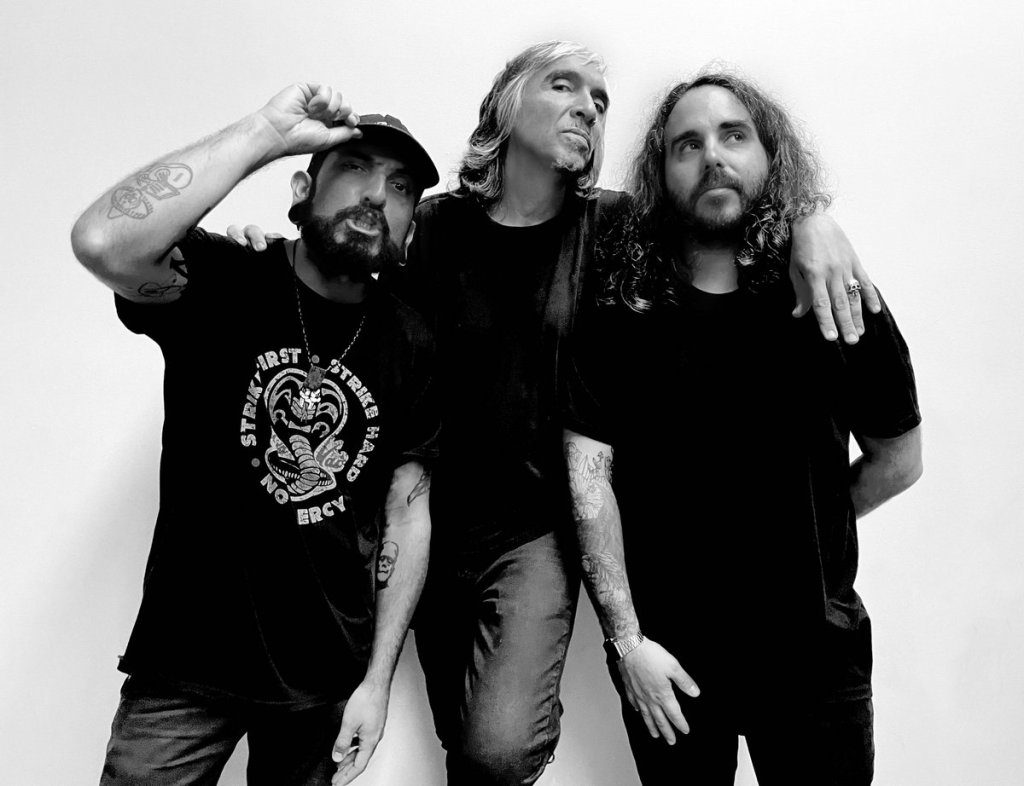


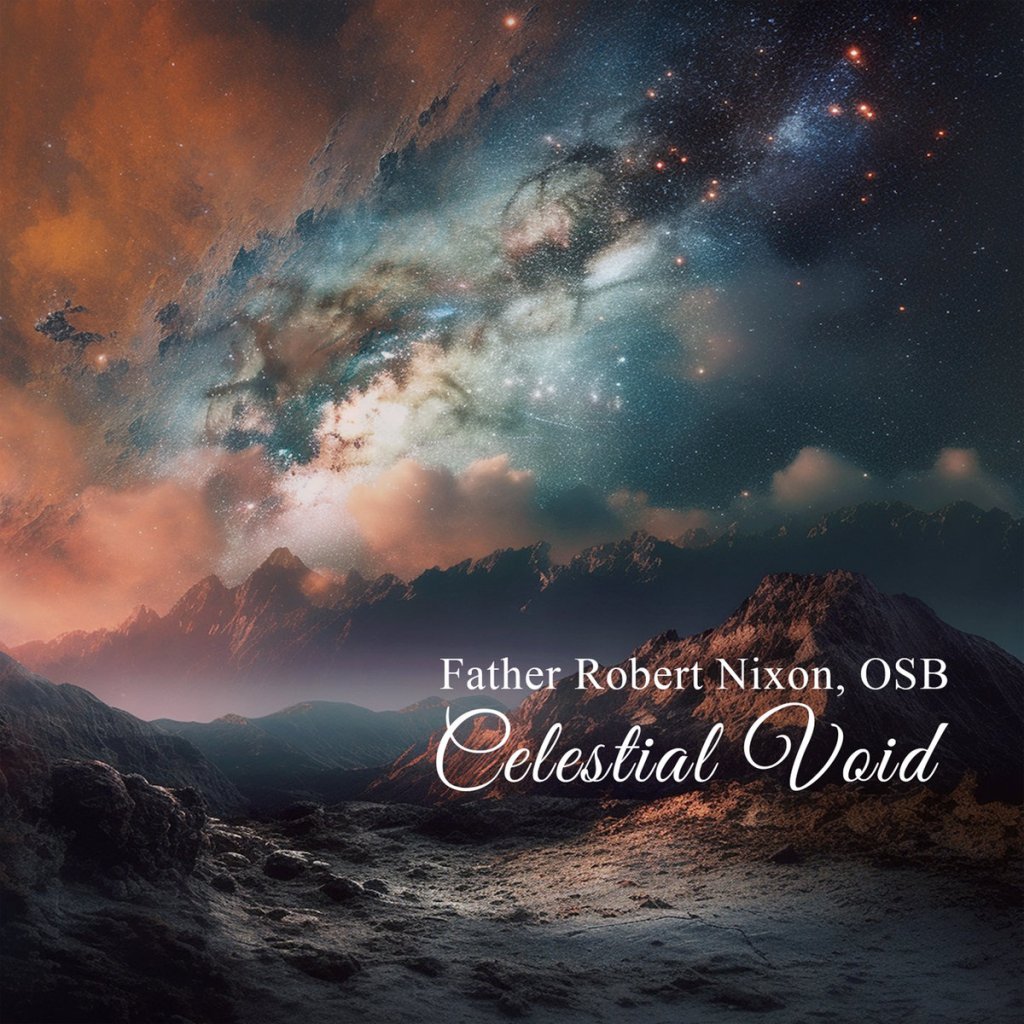
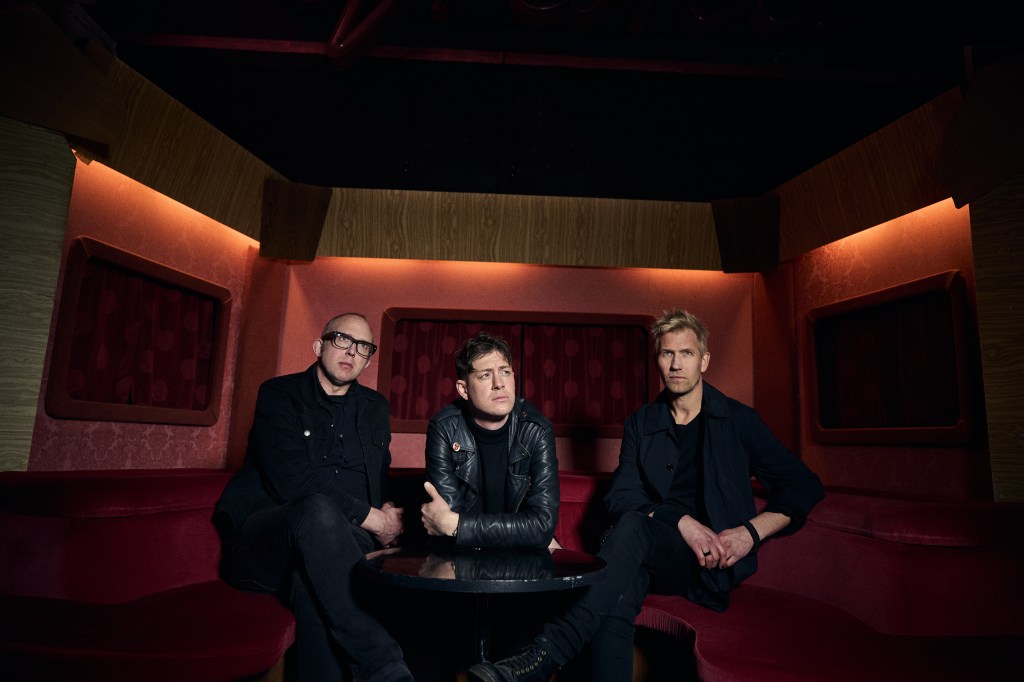


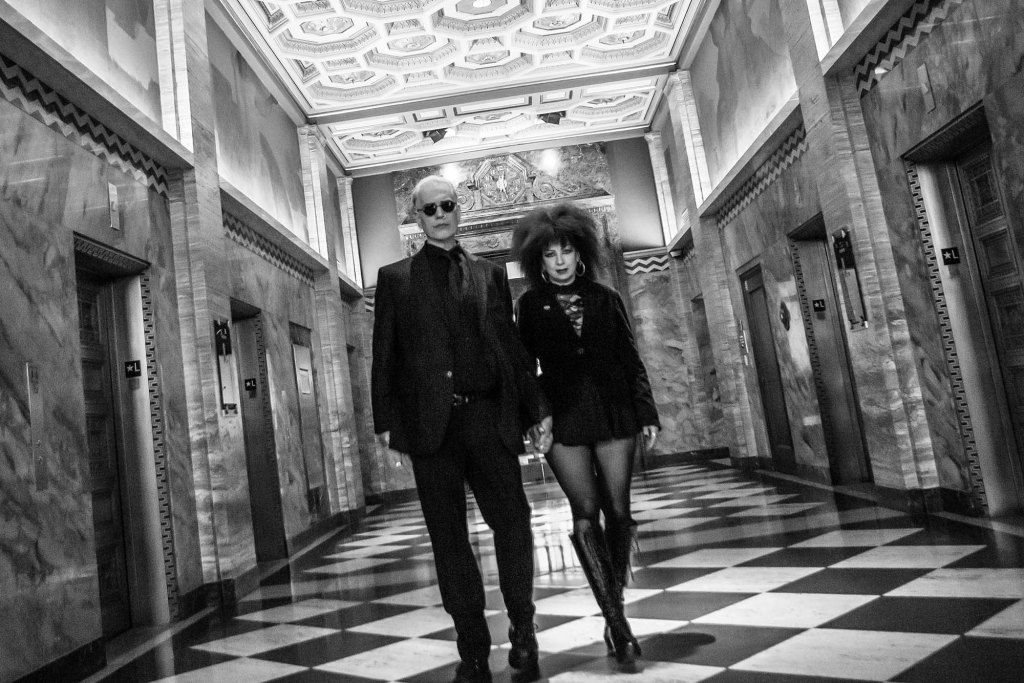
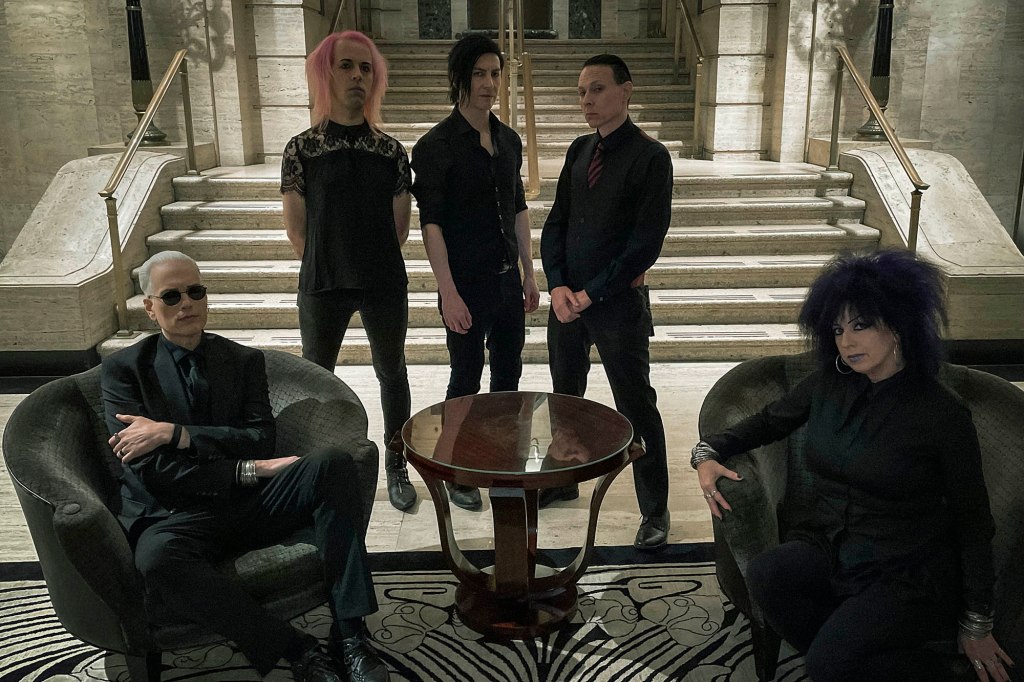

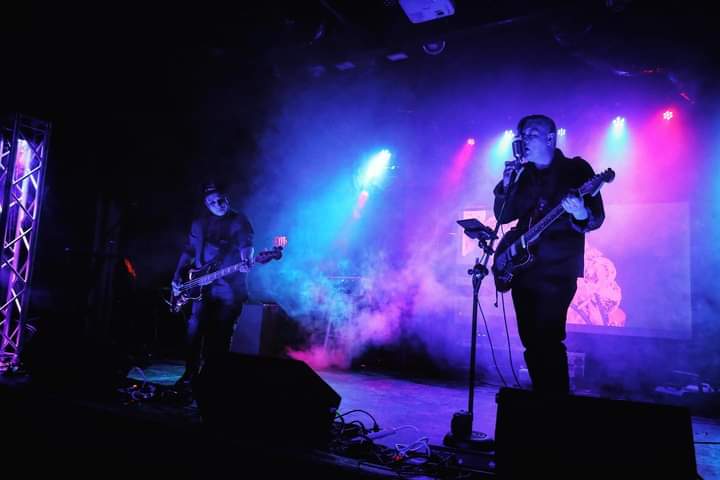


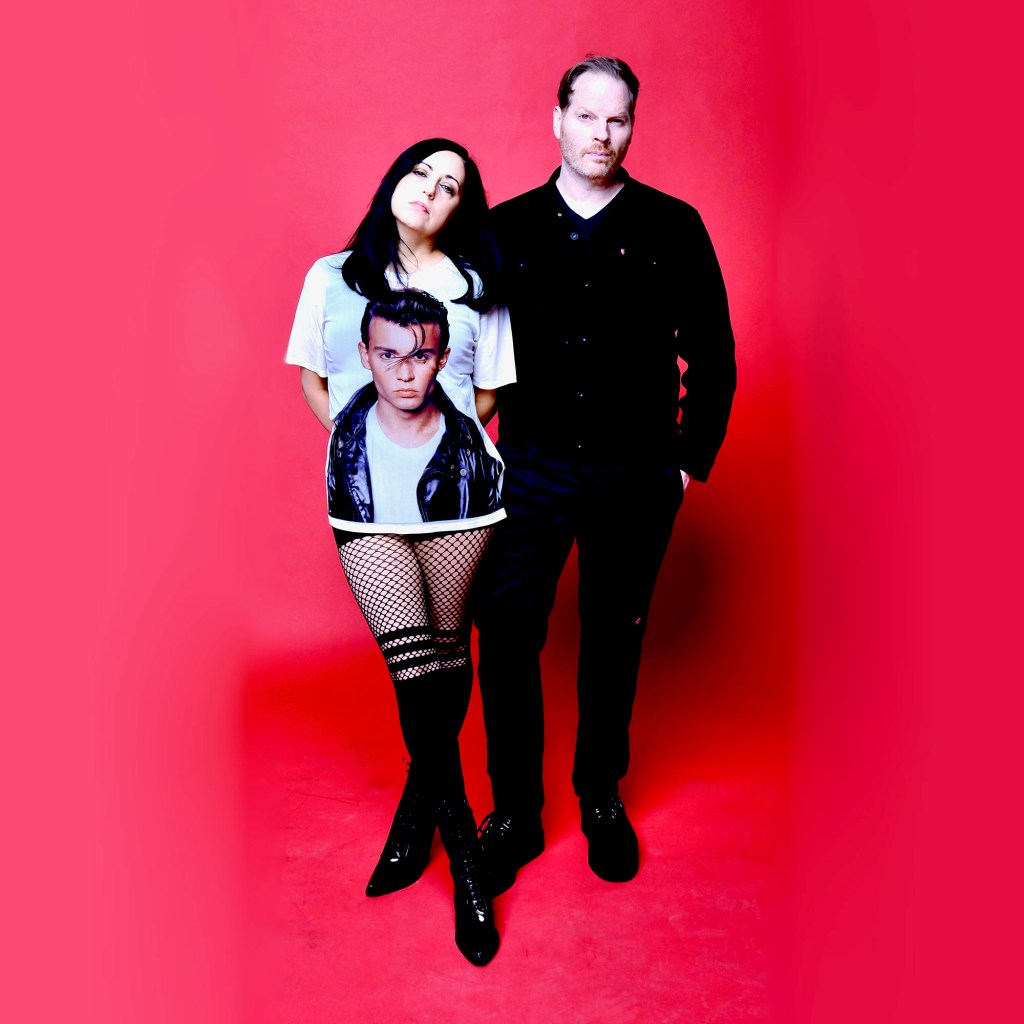


 Onyx Music Reviews