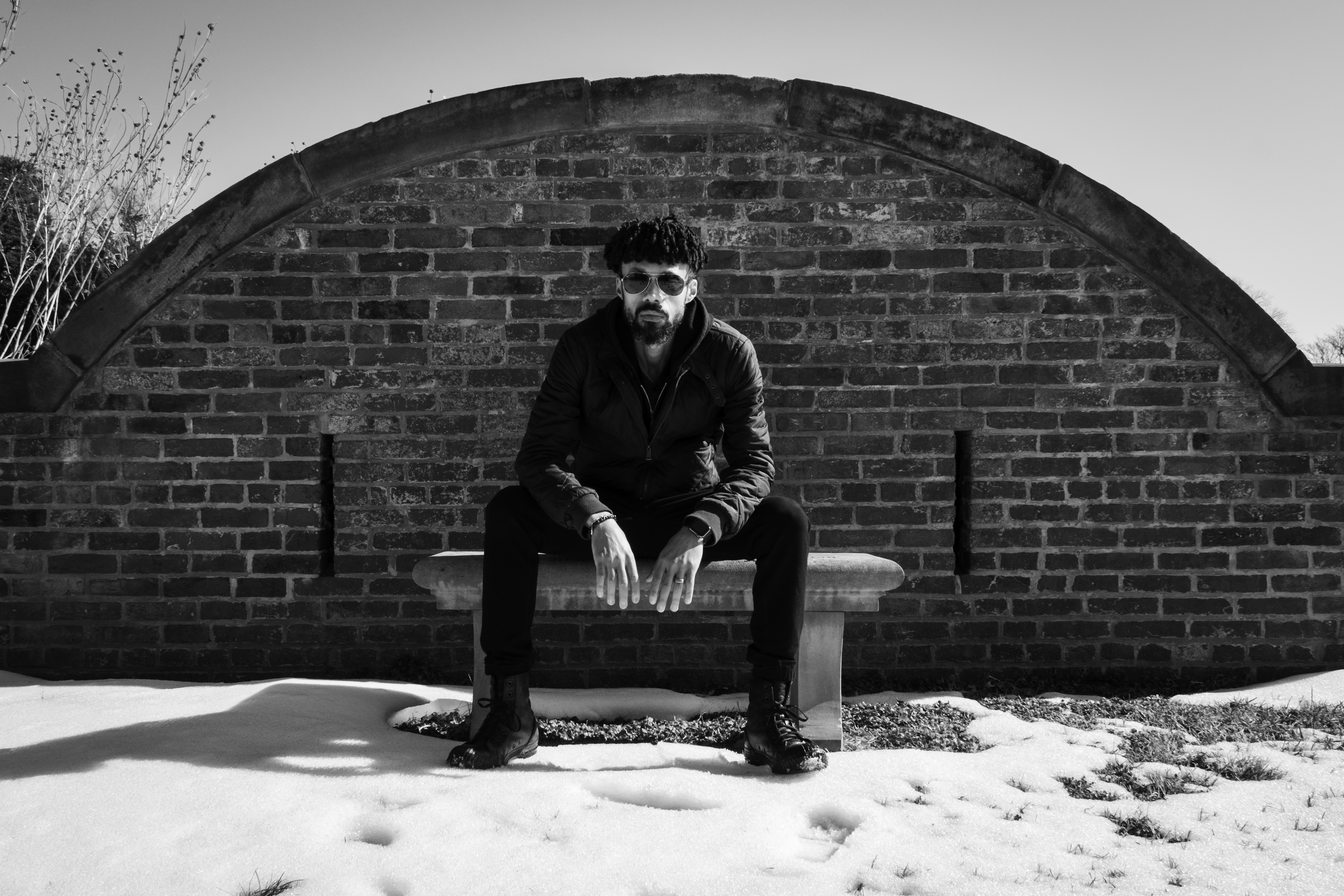
It isn’t easy being an alternative musician, who creates experimental post-punk pieces, fused with such styles as psychedelia, jazz and black metal. It is even harder when you are an artist of colour in an America, where the current political environment is to remove anything that references Black culture or history, and where it is even dangerous to walk the streets if you are coloured, or a part of the LGBTI+ community. Jeremy Moore lives in Washington. DC, running his independent label Saccharine Underground, and working feverishly on new music for his projects. Beginning of the year has seen a new album for Zabus in the form of Avoidance Moon and then at the end of March, his other project Bell Barrow will drop the album True Human Trough. You can hear the current climate bleeding into his latest music, so there is no better time than now to ask Jeremy about….. everything!
Welcome Jeremy Moore to the hallowed grounds of doom, gloom, and coffee-stained rooms.
You do seem like a man possessed almost, due to the incredible amount of music that seemingly pours forth. All your writing is deeply personal, so what is it that drives you to create music, like most people need to breathe?
First off, thank you so much for the interview. It’s an honour and a pleasure. I view music as one of several universal languages that can channel messages from other dimensions. It’s one language of nature, and for me, can be a way to grow closer to the spiritual world. In a more tangible and practical sense, it comes from a fascination with sound engineering. I always ask the question, ‘how can I convey what I’m feeling through “x”’?
Your previous work was in the bands Gorazde and Thee Rise Ov Sadistic Youth. Both these projects have disbanded, but what did you learn from them, and take into what you are doing now?
Ironically, I feel like I was closer to my best and most authentic 20+ years ago when I was recording out of my bedroom on a 4 track Tascam. I went through several iterations of Gorazde, relying too heavily on external pressures, subpar influences, and too much concern for what others thought of my creative output. I feel that my time recording as Gorazde and even into my short stint in Thee Rise Ov Sadistic Youth, it was a period of growth and rediscovery of what my sound should be. After all the years of toiling away in obscurity, I found that the best art comes from emotional vulnerability and pain. If what you create is personal to you, and of meaning, it will inherently have artistic merit. And it took all these years of multiple albums with the above bands to realize that. And the death of my father, processed through the last (and best IMO) Gorazde album, “Doctrine of The Void”, proved that.
There are several projects that you release under, with some as collaborations and others more like solo works. These being Zabus, Bell Barrow, and Zero Swann. How do you keep track of each project and more importantly, how do you decide what music to release for each group?
I have a vision, message and ethos for each, and I let that guide the process of creation. With Zabus, it was an opportunity to take the best elements of Gorazde (emotional weight, experimentalism, gothic romanticism) and channel that into something more positive than the (often) dismal negativity that blanketed much of Gorazde’s output. Initially, Zero Swann was more freeform and symphonic (debut album “Amon Zonaris”). I wasn’t sure where that band would go—maybe a one off or I could take it further. I decided to resurrect that project after a renewed desire to incorporate more chaos and unhinged improvisation into the mix.
Bell Barrow was the impetus for all of this improvisational output though. I am obsessed with formless noise as a primal form of creative expression. There is so much in our natural environment that we tune out or ignore, that has certain natural rhythmic qualities, certain frequencies, diverse textures. It speaks to you if you listen. If there are ways to create “field recordings of the mind”, I want to find them and cherish them.
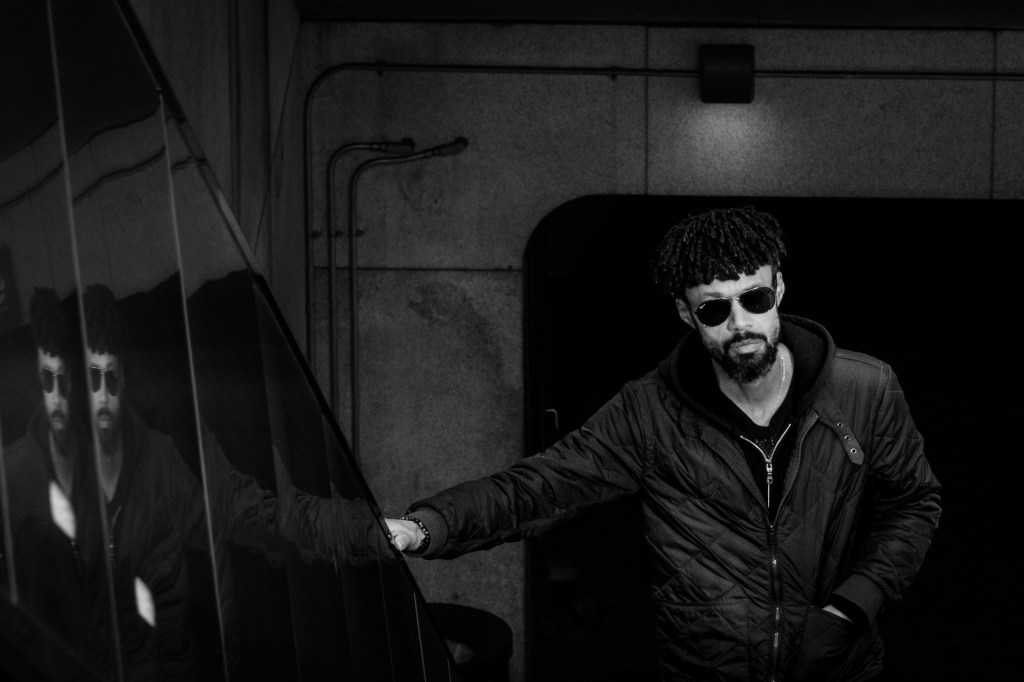
Jeremy, could you please explain how each project has come about and the sound you are aiming for?
With my projects it’s less about a particular sound and more about conveying how I feel at a particular moment and channelling that energy through a lens that’s true to who I am. I have always gravitated toward melancholia, darkness, and somewhat theatrical romanticism. I am fascinated by the unknown, the underbelly of what we deem as “normal”—I’m always trying to access the shadow sides of everything. In my opinion, that’s where truth lies. Bell Barrow is unique, however, in that I was directly influenced by free jazz and noise–genres I’ve loved for years and always wanted to incorporate into my sound. I knew that if I was going to take on that challenge, it would have to be an ‘all in’ affair with no compromises. From there I had the thematic idea for “CoreCore Pulp” and thought “let’s push this as far as I can.”
Zabus was originally the project you poured your grief into after the loss of your dad. How has it evolved after six full-length albums and an EP?
At the start it was about processing grief; in that moment in time, it was the only thing I felt or knew. What I gleaned from those creative sessions was a renewed commitment to speak authentically through my music. I was done with superficial BS or thematic ideas that had no real connection to me. With each successive album I’ve tried to push myself to experiment and not become complacent with the same recording techniques and writing styles. I’ve continued to diversify my influences without relying too heavily on them for direction. It’s vital to preserve your individual voice. When someone puts on a Zabus record, I want there to be no mistake who it is.
The newest Zabus album, “Avoidance Moon”, is released 24 February 2026: what are some key themes and inspirations behind this album, and what should people expect compared to previous Zabus releases?
“Avoidance Moon” serves as a metaphor for the album’s core themes of alienation and fragmented identity. I wanted to reject a singular narrative voice in favour of a shift between male, female, and non-binary perspectives, treating gender and sexual identity as “lived conflict” rather than a fixed aesthetic. In the context of the album, the “Moon” represents a state of consciousness. “Pride” is stripped of its commercial veneer and redefined as an act of defiance and inner strength within a world that tries to destroy it.
This album is unlike any before it; I fully embraced a DIY aesthetic and capitalized on the inherent imperfections in vintage equipment, prioritizing energy and immediacy over polish. There’s an intentionally unhinged quality to the melodies and song structure, to not only reflect the underlying rage behind the music, but to highlight the emotional and psychological confliction of the various lyrical protagonists.
My favourite Zabus album is “The Future of Death,” but do you have a favourite child, so to speak?
I’m a huge fan of “The Future of Death” as well; but if I had to choose one, it would probably be “Automatic Writhing”—I loved the experimentation on that one, and there’s this haunting weirdness about the arrangements that brings me back for repeat listens. Also, the recording process for that one was just really easy because all of us (I and session musicians) just intuitively knew what needed to go where. Our frequencies were just in sync. “Avoidance Moon” may dethrone it though haha.
“Saltire” was the second album for Bell Barrow, released in January 2026, which is an ambient and experimental instrumental. It has this beautiful hazy dreamlike quality, as if caught up in a fairy tale turned mythos, though there always feels like there is something dark and foreboding, lurking in wait. Tell us a bit more about “Saltire” please?
With “Saltire”, as with “CoreCore Pulp”, it was important that the compositions convey the thematic message in the absence of voice and lyrics. “Saltire” is a time based, panoramic view of past, present and future examining familial cyclical patterns of violence, abuse and addiction and whether supernatural events or one’s own choices impact fate. Each track is a singular voice or transmission spanning multiple dimensions and time frames of reference.
The question I posed (to myself and the audience): “Is our eventual destruction predetermined and independent of will or can we control the course of events through determined pleas at salvation?” I aimed to bridge disparate styles (progressive death metal, noise, neoclassical) through atmosphere and theatrical ebb and flow. From the cover art to the layered textures and dissonance, it all had to coalesce into one complete statement. As far as the sound, I knew I couldn’t and wouldn’t try to regurgitate another “CoreCore Pulp”. I also knew its follow-up had to be up to par and representative of my best work at that moment in time.
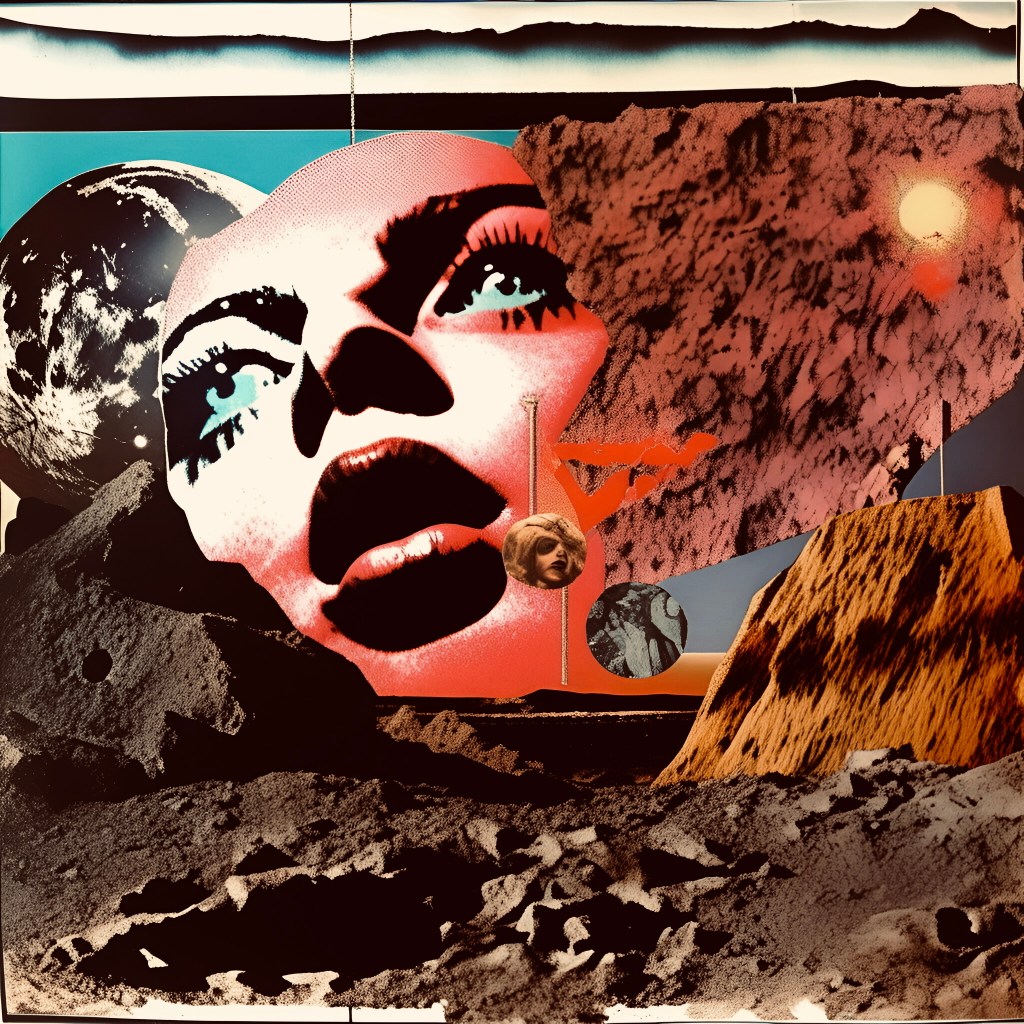
For me, Zero Swann and the album “Benefactor,” released in October of 2025, have very firm post-punk roots, dabbling in deathrock and soaked in your experimental pall of psych-noise. Tell us more about the concept and imagery for this album?
Zero Swann was always about capturing unfiltered expression in the moment. With ‘Benefactor’, I took this approach with every song. What helped with this process is the timing of recording; I had just wrapped up “Saltire” and the forthcoming third Bell Barrow album “True Human Trough” when the idea to resurrect Zero Swann came about. Improvisational chaos was the foundation for the album. I picked up the guitar and just beat the hell out of it. I did the same with every instrument, actually. Whatever I was feeling at the moment, however chaotic or bizarre, I would commit to tape.
Some songs sound and feel like fragmented shards of a machine on the verge of implosion; others like a wall of static…I was ok with it all as long as it was emotionally real. Lyrically, the album deals with dream state fantasies, the potential for spiritual rape, and the vulnerability we experience when the veil of consciousness is lifted. If we remain open emotionally and psychologically, and tune into lucid states of meditation, we can be imbued with gifts and insights into the unseen world around us. Some visions and messages are darker than others. Guarding against external malevolent forces while mastering the darkness within is the ultimate challenge.
You strike me as a guitarist originally, who got into the whole electronic thing. So, do you enjoy one medium over the other, or do you find pleasure in both?
I was a guitarist originally but fell in love with sound engineering and vintage equipment of all kinds. I felt like the guitar was too limiting to occupy the only role in my music making. I began to gravitate towards mediums like modular synths and other analogue and percussive hardware…it just took off from there. So definitely pleasure in both.
You run your label Saccharine Underground to release music for yourself and like-minded musicians. How important is it, especially now, to have independent labels?
The only important thing is to preserve artistic integrity by any means. Independent labels is only one way. When you are not beholden to some overreaching business entity or existential pressure to alter your creative vision, authentic expression is protected. The method to reach that end is less important than the bottom line.
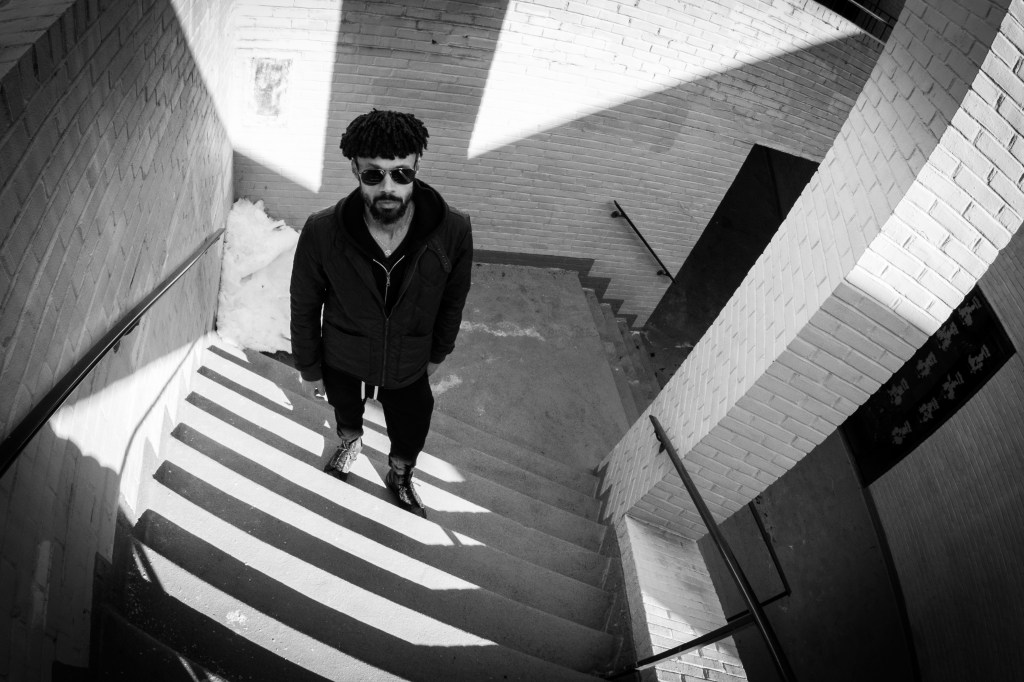
You are in the US city of Washington, D.C., one of the first major cities to feel the weight of the current administration’s heavy hand of forced military occupation in the streets. How has this influenced your music and what has this occupation meant personally for yourself?
This current administration’s evolving fascist ideals and our population’s apparent apathy as it unfolds is exactly what motivated the recording of the Zabus LP “Whores of Holyrood” last year. I’m not one to traditionally incorporate politics into my music, but at this time in my country’s history, I see us rapidly moving backwards towards a time when basic civil rights were non-existent.
I whole heartedly believe that if the far-right members of our government could resurrect the Jim Crow era and implement it nationwide they would. The military occupying our streets is just a reflection of our President’s infatuation with martial law and authoritarian rule. I have deference and respect for both the military and my country’s ideals, however when the military becomes an extension or arm of the President’s whims and distaste for democracy and constitutional civil liberties, these very ideals are perverted.
As a black male, how do you feel about Trump’s administration targeting people of colour, axing DEI and erasing black history?
My gut response is anger; but anger only clouds rational thought and strategic decision making. What our country needs are grassroots movements fronted by people who can harness this anger and channel it into decisive action. And when I say action, I mean resistance (non-violent) and political messaging and executable plans that can actually change people’s lives for the better.
I would love to know your thoughts on these gothic/punk groups popping up on FB ranting about cancel culture and that you can be a right-wing MAGA supporter, whilst still being a part of these counter cultures….
When I see or hear about these kinds of individuals, I like to break it down to the basics—what is the core ethos of gothic and post punk culture? What is the ethos of MAGA? I’d say that the gothic and post punk scenes were founded on inclusion and creating a safe space for individual expression for those who felt like outsiders or viewed as “different”. MAGA culture prides itself as an anti-immigrant, anti-diversity, frankly white America centric movement backed by the most ignorant and narrow-minded sect of our country, where education and really just basic humanity is shunned for a perpetual echo chamber of opinion-based cult worshipping stupidity. So, you can’t really be both, can you?
I believe music is political and it is a tool to use as a mirror for truth. What would you say to those that say music should stay out of politics?
I disagree with it; music can and should be about whatever moves the artist. And if the times call for it, music can very much be the voice that changes everything. Punk movements across the world have been born out of a resistance to government oppression.
What does Jeremy Moore have brewing in the studio next?
I’ve got the third Bell Barrow album releasing next month, and the next Zero Swann album releasing in April. Currently, I’m finishing up a dark psychedelic freak folk album under a new moniker. I’m planning ongoing releases for this project, with all albums available through Saccharine Underground. Expect the debut to drop sometime late Spring early Summer 2026.
Should a lamp fall into your lap tomorrow and a genie popped out to grant three wishes, what would you choose?
That my wife, son and I continue to strengthen our relationship through love and support, that creative inspiration never dies, and that the current administration implodes and is erased from memory.
 Onyx Music Reviews